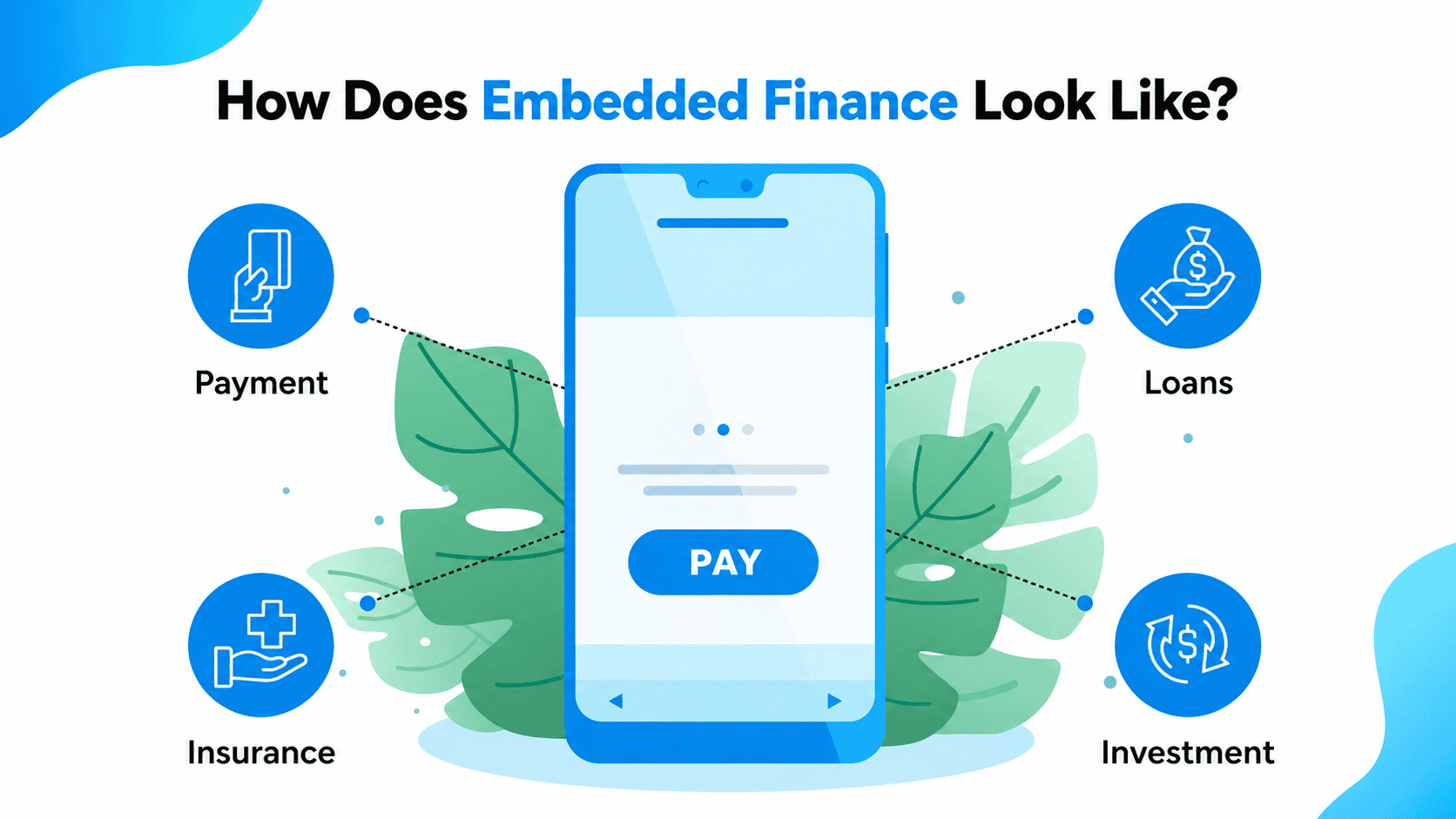
Embedded finance is quietly changing how businesses and consumers interact with financial services. Whether you’re paying for a ride, buying insurance while booking a flight, or accessing a business loan through your accounting software, you’re already using embedded finance—often without even realizing it.
Not long ago, accessing financial services meant visiting a bank or logging into a separate banking app. Today, businesses are bringing those services directly into the platforms customers already use. Payments, lending, insurance, savings, and even payroll are becoming built-in features rather than standalone products.
This shift is changing how companies build products, serve customers, and generate revenue. But what exactly is embedded finance, and why has it become one of the biggest trends in technology?
What Is Embedded Finance?
Embedded finance is the integration of financial services into non-financial products or platforms.
Instead of sending users to a bank or another financial institution, businesses allow customers to complete financial activities within their own apps or websites. These services can include payments, loans, insurance, digital wallets, business banking, payroll, and investment products.
For example, an e-commerce platform may allow merchants to access working capital loans without leaving the platform. A ride-hailing app can process payments automatically, while an accounting platform may help small businesses pay employees, send invoices, and manage expenses in one place.
In simple terms, embedded finance brings banking to where people already work, shop, and do business.

Why Is Embedded Finance Growing So Fast?
The rise of embedded finance is driven by changing customer expectations.
Consumers and businesses increasingly expect seamless digital experiences. They no longer want to switch between multiple apps to complete a single task. Instead, they want payments, financing, and other financial services integrated into the platforms they already trust.
Businesses have also realized that financial services create more value than software alone. By embedding payments, lending, or insurance into their products, they improve customer experience while opening up new revenue opportunities.
As a result, software platforms are evolving into complete business ecosystems rather than simple digital tools.
How Businesses Are Using Embedded Finance
Embedded finance is no longer limited to large technology companies. Businesses across different industries are integrating financial services into their platforms to simplify operations and improve customer experiences.
An online marketplace can offer instant payments to sellers after every transaction. A logistics company may provide vehicle financing to delivery partners directly through its platform. Healthcare providers can integrate flexible payment plans into patient portals, while retail platforms can offer Buy Now, Pay Later (BNPL) options at checkout.
Many Software-as-a-Service (SaaS) platforms now allow businesses to accept payments, manage payroll, access working capital, issue virtual cards, and purchase insurance without leaving the platform.
Instead of directing users to a bank, the platform itself becomes the place where financial transactions happen.
Why It Matters for Businesses
For founders and product teams, embedded finance is more than a convenience feature—it’s a competitive advantage.
Offering financial services keeps customers engaged for longer because they can manage more of their business from one platform. This deeper engagement often leads to stronger customer loyalty and higher lifetime value.
Embedded finance also creates new revenue streams. Beyond subscription fees, businesses can earn income from payment processing, card transactions, lending partnerships, and other financial services integrated into their platforms.
Perhaps most importantly, every financial transaction generates valuable data. These insights help businesses better understand customer behaviour, improve products, personalise services, and make smarter decisions.
The Technology Behind Embedded Finance
Most technology companies don’t become banks. Instead, they partner with licensed financial institutions and Banking-as-a-Service (BaaS) providers that supply the infrastructure needed to deliver financial products.
This ecosystem generally includes three key players.
Financial institutions provide the banking licences, regulatory oversight, and financial products.
Technology providers supply the APIs and infrastructure that connect financial services to digital platforms.
Businesses then embed those services into their own products, creating a seamless experience for end users.
This partnership model allows non-financial companies to offer sophisticated financial services without building a bank from scratch.
Why Every Industry Is Paying Attention
Embedded finance is no longer just a fintech trend. It is becoming a business strategy across industries including retail, healthcare, logistics, education, agriculture, travel, and real estate.
As digital platforms become central to everyday life, customers expect financial services to be available exactly when they need them. Businesses that meet these expectations can remove friction, simplify customer journeys, and build stronger relationships.
This is why embedded finance is expected to become one of the fastest-growing segments of the global fintech market over the next decade.
What This Means for African Businesses
Embedded finance presents a significant opportunity for Africa’s digital economy.
Across the continent, many small businesses still struggle to access credit, affordable payment solutions, and financial management tools. By integrating these services into platforms they already use, businesses can improve financial inclusion while helping entrepreneurs operate more efficiently.
For startups, embedded finance also offers a way to differentiate products in increasingly competitive markets. Instead of competing solely on features, companies can become essential partners in their customers’ financial journeys.
As Africa’s digital economy continues to grow, embedded finance could play a major role in supporting commerce, expanding access to financial services, and accelerating business growth.
Don’t miss important articles during the week. Subscribe to Techbuild weekly digest for updates