


Africa is home to one of the world’s fastest-growing fintech ecosystems. Digital banks, mobile money, embedded finance, and remittance platforms are changing how millions of people access financial services.
But despite this progress, one major problem remains: cross-border payments.
Whether it’s a Nigerian business paying a supplier in Kenya, a freelancer in Ghana receiving payment from South Africa, or an investor funding a startup in another African country, moving money across borders is often slow, expensive, and complicated.
The issue isn’t a lack of innovation. It’s the fragmented financial systems that fintech companies have to work with.
One Continent, 54 Different Rulebooks
One of the biggest barriers to seamless cross-border payments is regulation.
Africa has 54 countries, and each has its own rules for licensing, foreign exchange, customer verification (KYC), anti-money laundering (AML), and data protection. For fintech companies, entering a new market often means repeating the entire compliance process. Instead of building one product that works across Africa, they must adapt it for every country they enter. This increases costs, slows expansion, and makes it harder to scale. It also affects millions of informal traders and unbanked individuals who may not have the documents required to meet strict KYC rules.
Until African countries adopt more harmonised regulations, cross-border payments will remain difficult and expensive.
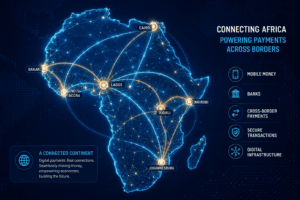
The Real Challenge Is Connecting Payment Systems
Africa has invested heavily in digital financial services, especially mobile money. The challenge today isn’t the lack of payment infrastructure—it’s that much of the infrastructure doesn’t work together.
Many banks, mobile money providers, and payment companies still operate as separate systems. As a result, fintech companies often need to build different integrations for every bank or provider they want to connect with. This lack of interoperability increases development costs, slows payment processing, and creates a poor user experience.
In some cases, payments between African countries still take two to five days because they pass through multiple systems before reaching the recipient.
As Africa’s digital economy grows, connecting these systems will become just as important as building new ones.
Too Many Currencies, Too Many Costs
Another major challenge is currency fragmentation. Africa has more than 40 different currencies, with each having different exchange rate policies and varying levels of liquidity.
For businesses, this creates several problems:
- High foreign exchange (FX) conversion costs.
- Unpredictable exchange rate fluctuations.
- Capital control restrictions in some countries.
- The need to hold funds in multiple currencies before making payments.
These factors increase costs, tie up working capital, and make financial planning more difficult.
Many transactions also rely on intermediary currencies such as the US dollar, making payments between two African countries more expensive than they should be.
Why Sending Money Across Africa Is Still So Expensive
Africa remains one of the most expensive regions in the world for cross-border payments. The biggest reason is the number of intermediaries involved.
A single payment may pass through several correspondent banks, payment processors, settlement partners, and foreign exchange providers before reaching its destination.
Each intermediary adds:
- Extra fees.
- Longer processing times.
- More operational complexity.
For businesses, this often means:
- Higher transaction costs.
- Less visibility into where their money is.
- Unpredictable settlement times.
- More time spent reconciling payments.
For small and medium-sized businesses (SMEs), these costs can reduce profits and limit opportunities to expand across African markets.
New Solutions Are Beginning to Change the Story
Although the challenges are significant, several innovations are making cross-border payments easier.
PAPSS and Regional Integration
The Pan-African Payment and Settlement System (PAPSS), developed to support AfCFTA, allows businesses to make payments in local currencies without relying heavily on correspondent banks or intermediary currencies.
While adoption is still growing, PAPSS has the potential to become one of Africa’s most important payment infrastructures.
Better Interoperability
Companies such as Hub2 are helping connect banks, mobile money providers, and card networks through a single API.
Instead of building separate integrations for every country, fintech companies can connect to multiple payment systems through one platform. This reduces complexity, lowers costs, and speeds up expansion.
AI Is Making Payments Smarter
Artificial Intelligence is also improving cross-border payments by helping companies:
- Detect fraud faster.
- Route payments through the most efficient channels.
- Predict liquidity needs.
- Reduce failed transactions.
- Automate compliance processes.
Rather than replacing payment systems, AI is making them more efficient and reliable.
Blockchain and Stablecoins
Blockchain technology and regulated stablecoins are also gaining attention as faster and cheaper ways to move money across borders. By reducing the number of intermediaries involved, these technologies could lower transaction costs and speed up settlement times.
Although regulation is still evolving, they represent an important area of innovation for Africa’s payment ecosystem.
What This Means for Investors and Fintech Leaders
For investors, Africa’s cross-border payment challenges also represent one of the continent’s biggest opportunities.
The companies most likely to succeed won’t simply be those processing the highest number of transactions. They’ll be the ones that build strong regulatory capabilities, reliable payment infrastructure, efficient liquidity management, and seamless interoperability across markets.
As trade within Africa continues to grow under AfCFTA, demand for better cross-border payment solutions will only increase.
The Techbuild Africa Take
Cross-border payments remain Africa’s biggest fintech challenge because they combine four major problems: fragmented regulations, disconnected payment systems, multiple currencies, and high operating costs.
Solving this challenge won’t depend on a single technology. It will require governments, regulators, banks, fintech companies, and infrastructure providers to work together to build a more connected financial ecosystem.
The good news is that progress is already underway. Initiatives like PAPSS, interoperable payment infrastructure, AI-powered payment systems, and blockchain-based settlement are helping remove long-standing barriers.
The next chapter of Africa’s fintech growth won’t be defined by creating more payment apps. It will be defined by making it easier, faster, and cheaper to move money across the continent.
Don’t miss important articles during the week. Subscribe to Techbuild weekly digest for updates