


WhatsApp keeps edging toward a style of messaging where conversations behave more like temporary exchanges than permanent records. The latest beta test on iOS points in that direction.
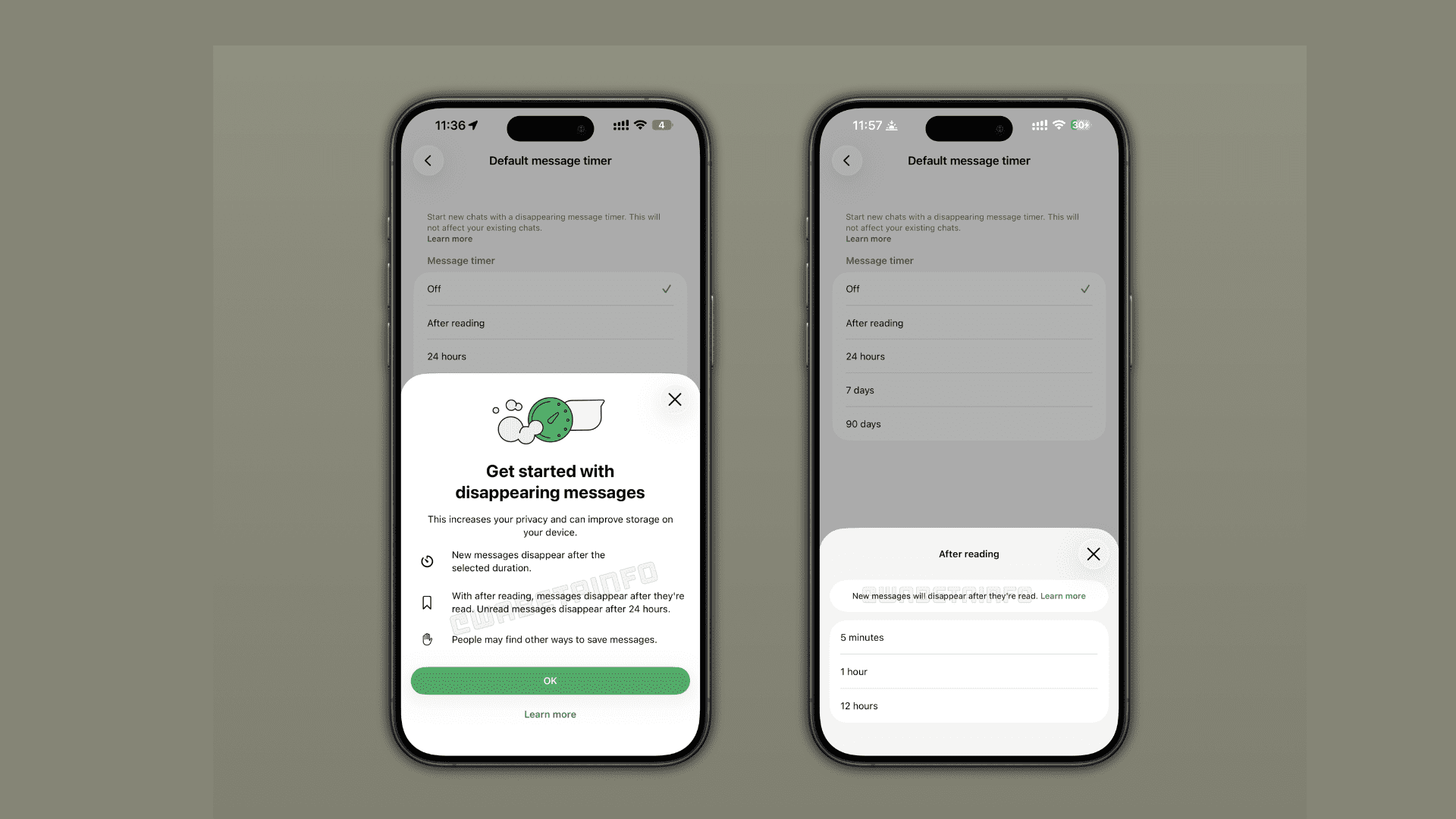
A recent test build introduces a new option that lets messages disappear after they’ve been read. Current disappearing messages on the app rely on fixed timers.
Users choose 24 hours, seven days, or 90 days, and the countdown starts the moment the message is sent. The new experiment shifts that logic. The clock starts when the recipient opens the message.
That sounds like a small change, though it alters how people control the life span of conversations.
From timed deletion to read-triggered deletion
The beta version spotted on iOS through Apple’s TestFlight program includes a new setting labeled “After reading.” When someone enables it, the message disappears shortly after the recipient opens it.
The sender can set a short timer once the message is read. Current test options include five minutes, one hour, or twelve hours. If the recipient never opens the message, it still disappears automatically after 24 hours.
The feature must be enabled manually and can be applied per chat rather than globally. Some beta testers already see the option while others will likely receive it in stages.
WhatsApp keeps moving toward temporary communication
This feature fits a longer pattern. The app introduced disappearing messages years ago as a way to reduce the permanence of chat histories. At first, the system relied on fixed expiration timers tied to when a message was sent.
The new approach changes the reference point. Deletion now depends on when the message is actually consumed.
That design echoes how other messaging apps treat sensitive communication. The sender focuses less on when the message leaves their device and more on how long it remains visible once the recipient reads it.
Messaging apps are quietly rethinking memory
Messaging platforms used to assume every chat would sit in an archive forever. Storage became cheap and search tools made it easy to retrieve years of messages. That expectation is starting to shift.
Some people now treat messaging threads more like conversations that should fade after they serve their purpose. Short-lived messages help reduce clutter in long-running chats.
They also change how users share information that might feel awkward to leave behind in a permanent thread.
WhatsApp’s experiment sits somewhere between permanence and full ephemerality. Messages can vanish quickly, though they still exist long enough for both sides to read them.
Features spotted in beta builds often change before release, and sometimes they never leave testing. For now, it shows that the app continues to adjust how long a digital conversation should last.
Don’t miss important articles during the week. Subscribe to techbuild weekly digest for updates