


Nigeria’s cities are expanding at a pace that is beginning to expose deeper structural gaps, not just in transport or payments, but in how everyday systems connect and function together.
Moving across urban centres still involves inconsistent options, while completing routine transactions often requires switching between multiple platforms, each introducing its own delays and points of failure.
At the same time, mobile adoption has accelerated, and for millions of people, the smartphone has become the primary interface for accessing services, making payments, and managing daily activities.
The behaviour has already shifted toward digital, but the systems supporting that behaviour remain fragmented.
It is within this gap that a new category of platforms is beginning to emerge.
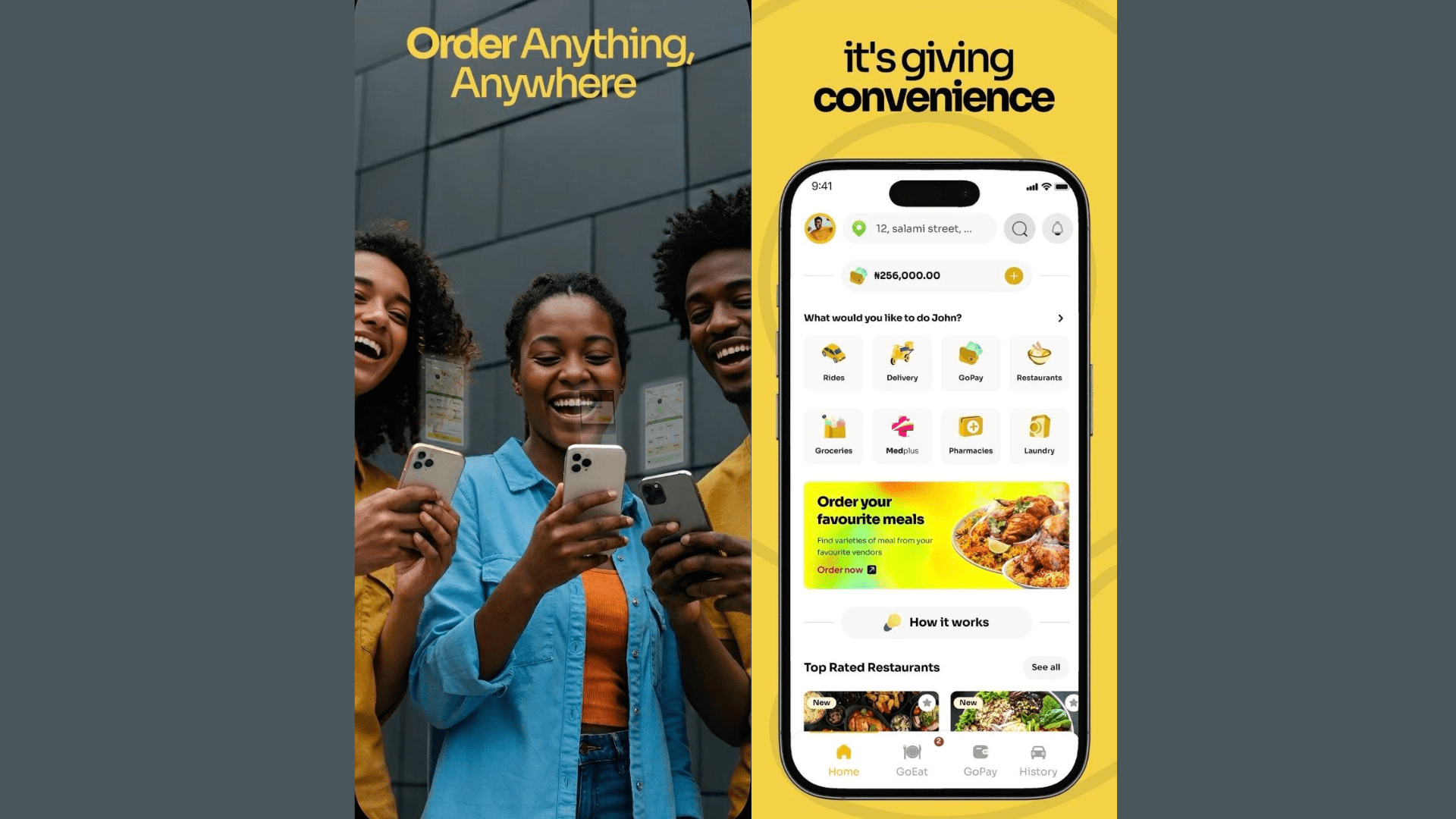
In an interview with this publication, Adioo Technology described its flagship product, GoApp, as a direct response to this fragmentation, positioning it not as another standalone application, but as a unified system designed to bring together services that have traditionally operated in isolation.
“We were not trying to build another app in an already crowded space,” the company said. “The focus was on removing the friction between the services people already depend on.”
GoApp, formerly known as GoCaby, operates as a multi-vertical platform that integrates transport, logistics, food services, commerce, and digital payments into a single environment, allowing users to move between these services without leaving the ecosystem.
According to Adioo, the issue was not access to services, but the inefficiency created by their separation. Users could already book transport, order food, or make payments, but each action required a different system, creating repeated friction across everyday interactions. GoApp was designed to collapse those flows into one continuous experience.
At the centre of this system is GoPay, the platform’s financial engine, and a significant part of its development during a critical growth phase was led by Senior Software Developer Eferhire Ugbotu.
“The challenge was not just scaling transactions,” Ugbotu said. “It was building a system that could remain stable and reliable even when the infrastructure around it was not.”
To address this, GoPay was rebuilt as a unified payment system capable of handling transactions across multiple categories, including utilities, travel, and public services, supported by a consolidated wallet and a single payment API.
The impact has been measurable. Following the introduction of recurring billing and improved transaction flows, the platform’s stickiness ratio increased by 22 percent, reflecting stronger and more consistent user engagement.
Performance improvements within checkout flows also delivered results. A redesigned one-tap asynchronous payment system reduced transaction abandonment by 18 percent and improved conversion across key services such as food and grocery.
Additional features reinforced growth. A split-bill system enabled real-time shared payments and contributed to a 15 percent increase in organic user acquisition, while a loyalty and cashback system drove a 30 percent increase in user retention.
As usage increased, the platform scaled accordingly. Monthly transaction volumes grew to reach a Gross Merchandise Value of £313,000, equivalent to over ₦230 million, supported by integrations with multiple payment providers.
To maintain reliability at this scale, the platform implemented a failover architecture using load balancing and circuit-breaker patterns, enabling uptime levels of 99.9 percent despite instability in external payment systems.
Adioo said reliability at this level is central to adoption, particularly in financial systems where consistency directly shapes user trust and long-term usage.
The structure of GoApp reflects this thinking. Transport drives engagement, commerce increases transaction frequency, and payments connect every interaction, creating a system where each layer reinforces the others.
This approach aligns with a broader shift across emerging markets, where platforms are evolving from standalone services into integrated ecosystems that reflect how people actually live and transact.
Looking ahead, the company confirmed plans to expand the platform, deepen financial integrations, and adapt the model for additional markets, supported by an architecture designed for scale.
For Adioo Technology, GoApp is positioned not just as a product, but as infrastructure designed to connect movement, money, and everyday transactions into a single system.
As digital adoption continues to accelerate, the platforms that succeed will be those that reduce friction, integrate seamlessly into daily life, and operate reliably at scale. Adioo is making a clear case that GoApp is being built to do exactly that.
Don’t miss important articles during the week. Subscribe to techbuild weekly digest for updates