

In this week’s edition of AfriLabs hub feature, we would be spotlighting LakeHub located in Kenya.
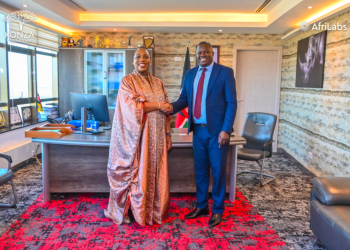
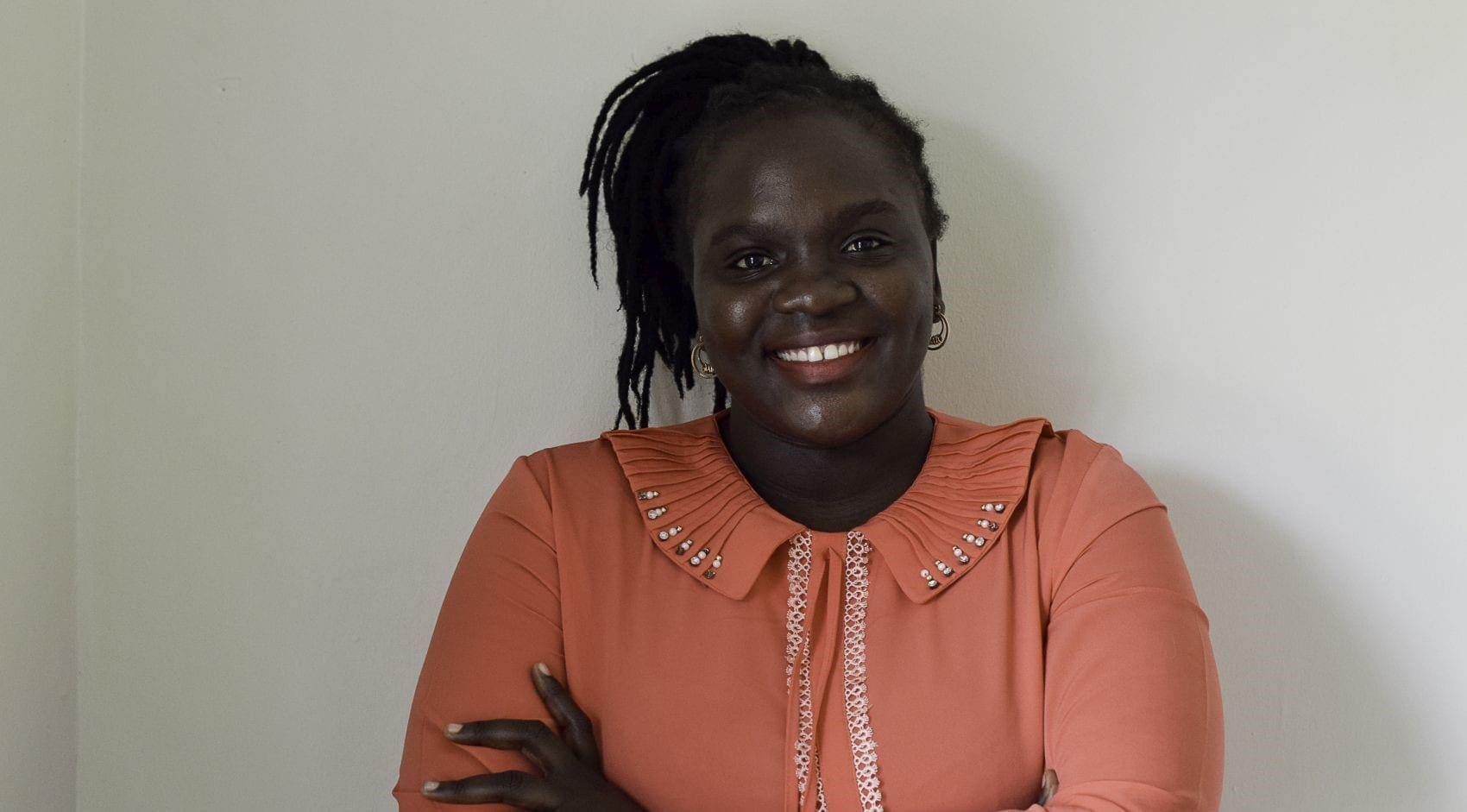
We caught up with Dorcas Owino, the Managing Director of the East African hub. Dorcas has extensive experience driving innovation programs in innovation hubs and in corporations as a consultant.
She is also into entrepreneurship, business coaching and startup mentorship. Basically, Dorcas’ typical day involves her working around her team to have a clear understanding of the current trends in technology identifying the necessary skills needed to function in that environment, identifying the skill gaps in the Kenya youth and building programs to groom them in the identified skill area.
In getting to know more about LakeHub, Dorcas took us through an overview of the hub.
Why LakeHub?
According to Dorcas, the Lake Region is one of the most densely populated regions of Kenya having more than 14 million people which constitute about 31% of the Kenyan population.
Young people dominate the Kenyan labor market with youth between the ages of 15 to 34 constituting two-thirds of the country’s workforce.
About 800,000 young Kenyans enter the labor market every year and according to a 2013 UNDP (United National Development Program) analysis on youth employment in Kenya, youth unemployment depending on age can go as high as 35% compared to the country’s overall unemployment rate of 10%.
The analysis also reveals that 80% of Kenyans unemployed population fall within the bracket of the country’s young population.
“To this end, a new approach is required in inspiring innovations to address this challenge by driving action towards developing interventions specific for the lake region to create sustainable jobs for all.”
This is why LakeHub is blazing the trail to promote innovative business models and mindsets; while partnering with governments both local and national, development agencies and other ecosystem support players to be solution providers other than seekers of it.”
LakeHub’s mission and vision
Dorcas expressed her delight as the Managing Director of the social enterprise technology organization, stating that the hub has created space for young people to pursue their passion in using technology to create sustainable technological solutions for the community they live in, which address social needs such as food security, health, safety, education and employment.
“LakeHub exists primarily to spur innovation in the Western Kenya region as a means to create job opportunities for youths in the lake basin region.
Towards this end, LakeHub strives to achieve its mission of decentralizing access to technology and promoting youth entrepreneurship and innovation at the grassroots.”
Dorcas explained that the hub is executing its mission and vision in two ways:
Skills development
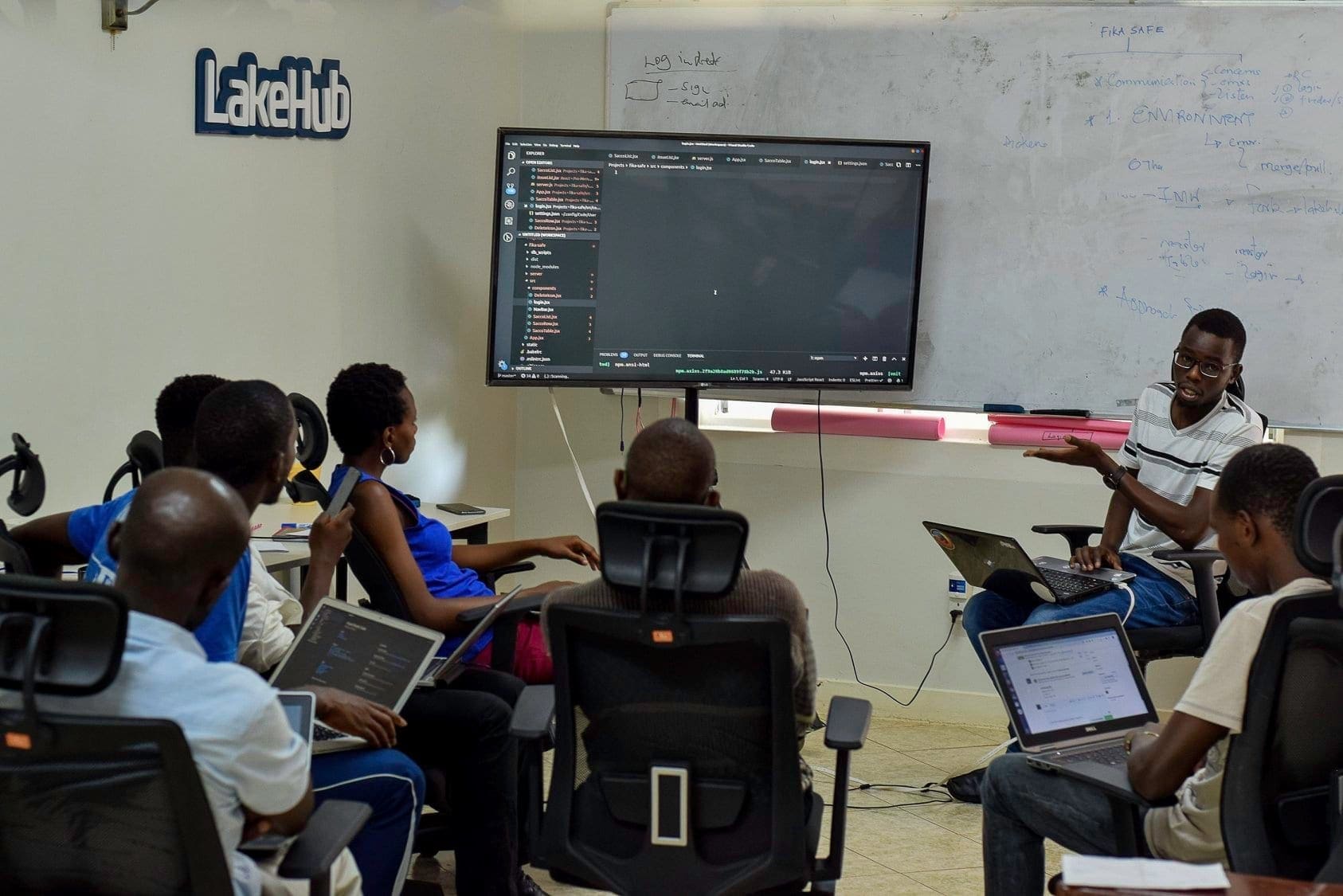
This fellowship program is done through the LakeHub Academy which is a self-paced, 5-month software development bootcamp in Kisumu, Kenya.

The LakeHub Fellowship includes 3 months of immersive learning, 2 months of mentorship, and 2 years of paid job placement.
The curriculum covers full-stack JavaScript and is delivered through a combination of instructor-led, self-paced, and peer learning experiences.
Entrepreneurship training
Through the LakeHub incubation program where we work with early-stage entrepreneurs such as students, academics and tech professionals who are starting or growing their business.
“We offer training and coaching and introductions to our extensive network of industry leaders, business professionals, investors and service providers.”
Innovation and entrepreneurship
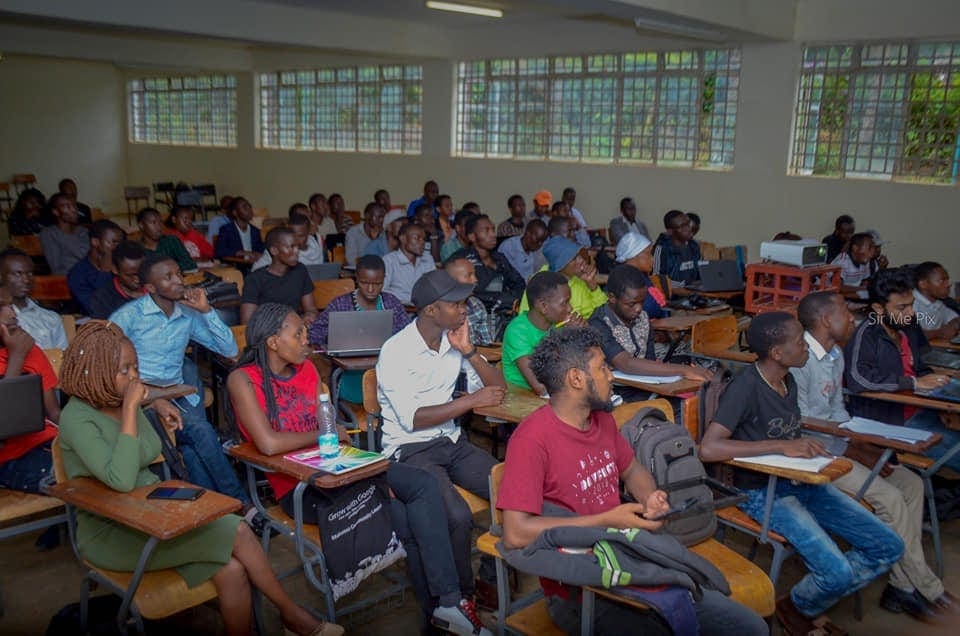
On how hubs foster innovation and entrepreneurship, Dorcas explained that most innovation hubs bring together a community of innovators, creatives, investors and entrepreneurs.
“These melting pots where different professions, backgrounds, nationalities and cultures meet then create a thriving ecosystem that fosters collaboration which fosters innovation and entrepreneurship.”
According to Dorcas, innovation hubs are constantly looking for new ideas encouraged, by organizing hackathons, pitch events and competition.
“This not only deliberately encourages innovation/entrepreneurship but also gives entrepreneurs and innovators a platform.”
On the state of innovation/entrepreneurship in Kenya, Dorcas said, “thanks to the invention of the popular money-transferring Mpesa, Kenya has experienced a tech revolution, this has led to the growth of infrastructure such as high Internet penetration rate.”
She further stated that a fast Internet speed has made Kenya an attractive environment for digital entrepreneurs and investors. This has put Kenya on the map as the East African tech node.
“The innovation and entrepreneurship space in Kenya has a variety of enablers that offer non-financial business support, mentoring, co-working spaces, as well as startup accelerators.
This support is helping developers, designers, researchers and entrepreneurs to work on new technological solutions.”
Kenya’s reception to STEM education
Innovation leads to new products and processes that sustain a country’s economy and according to Dorcas, innovation and science literacy depends on a solid knowledge base in the STEM areas.
“It is clear that most jobs of the future will require a basic understanding of math and science and coding will be as important as learning how to read and write. Despite these compelling facts, mathematics and science scores on average.”
Schools should create curriculums that include stem education. It should be a practical process that connects to real life through the application of science, technology, engineering and mathematics by students with guidance from teachers.”
Dorcas further stated that parents need to get behind the STEM movement and encourage their children to pursue studies in these areas.
“For example, talk about gravity when your child tosses a ball in the air. Discuss fractions or percent when you slice a pie. Cooking provides opportunities to talk about measurement, boiling and evaporation. Toys and vehicles give kids a chance to learn about pulleys, levers, and engines.”
Women’s participation in technology
Dorcas stated that innovation is still male-dominated as a lack of gender diversity carries with it a major opportunity cost, both for individual tech companies and the entire sector.
According to her, technology is a global public good, offering space for global decision-making and commitments around gender in research and development.
“A cross-country partnership modeled on the Open Government Partnership might see countries commit to make policy progress towards greater gender equality in technology and submit to peer review of their progress.
This could be part of an innovation hub with a broader agenda around global gender equality or specifically concerned with technology.”
The Government and AfriLabs’ role
Direct funding from the government typically aims to serve broader social, political, or national defence purposes, however, the government of Kenya can assist hubs, by creating a public fund for startups that have been nutured by hubs.
Dorcas stated the following illustrations to buttress her point:
For example in Israel, where the public venture-capital fund Yozma has provided early-stage funding to some of the country’s most dynamic companies, and Finland, where Sitra, the public innovation fund, supplied early financing for Nokia. In China, the state-owned development bank is offering billions of dollars in loans to some of the country’s most innovative companies, including Huawei and Yingli Solar.
Also, the private sector does not have sufficient incentive to carry out research and development, one possibility is for the government to fund such work directly.
“Government spending can provide direct financial support for research and development (R&D) done in innovation hubs”
On AfriLabs role in Lake hub’s journey, Dorcas stated that AfriLabs has helped her realize her identity beyond being a Kenyan woman in tech.
AfriLabs has helped enable my realization of my identity beyond being a Kenyan woman in tech.
Through AfriLabs, the people of Africa are coming together to work for a common goal with a focus on encouraging technology, innovation and entrepreneurship in all forms.
This means promoting the creation of African-made technology with a special focus on the social, economic and environmental sectors.
“Previously being a member of Afrilabs for me was just meeting other African hub owners and managers. However, over the years I have had the privilege to be part of inter-country hubs collaboration mentorship, networking and thus forming bonds that serve as building blocks for my tech community and the African innovation space at large.”
According to her, AfriLabs has helped reframed her perspective on other African countries as far as technology, innovation and entrepreneurship are concerned.
LakeHub’s milestone
Dorcas explained that LakeHub was one of the first hubs outside Kenya’s capital city, Nairobi, for a long time as most innovation hubs in Kenya were located in Nairobi.
“This meant that we had to do a lot of leg work in order to build the ecosystem in such a way that we could attract programs and funders to support the local entrepreneurs.”
In 2020, LakeHub completed its first incubation program for early-stage startups in the circular and shared economy.
After the training, the hub gave out a total of $15,000 to 3 startups and linked many others to investors.
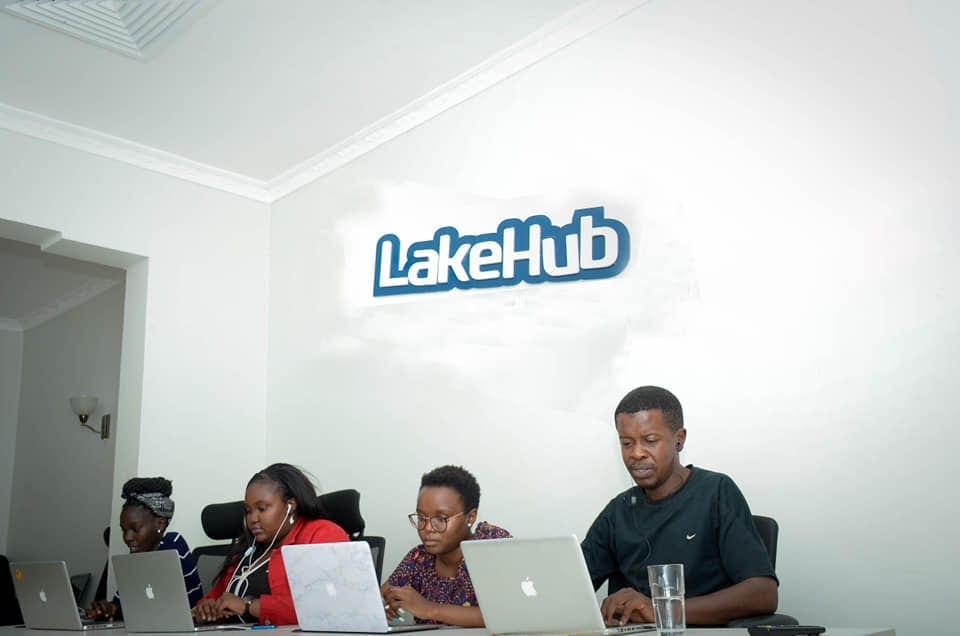
Featured Image: Dorcas Owino, Managing Director, LakeHub
Don’t miss important articles during the week. Subscribe to techbuild.africa weekly digest for updates.