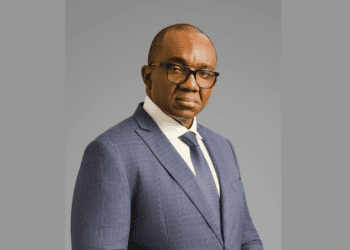



By Gloria Onosode, Director, Enterprise Sales, FairMoney Business
Nigeria is targeting an ambitious $1 trillion economy by 2030. To achieve this, women-led businesses must transition from mere passive observers to primary growth drivers at the heart of the economy, and strategic participants in their respective industries.
According to the National Bureau of Statistics (NBS), the increased ownership rate of MSMEs by women represents a significant contribution to economic growth and job creation.
Digital empowerment for these enterprises must move from being a social responsibility or gender support initiative to contribute to broader economic development.
To reach the $1 trillion GDP milestone, women-led businesses must be positioned to operate at a macroeconomic scale. This requires moving beyond subsistence trading and into the digital value chain.
For instance, a fashion designer in Aba through digital positioning can access broader markets and commercial networks and thereby facilitate better record-keeping and data-driven decision-making, supporting improved financial record keeping, which may be considered in credit assessments by financial institutions.
FairMoney Microfinance Bank (MFB), a bank licensed and regulated by the Central Bank of Nigeria, contributes to the digital transitioning of small businesses in Nigeria, by providing tools specifically designed for the realities of the Nigerian entrepreneur.
For women, whose businesses often fluctuate with seasonal demands or family needs, the ability to protect and grow capital is paramount.
FairMoney MFB offers features that empower women to move from informal ‘under-the-mattress’ savings to digitized interest-bearing savings products.
By embracing digital transition, tech-based saving platforms can enable business owners to set specific goals, such as purchasing new equipment, saving towards business goals in a disciplined manner, while earning interest at applicable rates.
For that business owner who requires immediate liquidity, our flexible savings feature offers interest while allowing for withdrawal access that is subject to applicable terms and conditions to cover emergency restocks.
For longer-term scaling, our fixed-term savings feature allows entrepreneurs to lock away funds for a fixed period and accrue interest based on product terms and subject to terms and conditions.
By automating savings and providing interest at applicable rates, FairMoney MFB is designed to support financial planning and resilience over time for women-led SMEs.
Nigerian women are among the most entrepreneurial globally, consistently defying structural barriers to build enterprises from the ground up.
According to the Small and Medium Enterprise Development Agency of Nigeria (SMEDAN), Nigeria has approximately 39.6 million nano, micro, small, and medium enterprises.
Charles Odii, Director General at SMEDAN in 2024 also recently shared that approximately 72% of these enterprises are now classified as being owned or led by women.
This is a significant jump from previous years, which hovered around 40–43%, largely due to the surge in ‘nano’ and ‘micro’ home-based businesses. These female-led enterprises are the primary engines of job creation and community stability.
Despite this drive, women entrepreneurs face a unique set of structural hurdles that stifle their ability to scale. The ‘financing gap’ remains the most formidable obstacle.
The World Bank IFC Nigeria2Equal initiative reports that while Nigeria has one of the highest female entrepreneurship rates globally, the credit gap for these women is estimated at over 2.9 trillion Naira, forcing them into the ‘savings and family’ funding model.
The case for supporting these businesses extends beyond equity; it is rooted in the ‘multiplier effect’. Research demonstrates that women reinvest up to 90% of their income into their families and communities; specifically in education, healthcare, and nutrition.
Supporting these enterprises is, therefore, a direct investment in Nigeria’s human capital. By bringing these businesses into the formal sector, the accuracy of economic planning will be improved. When a woman-led SME flourishes, the benefits ripple across the entire socioeconomic landscape.
The future of the Nigerian economy is intrinsically tied to the success of its women. When we prioritise women-led businesses, we are not merely fulfilling a gender quota; we can contribute to unlocking economic potential across sectors.
By bridging the digital gap and providing robust financial tools for saving and credit to women-led businesses, Nigeria can begin to support the growth of micro-enterprises over time.
A $1 trillion Nigeria is not just a dream, it represents a significant opportunity that can be progressively realised by the resilient women entrepreneurs of our nation.
Don’t miss important articles during the week. Subscribe to techbuild weekly digest for updates