


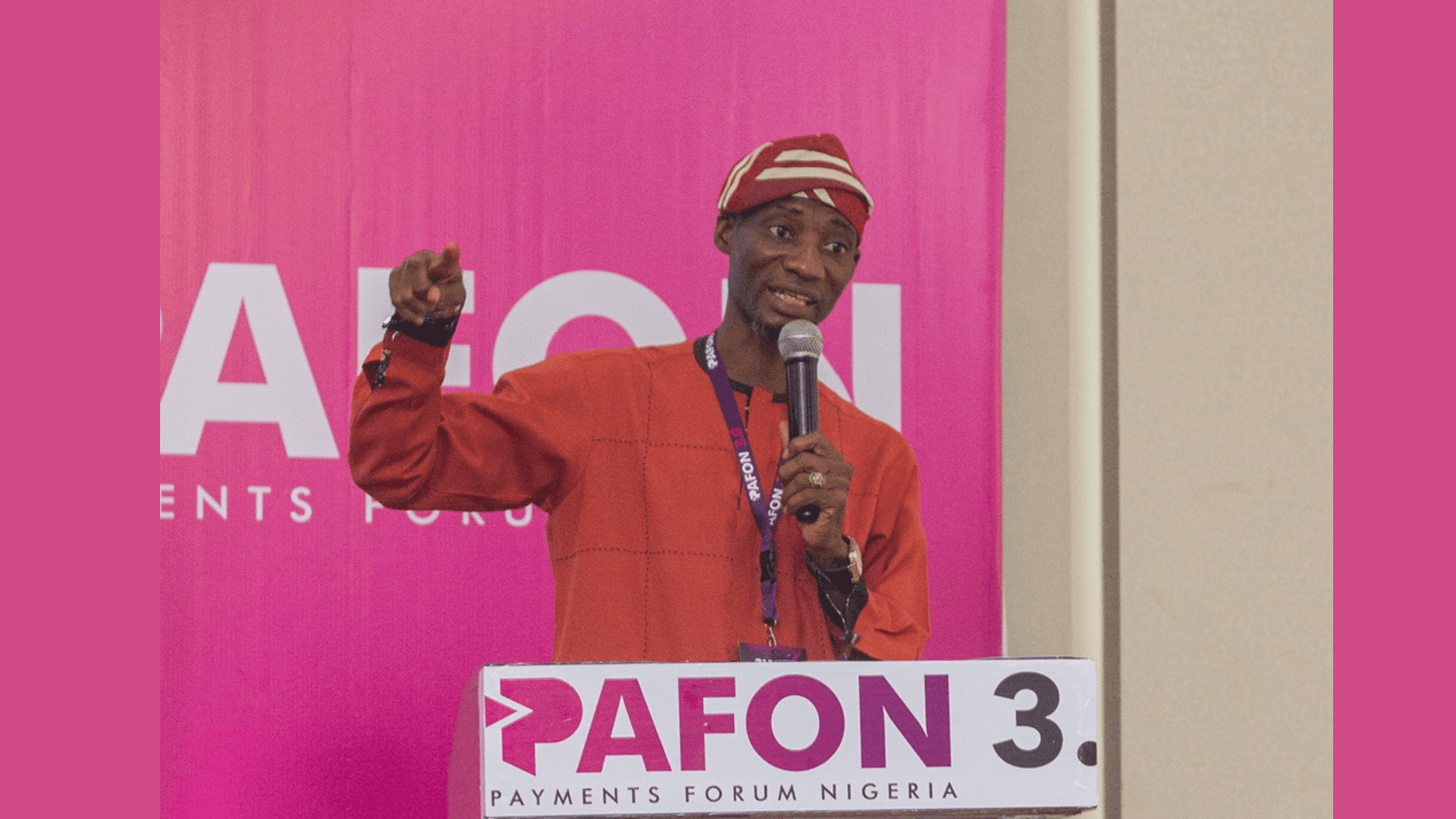
The National President of the Association of Mobile Money and Bank Agents in Nigeria (AMMBAN), Dr. Obioha Oti, has described agency banking as Nigeria’s most critical last-mile channel for achieving meaningful financial inclusion, stressing that millions of Nigerians, particularly in rural and underserved communities, remain financially excluded despite notable progress in the sector.
Speaking at the third edition of the Payments Forum Nigeria (PAFON 3.0), themed “Fair Digital Payments as a Catalyst for Deepening Financial Inclusion in Nigeria,” Oti, represented by Alhaji Yusuf Adeyemo, vice president of the Association of Mobile Money and Bank Agents in Nigeria (AMMBAN), said agency banking has become Nigeria’s most practical and scalable solution for bridging the persistent financial access gap caused by poor infrastructure, low financial literacy, trust deficits, and high service delivery costs.
According to him, without effective last-mile financial access, Nigeria’s financial inclusion ambitions may remain unattainable.
Oti noted that through extensive agent networks, Nigerians now enjoy convenient access to critical financial services including cash deposits, withdrawals, transfers, bill payments, account opening, and other essential banking products, adding that beyond transactional services, agency banking offers trust, human interaction, and proximity-factors that purely digital channels cannot fully replicate.
“Agency banking has emerged as the most practical, scalable, and human-centred solution,” he stated, adding that agents serve as trusted financial intermediaries within local communities.
Highlighting AMMBAN’s contributions, Oti said the association has played a central role in strengthening Nigeria’s financial inclusion ecosystem through policy advocacy, professional training, rural agent expansion, fraud awareness campaigns, consumer protection initiatives, and strategic collaborations involving banks, fintechs, telecom operators, and mobile money providers.
He further noted that the agency banking sector has created millions of jobs and unlocked significant economic opportunities nationwide.
Oti acknowledged the contributions of major ecosystem drivers, including the Central Bank of Nigeria (CBN), which he said continues to provide regulatory support through financial inclusion frameworks, consumer protection policies, and interoperability initiatives.
He also credited the Shared Agent Network Expansion Facilities (SANEF) for accelerating agent expansion across the country, while Enhancing Financial Innovation and Access (EFInA) was recognized for its support through research, innovation funding, and data-driven insights.
Despite these achievements, Oti warned that the sector continues to grapple with significant obstacles such as liquidity shortages, network instability, fraud risks, poor agent profitability, infrastructure deficits, and overlapping regulations.
He stressed that these challenges must be urgently addressed to sustain growth and deepen inclusion. “For inclusion to truly deepen, digital payments must be affordable, reliable, transparent, and accessible to all Nigerians,” he said, insisting that fairness in digital payments is essential to closing the financial inclusion gap.
He warned that unfair pricing structures, unstable systems, and exclusionary payment models could further marginalize vulnerable populations.
Looking ahead, Oti urged stakeholders across the financial ecosystem to prioritize stronger collaboration, improved agent profitability, infrastructure development, enhanced financial literacy, increased financing access for agents, and supportive regulatory frameworks.
He projected that Nigeria’s financial inclusion future will be “phygital,” combining physical agent networks with digital platforms to create seamless financial access.
According to him, agents are rapidly evolving beyond transaction points into community-based financial service hubs capable of driving grassroots economic development. “Agency banking is no longer just a distribution channel; it is the backbone of financial inclusion in Nigeria,” Oti declared.
He reaffirmed AMMBAN’s commitment to working with regulators, financial institutions, and technology providers to strengthen the ecosystem, empower underserved populations, and build a more inclusive national financial system.
Featured Image: Alhaji Yusuf Adeyemo, vice president of the Association of Mobile Money and Bank Agents in Nigeria (AMMBAN), speaking at Payments Forum Nigeria (PAFON 3.0)
Don’t miss important articles during the week. Subscribe to techbuild weekly digest for updates