

Interest in stablecoins has surged to its highest level yet, according to fresh data from Google Trends, pointing to a shift in how the public, particularly in major economies, is engaging with digital finance.
The spike, which reached its peak in July 2025, highlights the growing awareness and curiosity surrounding these digital assets that aim to offer price stability while leveraging blockchain infrastructure.
The United States led global search volume, with Washington state recording the highest activity. Other major contributors included New York, California, and Texas, states that remain central to regulatory conversations and digital finance development.
This increased search volume appears to track closely with ongoing public policy discussions around stablecoins and how they may be used in financial inclusion and cross-border payment systems.
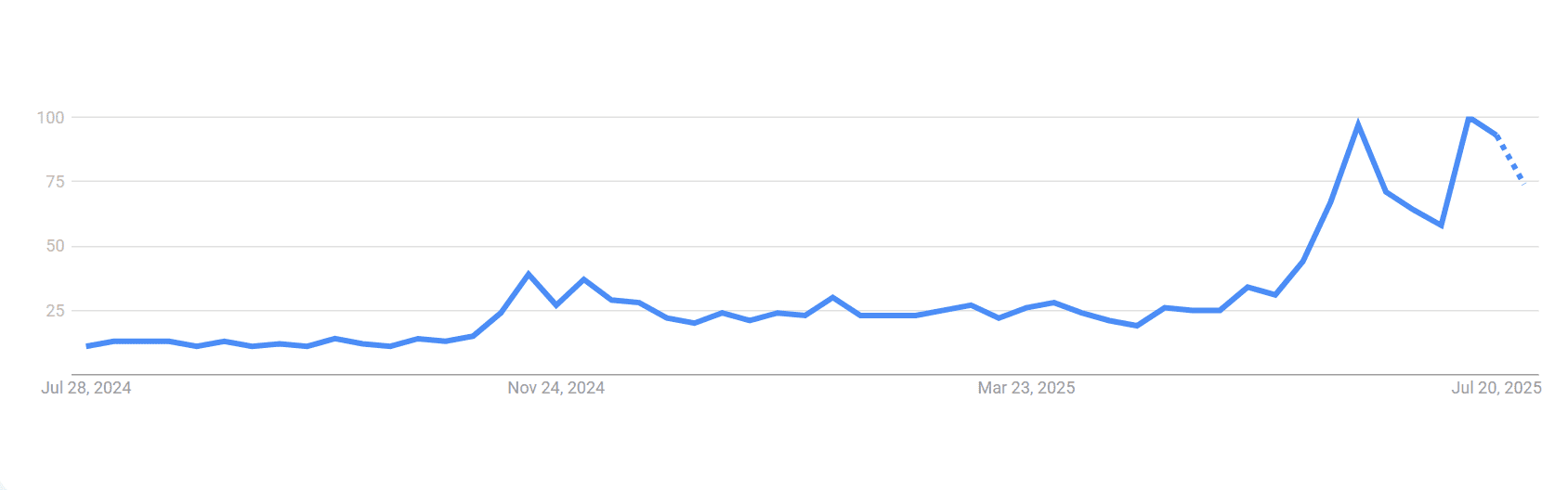
Globally, related search terms like “What is a stablecoin,” “USDT vs USDC,” and “How do stablecoins work” have climbed steadily over the past quarter, showing a wider desire to understand the basics of how these tokens function and differ.
That curiosity isn’t limited to the West. In Nigeria, for example, Abuja ranked among the top 20 cities globally by search interest, underlining the regional relevance of stablecoins in addressing issues like inflation and remittance fees.
This data aligns with broader industry trends. As stablecoins become more embedded in DeFi tools, international transfers, and everyday use cases, more people, especially in markets with limited access to stable currencies, are actively seeking information.
Institutional interest also plays a role in pushing these conversations into the mainstream. Tech companies and financial institutions continue to test use cases for stablecoins, particularly as discussions around central bank digital currencies (CBDCs) and crypto regulation heat up.
What the numbers suggest is clear: people around the world are starting to pay closer attention to how stablecoins might fit into their economic lives, not just as a speculative asset, but as a functional tool in an increasingly digital economy.
Don’t miss important articles during the week. Subscribe to techbuild weekly digest for updates