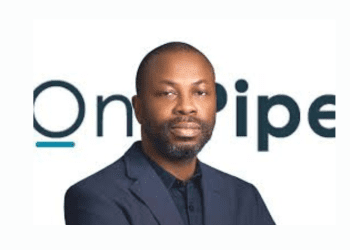



Will Green is a seasoned entrepreneur with over 20 years of experience in Africa’s technology and business space.
He has not only led the growth of profitable businesses but has also cultivated them from humble startups to multi-million-dollar enterprises, showcasing an unparalleled ability to scale rapidly.
With a deep understanding of the industry landscape, Will has crafted groundbreaking business models and go-to-market strategies that have revolutionized sectors like the southern Africa insurance industry, addressing a staggering $2.6 billion customer liability problem.
Will has a unique gift for identifying untapped opportunities and building innovative companies around them, often well before they reach mainstream recognition.
With a passion for venture capital, angel investing, seed funding, private equity, tech accelerators, tech incubation, and entrepreneurship, his journey has inspired and transformed Africa’s entrepreneurial landscape.
In this exclusive chat, we delve into the insights and experiences of Will Green, understanding the limitless possibilities of innovation and growth on the African continent.
Can you tell us about your experience as a tech business and ecosystem builder in Africa over the last 23+ years?
In 2006, I began my ecosystem building in Africa, and I have moved from being a solo entrepreneur to advising businesses and angel investing.
I have been involved in the acceleration space with Grindstone, focusing on ecosystem building and bridging between different ecosystems.
Recently, I had the opportunity of being among the panel of judges who selected 10 companies from South Africa heading to Paris to attend Viva Tech this June.
I truly enjoy building ecosystems and I believe Africa needs more ecosystem builders, and connectors between accelerators, incubators, corporates, universities, VCs, and government agencies.
What motivated you to focus on accelerating access to funding, markets, talent, and global networks for tech founders and their companies in Africa?
The motivation behind my work stems from the entrepreneurs themselves – the individuals who have taken the risk to start these businesses.
Without entrepreneurs, we wouldn’t have an industry, so it’s crucial to empower and support them.
Having experienced the challenges of being a solopreneur, I understand the importance of being available to provide support and guidance.
My goal is to ensure that I can help these individuals make their dreams a reality by offering advice and assistance in executing successful ventures.
Can you share some examples of profitable businesses that you have built from start-up to multi-million dollars in annual turnover rapidly and sustainably?
One of my first ventures was Apurimac, a digital media business focusing on ad sales and media operations for international clients like Sky News, Sky Sports, Yahoo, CNN and WWE.
This was in 2006 when digital media and advertising were still in their infancy. From there, I spawned other ventures, including MediaMind Africa, an ad-serving company, and Co.lab, an advisory and investment business where we incubated a successful InsureTech product called FindBEN, addressing the unclaimed insurance benefits challenges.
I have had failures as well, such as investing in a gaming company despite not enjoying gaming myself.
My lesson here is don’t invest your time and valuable capital in ventures and industries that you don’t like and know much about.
These experiences have taught me valuable lessons and enabled me to provide tangible advice to founders.
How do you approach developing successful business models and go-to-market strategies for start-ups and scale-ups?
When approaching the development of successful business models and go-to-market strategies for start-ups and scale-ups, it is important to manage risk and strive for predictability.
Entrepreneurs, regardless of their location—be it in San Francisco, Soweto, Kampala, Nairobi, or Lagos—face numerous challenges.
Access to markets and paying customers is a major hurdle, along with the need to find product-market fit.
Often, technical founders excel in building the product but struggle with sales due to introversion.
Thus, it is crucial to have the right team in place, with founders who are the right fit for solving the specific problem at hand.
Additionally, entrepreneurship is a long and lonely journey, and it is essential to have a larger purpose that keeps one motivated and persevering through setbacks.
Personally, my aim is to help founders grow by keeping them accountable and connecting them to the best opportunities at the right time.
Can you discuss some of the opportunities you have identified and the companies you have built around them before they became mainstream?
Throughout my career, I have been privileged to work with bright entrepreneurs across various disciplines and industries, learning valuable lessons from each of them.
Timing plays a significant role in identifying and capturing opportunities. However, the success of these opportunities is often determined by raising capital and eventually selling the business.
The presence of IPOs and trade sales indicates a mature and active VC market. Currently, Africa represents only 1% of global VC investment, despite being home to 17% of the global population. There is a significant gap to be filled in VC funding on the continent.
In your opinion, what are some of the key ingredients for success when building and scaling tech companies in Africa?
When it comes to building and scaling tech companies in Africa, several key ingredients contribute to success.
In a recent call with a member of Google for Startups and the Black Founders Fund, we discussed some of the key ingredients that determine founders’ success.
The first is coachability—founders who are self-aware and willing to seek help are more likely to succeed.
Confidence in selling one’s vision to potential investors must be balanced with emotional intelligence and the ability to ask for assistance when needed.
Grit is another crucial characteristic, as challenges present opportunities for entrepreneurs in Africa. Harnessing this resilience is essential.
How do you see the tech ecosystem in Africa evolving in the next 5-10 years?
Looking ahead, I am optimistic about the evolution of the tech ecosystem in Africa over the next 5-10 years.
The population on the continent is projected to double by 2050, resulting in a large and youthful demographic.
Additionally, addressing the cost of data and improving internet access will allow individuals across Africa to build technology based on their location, not limited by affordability.
Rather than countries as a whole, I believe that smaller pockets of excellence, similar to city-states, will emerge as hubs of innovation.
This trend will facilitate quicker scaling by addressing local challenges, such as expensive transportation.
I also believe that, to scale quicker, you need to sort out fragments and ensure that technology is available to people where they are living.
For instance, transportation in Africa is quite expensive. I’m very bullish on Africa, purely because of the challenges we have that in some cases private citizens and entrepreneurs are solving where the government hasn’t contributed much.
Moreover, Africa’s entrepreneurial base is growing, but there is a need for educators, advisors, coaches, and mentors to support the next generation.
Can you share some advice for aspiring tech entrepreneurs looking to build successful businesses in Africa?
For aspiring tech entrepreneurs seeking to build successful businesses in Africa, I offer a few pieces of advice.
Firstly, leverage the power of your cell phone and internet access. It has never been easier to start a business.
Secondly, take a critical look at your media consumption habits. Often, valuable time is wasted on social media when it could be invested in building a business.
In addition, give your newfound business a name. This creates accountability and a social contract to execute your idea. Lastly, always be prepared when meeting with potential investors or advisors.
Tailor your pitch to align with their specific interests and demonstrate your readiness to make the most of their time.
You can’t meet a VC who is clearly interested in agtech when you are a fintech startup, that’s a waste of their time.
Finally, what are your current projects and what are your future plans in the tech space in Africa?
I recently completed Grindstone 10 and 11 as part of the Grindstone team. Over the past three years, I have helped find and scale 75 companies, supporting over 150 founders and providing access to funding and markets.
I remain committed to supporting entrepreneurs and addressing the funding challenges in Africa with the aim to bridge the gap in angel and seed funding, which is currently fragmented and limited.
My goal is to facilitate direct investments from family offices and high-net-worth individuals into the African ecosystem.
Additionally, to collaborate with venture capital firms from outside the continent, serving as a local partner and offering valuable advice.
I am open to exploring new opportunities, with emphasizing the importance of being helpful and working with various stakeholders in the ecosystem.
I believe in accelerating innovation for African economies by facilitating seamless collaborations between startups and corporates.
There is tremendous potential for innovation within corporations, and by understanding their goals and helping them save or make money, technology can play a crucial role in driving efficiency and participation in the evolving innovation economy.
We need to unlock funding opportunities for startups through paid pilots or proofs-of-concept (POCs). By securing an ‘anchor tenant’, a startup can reduce the stress associated with fundraising and ensure they target the right customers and funders.
This is crucial as many early-stage startups tend to give away too much of their equity too early.
I have been working with ABSA Bank and Deloitte to explore ways to unlock these opportunities for startups.
By creating a favorable environment for startups to engage in paid pilots, the chances of securing funding and finding the right customers are significantly enhanced.
In conclusion, my future plans are to continue to connect the right capital and customers with high-growth founders building disruptive innovation from Africa to the World and the World to Africa. Who knows I might even start or join a new venture or fund.
(If you are ever in Cape Town and free on an early Friday morning, reach out to Will to join the weekly group of business leaders, founders, investors and technology ecosystem builders on “Will’s Green Walk” up Lion’s Head, next to the iconic Table Mountain.)
Don’t miss important articles during the week. Subscribe to techbuild weekly digest for updates.