

Over the past few years, databases have become incredibly popular across all industries. This is partly because of their capacity for data storage, interactivity, and analysis and nearly infinite scalability.
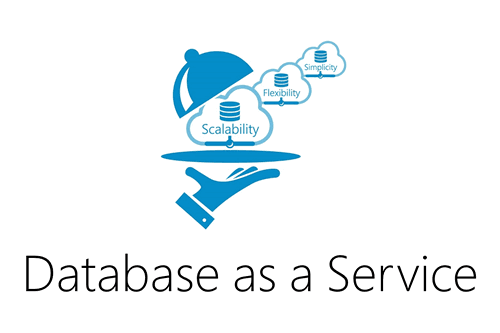
A database can be used by businesses without installing physical hardware, thanks to the cloud computing service known as “Database-as-a-Service” (DBaaS). With this service, businesses no longer need to spend a fortune on hiring expensive staff to handle their data.
Additionally, users are not required to set up software or engage personnel to maintain the underlying technology.
With one-click operations, DBaaS streamlines database management reduces time-consuming procedures and provides flexibility for quicker software development.
Continue reading to find out more.
You recall that the database server is a component of the on-premises computing infrastructure in a conventional setup. The database needs to be installed, managed, protected, and scaled by local employees.
The supplier handles the hardware and offers the database as a private cloud service with a database as a service (DBaaS), however, this is a subscription-based service.
The high-level database administration (DBA) activities are handled by the service provider.
Benefits of Database as a Service
There are a ton of advantages to using a database as a service, aside from helping your business save money.
It is costly to install infrastructure for database management, and it is frequently wasteful to scale it as required.
With DBaaS, there is no need to buy extra capacity to have on hand for speculative future demands because your firm only pays a predictable quarterly price based on the resources you use.
Additionally, if you require it, you can swiftly and easily add more storage and computing power during use, and you may scale down your database cluster to reduce costs when demand is low.
Not only that, but you also need an internal administrative team if you want to handle and maintain a database locally.
With DBaaS, however, the cloud provider is in charge of everything. However, if you like, you might decide to handle some parts yourself.
DBaaS relieves your present IT personnel of some of the administrative duties, allowing them to focus on developing new apps and innovating.
Talk about a shorter time to market and fast development. Development teams often have to ask for access to on-premises database systems from IT, which can take days or weeks.
In contrast, with a database as a service (DBaaS), developers can quickly start spinning and set up a prepared database to be integrated with their application.
Cloud database providers often provide enterprise-grade security, including options like built-in identity and access management controls and data encryption by default for both data at rest and in transit. Some additionally adhere to particular regulatory compliance requirements.
Data risks are avoided by companies, thus database as a service can lower them. Major cloud providers’ DBaaS products often come with a service-level agreement (SLA) that promises a specific uptime level.
You will be paid for any excessive downtime you incur in the unusual event that your supplier doesn’t adhere to the SLA’s criteria.
You will not be concerned about sifting through dozens of various databases because the big cloud providers provide a vast range of highly flexible DBaaS solutions.
Finding the ideal database as a service provider for your business can be challenging, but don’t be alarmed; all it takes is figuring out which database technologies would perform effectively for your application and making sure your provider offers those technologies.
Since there is no one-size-fits-all DBaaS that is ideal for usage with all of your apps, the first half of the procedure can be complicated. There will always be trade-offs, perhaps subtle ones, but once they are made, your business is good to go.
Don’t miss important articles during the week. Subscribe to techbuild.africa weekly digest for updates