



The world is pushing towards the use of digital currencies, however, it appears that business merchants from emerging markets might be left out of this conversation because cash-based transactions worth millions of dollars are actually not tracked and this process goes on offline.
For the emerging markets not to be left out of the equation, it appears necessary to have a platform that can execute an end-to-end crowd-sourcing process to help map and offer retail insights across these markets in the world.
This challenge led to the creation of POKET, a consumer-facing mobile app for crowdsourcing points of interest, paired with an enterprise portal for retail insights and analytics.
In light of this Techbuild.africa took a time out with one of the Co-founders of POKET, James Abasifreke, who took us through how the crowdsourcing app is redefining life for local businesses in the emerging markets
The journey
POKET solution was founded by James Abasifreke and Kamil Shafiq alongside Naba Siddiqui. Both James and Shafiq were students in Canadian higher institutions when they met each other on a trip to Israel to study the country’s startup scene back in 2015.

Kamil, who was a student at Schulich School of Business, Canada said the trip gave the founders an interesting outlook of the various opportunities found around emerging markets in the scene of startups and entrepreneurship.
“If there’s something Israel really nailed into us, it’s understanding the need you’re trying to solve and why you’re choosing to solve that need (before) building a startup.”, James added about the 2013 trip to Israel.
James, a software engineering student at the Lassonde School of Engineering, upon graduation worked with a software company, building projects for them, while Kamil found his way to a telecoms company, still within Canada.
The duo realised that their jobs weren’t giving them the level of life’s fulfillment they sought via social impact.
Despite finding satisfaction from building solutions for big companies, they still felt that hunger to do more for the general public which they believed were yearning for more
“So we decided to go ahead and do something that will impact the emerging market”, James explained
As early adopters of cryptocurrency, the founders came up with the idea of exploring mobile money.
“We were looking at the promises of blockchain, I was looking at it more from the layer of technology and how it could disrupt a country like Nigeria in payments, banking, politics and the likes using cryptocurrency at the back-end while using fiat currency at the front end”, James stated
While this project was ongoing, the duo stumbled upon a bigger societal need. According to the founders, there are an estimated 1 billion informal merchants in the emerging markets and these businesses have no identity in addition to people themselves not having their own identities.
“So due to this lack of identity, we decided to take a step by creating an online identity using the technology we have been exposed to in Canada, bringing merchants online in our countries”,
James noted that in China, Alibaba and other e-commerce platforms are giving businesses online platforms to flourish and that is what POKET does.
“To finance this, we would create a value proposition for businesses that need data like FMCG companies
“By bringing all these merchants online through crowdsourcing, we were able to create the data set for companies willing to pay us the money”
“Unemployment rate in Nigeria has grown by double figures, so we wanted to create an economy that people will make money by bringing businesses online,” James stressed
Exploring emerging markets
With the diverse background of the co-founders, James coming from a software company (blockchain-based), kamil from telecoms, and Naba from a financial background, the trio appeared to have the grits to solve these challenges.
“We all worked for good-paying companies, nevertheless we realised that wasn’t our purpose. Our passion and goal is to bring changes to the market that we grew up in.” James noted
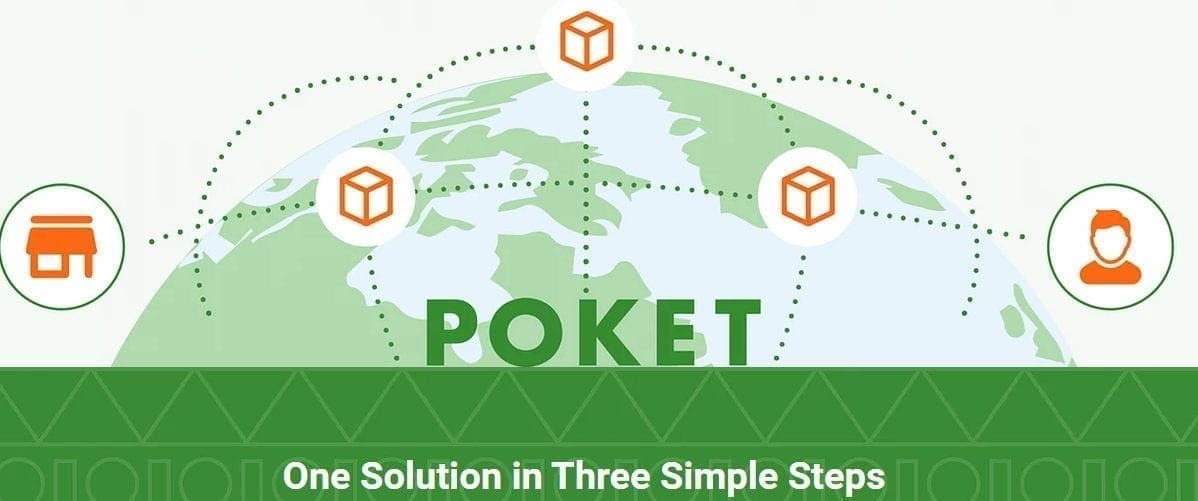
In three steps, the POKET app helps businesses find their requirements
Step 1
The app spells out insights and mapping/data collection required. Insights including GIS mapping, retail insights, field data collection/monitoring, new market entry, etc. across industries like CPG/FMCG, logistics, e-commerce, impact/research, city-planning.
Step 2
The app will help users build out the right forms and activate/manage mappers wherever their area of focus is. Using AI and proprietary tools to verify and clean all incoming data so users don’t have to bother.
Step 3
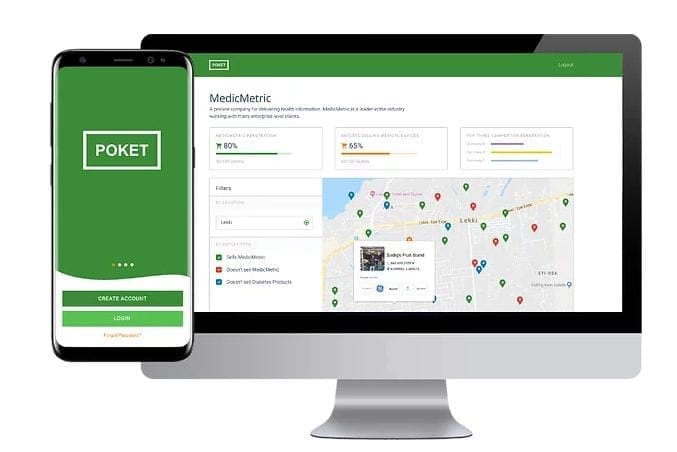
The POKET app has a custom dashboard for users to visualize, filter, and monitor all the data collected, in real-time.
Benefits of POKET to users
The POKET App isn’t specifically designed for merchants, however, its outcomes have benefits for them. Merchants don’t use or earn from the app, but they gain market visibility.
“This is the kind of readiness we want merchants to experience in Nigeria, where everyone can get the best around.
“We are trying to make merchants more efficient, visible, and get promoted in the digital space. With an online identity, they can be accessed anywhere in the world.” James added
POKET for the future
POKET plans to partner Fintech companies while bringing new ways of payments to merchants.
According to the founders, making tools equitable and easily accessible to everyone so they can participate in the modern financial system like getting credit loans, save properly, irrespective of their physical identity, borrow, invest and access financial services.
POKET plans expanding to Uganda, Bangladesh, Mexico, and Indonesia eventually.
In 2019, POKET app emerged as one of the 8 global social impact startups that had community-driven solutions at the United Nations General Assembly.
Featured Image: James Abasifreke, Co-founder, POKET
Don’t miss important articles during the week. Subscribe to techbuild.africa weekly digest for updates.