

The outbreak of the Covid-19 pandemic occasioned a new phenomenon in the global space. In Africa, as is the case in other parts of the world, the concept of remote work has come to stay.
How can businesses adjust to this new normal, and what are the benefits to be gained?
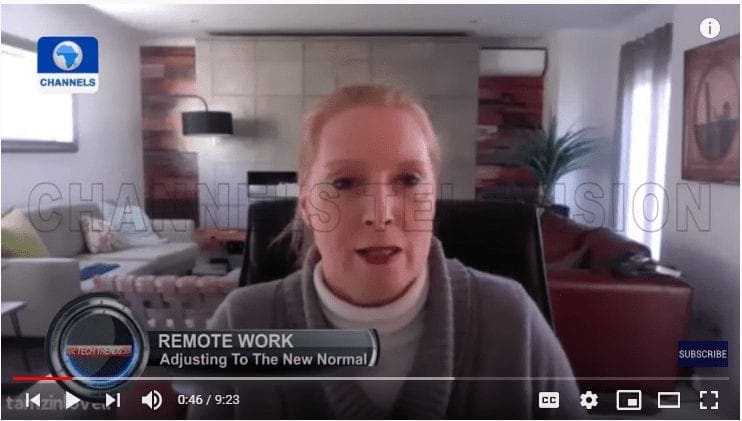
I, recently, had a chat with Tamzin Lovell-Miller, Founder, Artfundi, a digital art management software company that establishes a new way of working for galleries, collectors, and artists, enabling them to manage their inventory easily, enjoyably, and affordably.
On Tech Trends, a show on Channels Television, she gave insights on how businesses can adjust and make the best out of remote work, especially in today’s digital world.
CFA: Tamzin, thanks for being on the show today.
Tamzin: It’s my pleasure to be here. Thank you for inviting me.
CFA: Awesome. Do you think the world was ready for Covid, as it were?
Tamzin: Certainly not! In some industries more than others, but it certainly took everybody by surprise. The industry that I’m in on the one hand. One part of the industry that I work with, which is technology, obviously we’re ready.
We were already working on it. It hasn’t been much of an adjustment, but for all of our customers, huge adjustments. Our customers are in the art world, they’re art businesses.
They are used to people coming through their doors to see exhibits, art fairs. It was a huge shocker for all of my customers which obviously had a huge impact on us.
In terms of the way that we’ve been working right from the beginning, which is two and a half years now, we had a choice to go and get office space in Capetown and get into traffic while going to work.
I made the decision not to do that, but that we would all work remotely. So we were already luckily set up that way so we all had our home offices.
CFA: Okay. So let me ask you. Why did you decide to move your team to a work from home kind of setting? What led to that decision?
Tamzin: There were a few reasons. Firstly, I didn’t want to constrain my business to a geographic pool of talent. The tech that we’re developing is a global tech so that we can sell it anywhere.
That would mean that as we grow, we would need to have people in different geographies, speaking different languages.
So the team will anyway expand, to where it can’t be coming to the office. Geographic talent was one thing.
If you work from home, you can hire resources. Albeit, you’re not hiring resources that can get into the car and come to your office, you’re hiring resources that can do the job and they may live somewhere else and still deliver.
The type of work that we do, I wanted that level of talent to be accessible to the business.
CFA: Interesting. So I obviously think that there would have been a lot of benefits. So, explain it to us. What are the benefits you’ve seen by this singular move in your business?
Tamzin: There’s a benefit in terms of lifestyle. If you’re not spending an hour in the morning getting to work and an hour in the afternoon getting home from work, you could spend that time doing something else.
You can watch the full interview here.