


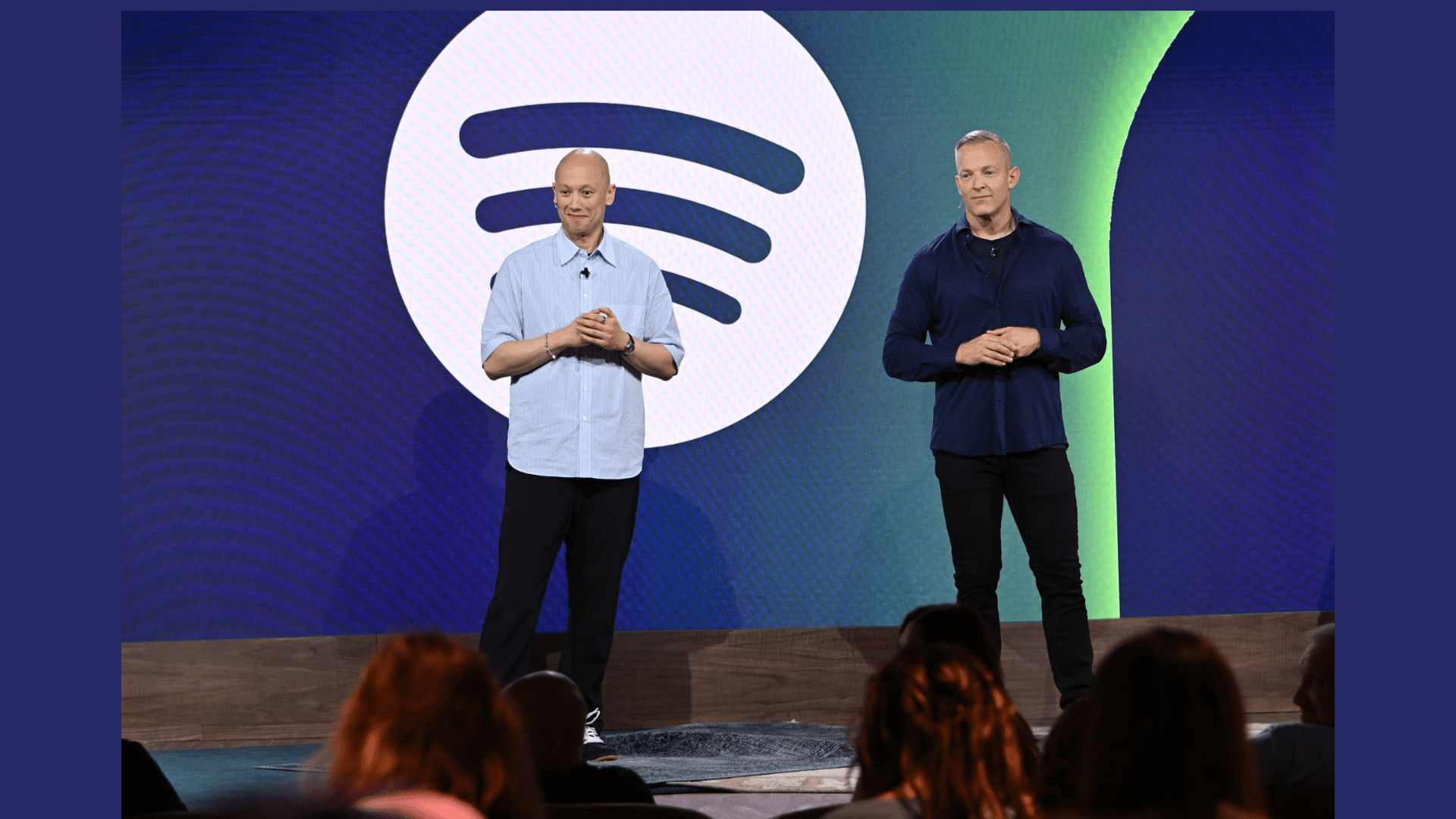
If you still think of Spotify as just a place to stream your favorite playlists, think again. At its 2026 Investor Day, the company dropped a massive hint about its future, making it clear they are officially moving past the “music app” label. Instead, Spotify is aiming for something much bigger: an all-in-one media and AI powerhouse fueled by hyper-personalization, creator tools, and your unique taste.
At the center of that strategy is what Spotify calls its “Large Taste Model,” an AI system trained on billions of user interactions across music, podcasts, and audiobooks.
The company says it now processes roughly 3.4 trillion daily taste signals, data it wants to use to push listeners beyond passive consumption and toward more interactive experiences.
The shift is already showing up in product announcements. Spotify introduced AI-generated “Personal Podcasts,” audio programs built around user prompts and listening habits.
It also previewed fitness-guided sessions that automatically adapt music tempo and coaching cues to match a workout pace. Another upcoming feature, called “Reserved,” will allow top fans to access concert tickets before public sale through partnerships tied to artist engagement data.
Podcasting remains a major part of the company’s expansion plan, though Spotify now wants podcasts to behave more like interactive software than static audio files.
Premium users in select markets can already ask questions about podcast episodes in real time while listening. The company is also introducing paid podcast memberships aimed at helping creators build recurring revenue streams directly inside Spotify’s ecosystem.
Audiobooks are getting similar treatment. Spotify said its audiobook catalog has grown to more than 700,000 titles across 22 markets, and the company plans to expand audiobook subscription tiers later this year.
The less flashy part of the presentation may matter more financially. Spotify spent considerable time discussing its rebuilt advertising infrastructure, which the company says is now driving stronger advertiser growth and improved monetization.
Executives said active advertisers rose 68% year over year, while biddable ad channels now account for more than a third of ad revenue.
What stood out was how aggressively Spotify framed AI as part of the listening experience itself rather than a background recommendation engine.
For years, streaming companies competed on catalog size and distribution. Spotify now appears to think the next phase depends on whether platforms can make media more adaptive, conversational, and personalized.
That creates a different kind of competition because Spotify is no longer positioning itself only against music streaming services. It is edging toward territory occupied by AI assistants, creator platforms, live entertainment networks, and digital media companies all at once.
Don’t miss important articles during the week. Subscribe to techbuild weekly digest for updates