

With AI transforming nearly every industry, journalists, academia and industry experts in Nigeria met to ask a vital question: how can the technology help build a stronger, more transparent media space that upholds democracy?
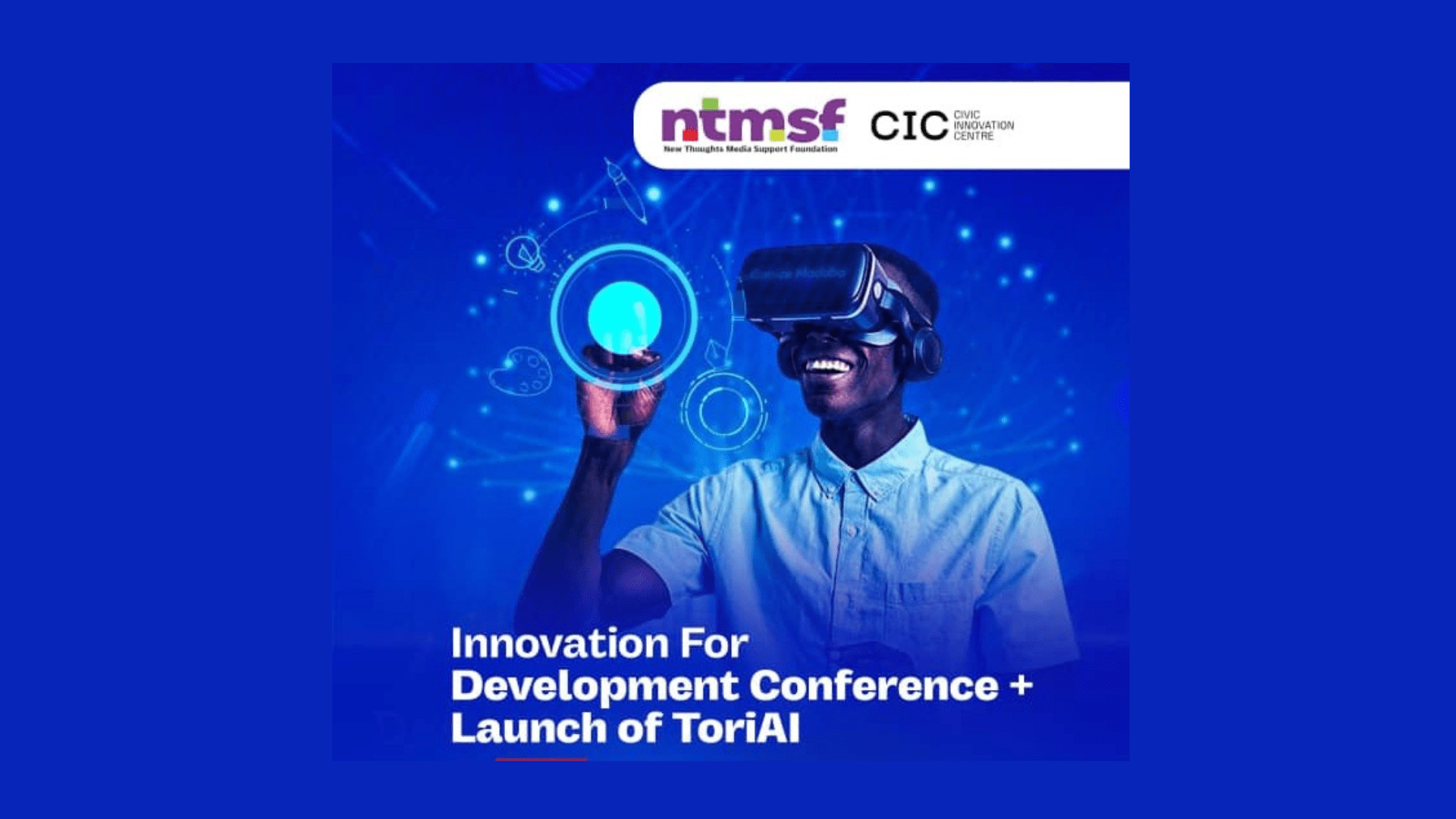
This is why the New Thoughts Media Support Foundation (NTMSF) convened the Innovation for Development Conference and the unveiling of ToriAI today at the BON Hotel GRA, Ikeja, in Lagos.
The event, themed “Unlocking Nigeria’s AI Potentials for Media Sustainability and Democracy,” spotlighted the growing role of AI in combating misinformation, improving newsroom efficiency, and empowering journalists with data-driven tools to support accountability in news delivery.
Delivering the keynote address, Mr Dapo Olorunyomi, the founder of the Centre for Journalism Innovation and Development (CJID), ably represented by Mr Monsur Hussein, Innovation Lead at CJID, called for ethical, inclusive, and purpose-driven use of Artificial Intelligence (AI) to safeguard democracy and strengthen media sustainability in Africa.
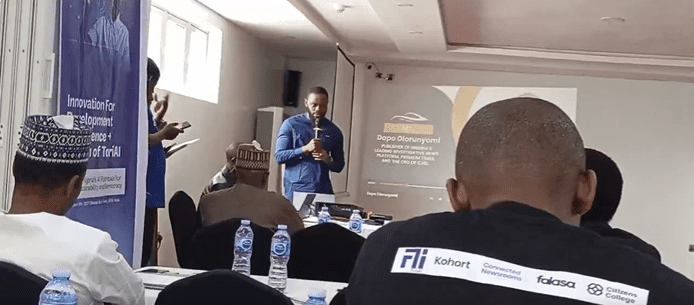
He highlighted that technological revolutions throughout history have always carried both promise and peril, and Africa must deliberately shape AI’s trajectory to ensure it serves the public good.
“The survival of democracy depends not only on strong institutions and civic will, but also on innovation, knowledge and imagination. “We must ask ourselves: will this transformation strengthen democracy or subvert it?”, Olorunyomi noted.
On AI’s double role in journalism, the CIJD founder added that AI is already transforming newsrooms worldwide, from transcribing interviews and detecting deepfakes to analyzing vast datasets and generating stories.
While these tools increase efficiency, they also raise ethical and democratic questions about control over information and judgment.
“The real danger is not that AI will replace journalists, but that it might replace judgment,” he warned. “Truth itself could become mechanized, stripped of nuance, divorced from ethics and devoid of empathy.”
He emphasized that the question is no longer whether AI will change journalism, but “in whose image that change will occur.”
While advocating for efficiency and innovation in newsrooms, Olorunyomi emphasized that these must not come at the expense of truth.
According to him, “Efficiency should not come at the expense of truth. Innovation without purpose is vanity,”
He emphasized that personalization algorithms, if unchecked, could lead to polarization by feeding audiences only what they like rather than what they need to know.
“If AI becomes a tool only for profit, it will deepen inequality,” he said. “But if we shape it as a tool for justice, accountability and inclusion, it can become democracy’s greatest ally.”
The highlight of the event was the official launch of ToriAI, an innovative tool designed to help Nigerian newsrooms harness the transformative power of artificial intelligence.
The flagship product by NTMSF, Tori Storycards, empowers small and mid-sized newsrooms to extend the reach of their journalism by automatically transforming a single 400-word story into multiple formats, including local languages and platform-specific social media versions.
This, according to the NTMSF, enables newsrooms to grow new audiences, deepen community engagement, and unlock fresh revenue streams with the same core story.
Specifically designed for Nigerian newsrooms, ToriAI brings intelligent tools built to help media teams get more value out of their content, faster and across more platforms.
One highlight is text-to-audio summaries, which turn long-form articles into short, engaging audio clips that people can listen to anywhere.
For publishers, it’s a simple way to reach more audiences, especially in places where on-the-go audio is quickly becoming the preferred way to stay informed.
Then there’s text-to-video summaries, a feature that reimagines written stories as dynamic videos ready for visual platforms. It’s a bridge between traditional reporting and the visual storytelling that modern audiences crave.
Tori AI also powers AI-generated audio newsletters, transforming written updates into broadcast-quality audio designed for WhatsApp, Telegram, and streaming services.
For many Nigerian newsrooms, this means their stories can travel directly to where audiences already are, on their phones and in their chats.
And because Nigeria speaks in many voices, Tori AI includes multilingual translation for Yoruba, Hausa, Igbo, Pidgin, Tiv, and Kanuri. It’s a thoughtful step toward inclusion, making sure language never becomes a barrier to information.
The platform integrates smoothly with newsroom systems through CMS Integration, automating the creation of summaries, audio, and video in real time.
Add to that its monetization tools, which make it easy to include ads or branded messages, and you’ve got a solution that doesn’t just create content, but creates opportunity.
Experts at the event also shared their diverse perspectives on the potential of AI for media sustainability and democracy through different panel sessions.
The first panel session, moderated by Habeeb Oladapo, discussed “AI Adoption in Nigeria-Postdoctoral fellowship” with Dr Aderonke Lawal, Dr Kayode Odeyemi, and Dr Jubril Abdullahi.
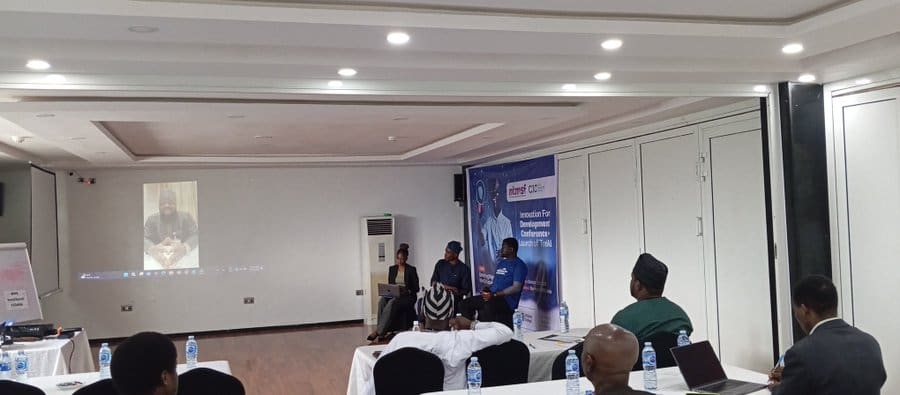
Dr Aderonke Lawal, a lecturer with a speciality in computer science and engineering, kicked off the session with a poser around the general adoption of the technology and the challenges with it.
While she admitted that in this part of the world, we have enthusiastically embraced AI in the surface level of adoption, we are still plagued with constraints, including an infrastructure gap, limited AI literacy, data underrepresentation and industry regulation.
In the same vein, Dr Kayode Odeyemi, also a lecturer, while acknowdeing the country’s adoption, emphasized the necessity for localization of AI models such that there would be a balance with the cultural and innovative nuance peculiar to Nigeria.
The overall discussion centered on the need for not only advanced AI knowledge but also localizing innovations addressing national challenges.
The second panel session discussed “The AI Ecosystem in Nigeria: The Knowledge Gap & Raising the Next Generation of AI Experts” with Prof. Abiodun Musa Aibinu, Prof. Suleiman Yar’Adua, and Dr Olusola Ayoola. Dr Aderonke Lawal moderated the panel.
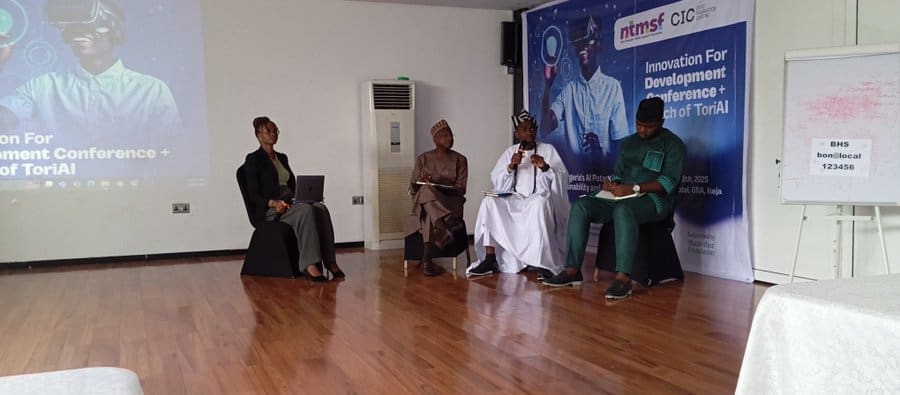
Professor Musa Aibinu, a development communication expert, highlighted the importance of embedding cultural values into AI systems to make them relevant and sustainable within Nigeria.
“For AI to work for us, it must be designed within our political structures, cultural values, and societal norms,” he said. “Unless technology reflects who we are, it cannot truly serve us.”
Professor Suleiman Yar’adua, a communication scholar and university administrator, emphasized that Nigeria’s AI ecosystem can only thrive through structured collaboration between four key stakeholders: academia, industry, government, and the community.
“The ecosystem requires a quadruple helix, academia, industry, government, and society, working together,” he said. “If any part of this structure is weak, the entire system suffers.”
Dr Olusola Ayoola, founder of RAIN Robotics and a leading figure in Nigeria’s AI sector, reflected on his decision to return to the country six years ago to help bridge the gap between academic training and industry needs.
“I came back to Nigeria for a particular reason, to bridge the knowledge gap between what universities produce and what the industry requires,” Ayoola said. “If we are not careful, we will end up training more people who can only use imported AI tools, without developing the capacity to compete globally.”
The last panel session highlighted AI Adoption: Lessons from The Newsrooms” with Tajudeen Sulaiman, Ajibola Amzat and Mojeed Alabi. Monsuroh Abdulsemiu moderated the session.
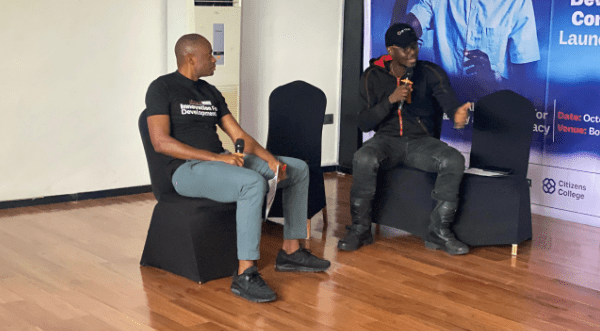
Towards the end of the event, Lanre Ogunkunle, a technology entrepreneur, had a fireside chat focusing on “Ethical Issues, Infrastructural Impediments and Opportunities around AI (and tech) adoption (for media sustainability and democracy) in Nigeria.”
Aside from the launch of ToriAI, NTMSF also unveiled Citizens College, Connected Newsrooms, Kohort and Falasa.
Don’t miss important articles during the week. Subscribe to techbuild weekly digest for updates