


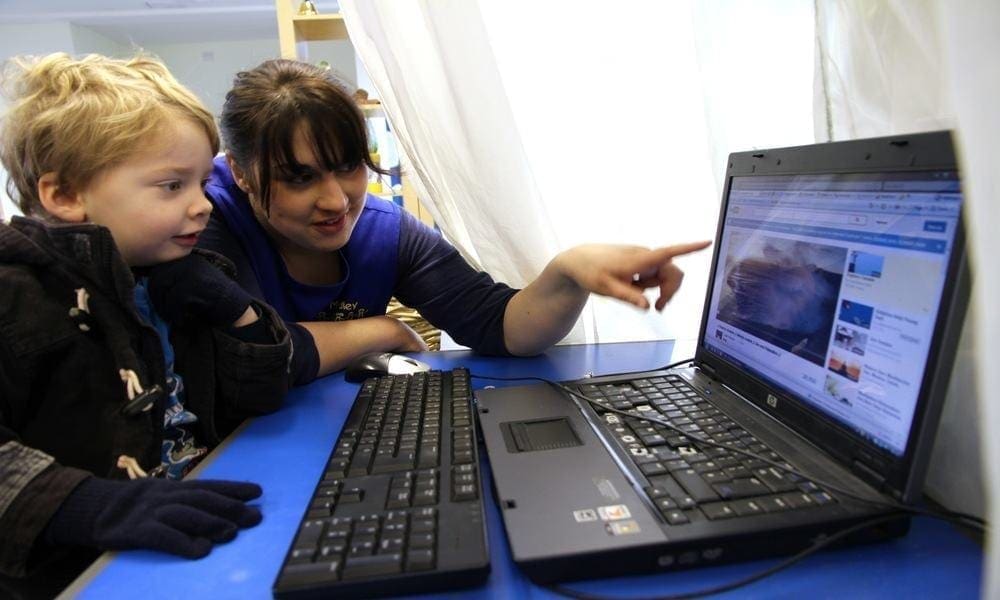
Parenting comes with a lot of headaches. From the moment you take the decision to allow your child own a smartphone or other smart device, a whole source of worry develops. This is because despite the many benefits that comes with exposure to the internet, your child also needs to be protected from the inherent dangers and pitfalls of the notorious web.
The following tips from the Research and Development of Yudala, Nigeria’s fastest growing e-commerce outfit, will help keep your child safe on the internet.
- Comply with age restrictions for social media use: With the growing number of social media sites available, most parents have a hard time keeping tabs on the ones their children use. It must, however, be stated that there are age restrictions for various social networks and blogs as a protective measure for kids. This is especially because some of these sites can have serious negative effects on children. These include exposing them to nudity, cyber-bullying, inappropriate content or grooming. Interestingly this fact is lost on many parents, with statistics showing that some parents don’t know if their children are old enough to use social networks like Facebook, Instagram or Snapchat. One of the ways of keeping your child safe on the internet is to monitor and ensure that they are old enough for the various social networks they use and also, that you do not give in to the temptation of allowing them have accounts when they are not old enough.
For the avoidance of doubts, your child must be at least 16 or older to use WhatsApp; 18 or older to use YouTube, Flickr, Keek (or 13 with parent’s permission), while the likes of Twitter, Facebook, Snapchat, Instagram, Reddit, Tumblr, Google+, Pinterest require that your child is at least 13 years old. - Beware of Cyber-bullying: It is important to educate your child on the pervasive problem of cyber-bullying and its often tragic effects on victims. Owing to the increasingly technology-mediated world we live in, the scope of bullying has extended from physical interactions in schools and playgrounds among students to the internet. Cyberbullying refers to the use of electronic communication to bully a person, typically by sending messages of an intimidating or threatening nature. These include posting rumors about a person, threats, sexual remarks, disclosing one’s personal information or hate speech. Research has shown a consistently strong link between bullying and suicide, as seen in recent bullying-related suicides in the United States and other countries, with global attention drawn to the potentially damaging effects of the scourge following a string of high-profile cases. The threat of cyber-bullying is real and children must be taught to immediately report mean or insulting messages when they come across these online. Furthermore, lines of communication must be kept open to ensure your child knows that he/she must talk to a teacher or parent whenever something happens online that makes him/her feel uncomfortable.
- Don’t give out personal information online: Children are often impressionable especially up to their teens. This makes them vulnerable to unscrupulous elements in cyber-space looking to take advantage of their naivety and trusting nature. A recent survey of 1,300 parents and 900 children conducted by renowned tablet maker LeapFrog revealed that children as young as five are sharing personal information online with people they don’t know in real life, with over half (56 per cent) of the children polled admit to sharing key personal information online, putting themselves at risk of illegal activity or abuse such as bullying, fraud or cyber predators. The survey further showed that about 41 per cent of children have shared their full name with strangers online and another 38 per cent have sent photographs of themselves. It is important for your child to know that personal information must not be given out to strangers without the permission of a parent. Personal information includes sensitive data such as passwords, home address, last name, photographs, school name, telephone number, credit/debit card information, etc. These could be used maliciously by a cyber-criminal to potentially costly effects.
- Exercise caution with online friends: Cyber-friendship is a concept that has been taken to far-reaching levels owing to the popularity of social media networks such as Facebook, among others. It is much easier to make friends on the internet as the anonymity of the web and the virtual space it creates gives teenagers and other young users a false sense of security. This has often resulted in regrettable consequences for some exposed kids through avoidable encounters with sexual offenders, cyber-bullies, child predators and cyber-fraudsters. Research from the Polly Klaas Foundation has it that about 54% of children sampled admitted to frequently having private conversations with online strangers or ‘friends’ through instant messaging. To ensure your child remains safe online, it must be emphasized that extreme caution must be exercised when making friends online or accepting friendship requests on social media. Also, physical meeting with an online friend must not be considered without the permission of a parent.
- Safe Downloads: With ransomware and hacking taking on global ramifications, (examples include the recent WannaCry and Petya attacks which affected computers in over 150 countries), it is important for kids for understand the need to seek permission before downloading or installing software on their laptops, tablets, smartphones or other devices. If left unguided, unsuspecting children may be lured into opening suspicious links or downloading malicious software that may compromise the entire family’s privacy or sensitive information. The same level of caution should apply when your child is using a shared resource such as a desktop or laptop computer in school or a cyber-café.