
Many years ago, the defunct Bank PHB’s advert predicted that one day, cars would run on water. Today, we are beginning to feel the glimpse of the manifestation. Cars are not operating on waters, but new technology is assisting cars to run on either sugarcane ethanol or biofuel. These are organic and digestible waste and not necessarily oil.
The rationale behind the tale is that there is future in technology and earlier developing nations like Nigeria start harnessing it, the better it becomes. There is a significant level of technological improvement in Nigeria, no doubt.
Over the years, Nigeria has over-dependent on oil as revenue and several attempts by previous and current administrations to chart another way to increase the Gross Domestic Product (GDP) of the country is being met with impediments.
However, considering the global ICT trend, Information and Communication Technology (ICT) and the knowledge economy will make oil insignificant in next few years, according to analysts.
The Nigerian Communications Commission (NCC) reports over $35b in the nation’s telecommunications industry from Foreign Direct Investment.
Stakeholders in the ICT industry believe that, though Nigeria is currently the fastest growing telecoms market in the world if she didn’t brace up to happenings around her, the fate of the dinosaur might await her.
Suggested Read: Blackberry Fall: How Does it Affect Nigerian Smartphone Market?
Experts’ Views
“As Nigeria strives to lessen its dependency on oil, is critical to invest and support the FG’s initiatives to cultivate and develop the ICT ecosystem. And broaden the composition of economic drivers within the country. The ICT sector has the unique capability to revolutionize a country and create innovation in areas previously undiscovered. The introduction of mobile phone technology to Nigeria is a classic example of the massive shift. We can instigate this in an economy”, says Eghosa Omoigui, Founder and Managing General Partner, EchoVC Partners.
In his words, Lanre Ajayi, President of the Association of Telecommunications Companies of Nigeria (ATCON), echoes that with appropriate government policies. Things could change, and as a matter of urgency, the government should deregulate the oil and gas sector.

“With deregulation, the miracle in the telecoms sector will be duplicated in the oil and gas industry. If the sector is deregulated, Nigerians can fix their prices, and the country will be better for it.”
Meanwhile, Emmanuel Ekuwem, Managing Director, Telecom Group believes that there can’t be innovation without knowledge. Nigeria needs to re-engineer its education system, and a situation where there is 70 per cent against 30 per cent science students is not acceptable. There should need to train our children in mathematics and another 15 to 20 years, Nigeria begins to benefit.
‘Nigeria has huge potentials and great talents but lamented that Nigerians don’t patronize themselves but believe more in expatriate, which shouldn’t be, he notes.”
According to Dayo Adefila, Co-Founder, and CEO, Hot sauce Ltd, there was a need for the implementation of science and technology across the board as this would be a good alternative to oil.
“There is an incredible growth in e-commerce, which is an element of adaptation and being able to do something differently. We can’t wait for the government all the time. We need to use ICT tools to turn around the economy for good,” he says.
Small and Medium Enterprises (SMEs) should be given the opportunity to showcase what they are doing, saying, “Policy is derived from valid information, and there is the need for data to be taken quite seriously, analyze and plan.” Says Sunday Afolayan, President, Nigeria Internet Registration Association (NIRA).
However, several reports have it that Nigerians are some of the cleverest and hardworking entrepreneurs we in a word. Lots of tech start-ups with innovative ideas keep springing up.
Technology Startups
At the recently concluded GITEX Technology Week held in UAE capital, Dubai. The National Information Technology Development Agency (NITDA) sponsored 16 Nigerian tech startups that represented Nigeria at the event.
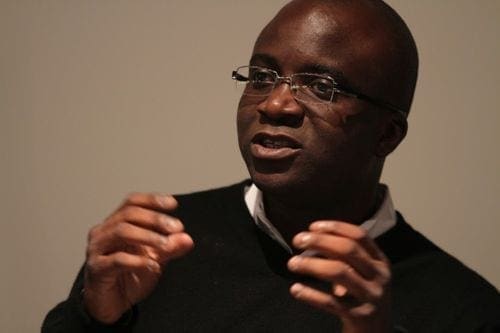
“They want to create a brighter future for themselves and generations to come. Technology can help them do just that. We have also seen that the very best time to invest in high-quality ICT entrepreneurs is in the context of fear and uncertainty.
We are very committed to seeing this happen in Nigeria. For now, what we see is a mismatch of conviction between entrepreneurs and investors. We share the same levels of confidence that our local entrepreneurs have, and are here to stay. Make no mistake; we are not in the business of giving grants.” says Eghosa
Although, access to funding is one of the greatest challenges of most tech start-ups in Nigeria. Meanwhile, as an investor what do you look out for before committing your funds? Most investor loses confidence in some of the startups. This, in the long run, exacerbates the situation.
According to Eghosa Omoigui who owns a seed and early stage venture capital firm in Silicon Valley. He explains that their model is designed to invest in successful companies that can generate positive returns to our investors, the company founders and employees and the ecosystem at large.
“We look for entrepreneurs that share similar characteristics to entrepreneurs we have seen grow successful businesses in the US and other markets. They tend to share a similar DNA”, he added.
.