


The education system faces a persistent challenge: ensuring equal opportunities for all students to learn and succeed.
While educators strive to provide a strong foundation of knowledge and open doors to future possibilities, the reality is that many factors create an uneven playing field.
Socioeconomic background can limit access to resources and educational support outside of school.
Location can influence the quality of available teachers and facilities. Even within the same classroom, students come with varying levels of preparation and learning styles.
These disparities can hinder a student’s ability to grasp concepts, keep pace with the curriculum, and ultimately reach their full potential.
The Challenge of Educational Inequality
Educational inequality refers to the disparities in educational opportunities and outcomes experienced by different groups of students.
These disparities can have a lifelong impact, affecting a student’s future success and career options.
Students from low-income backgrounds often face significant disadvantages. They might have access to fewer educational resources, such as after-school programs or enrichment activities.
They might also attend schools with limited budgets, resulting in larger class sizes and fewer qualified teachers.
This lack of individual attention can make it difficult for students to get the support they need to grasp complex concepts and keep pace with the curriculum.
Location can also exacerbate educational inequality. Students in remote or underserved areas might have limited access to quality educational institutions.
Their schools might have outdated facilities or lack access to specialized courses and programs offered in more affluent districts.
This lack of resources can hinder a student’s ability to explore their academic interests and prepare for college or future careers.
The traditional one-size-fits-all approach to education often struggles to address these challenges effectively.
Large class sizes make it difficult for teachers to provide personalized attention to each student.
Textbooks and standardized curriculum might not cater to different learning styles or paces.
Students who learn visually, for example, might struggle with a text-heavy curriculum, while those who learn kinesthetically might benefit from more hands-on activities.
This inflexibility can leave many students feeling disengaged and frustrated, particularly those who require additional support or who have different learning needs.
The consequence of these inequalities is often lower academic achievement, decreased motivation, and ultimately, a student’s potential left unfulfilled.
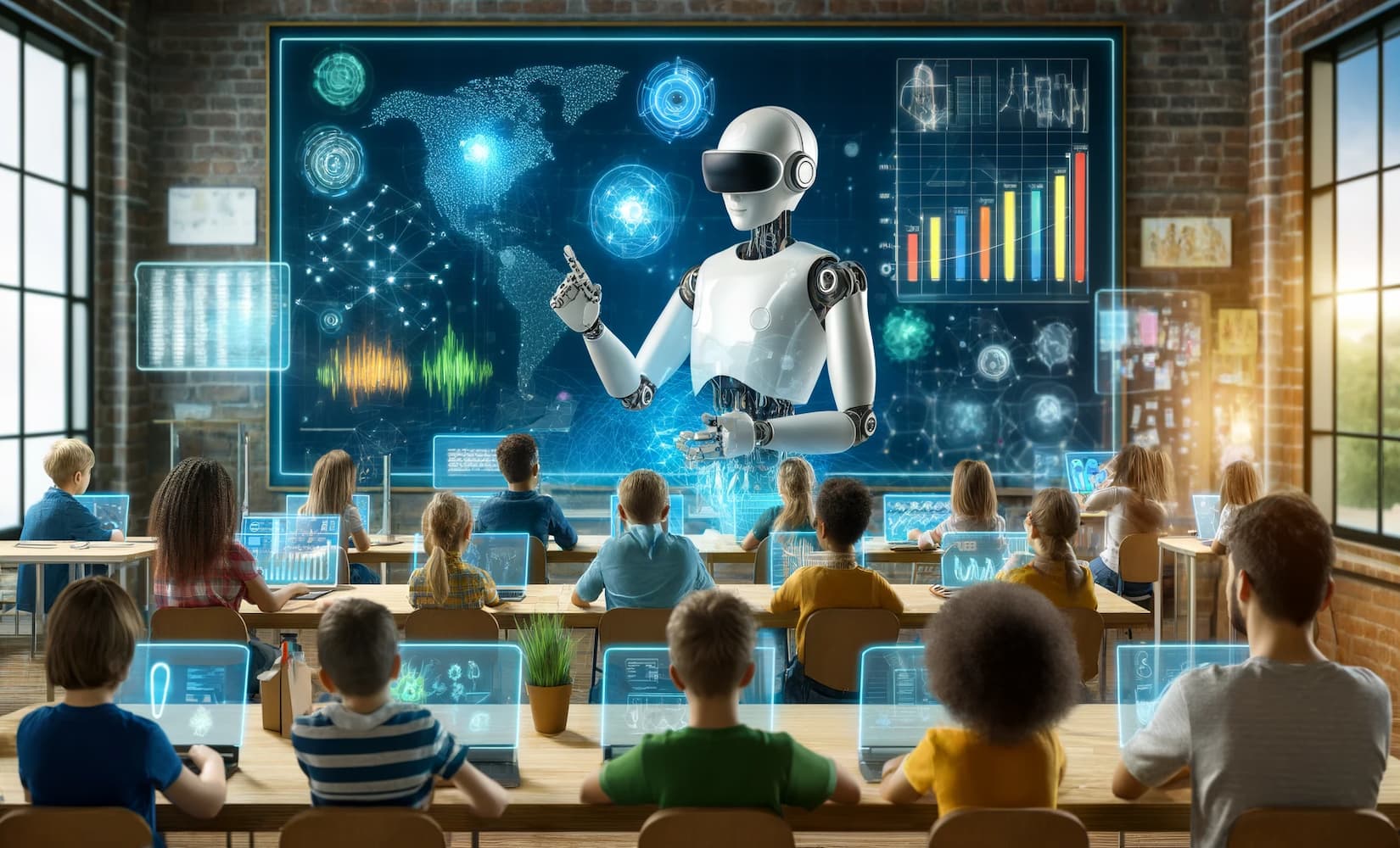
However, advancements in artificial intelligence (AI) are paving the way for a new era of personalized learning, with AI tutors emerging as an innovative tool to level the educational playing field.
AI Tutors: Personalized Learning for All
AI tutors offer a revolutionary approach to education by personalizing the learning experience for every student.
This is a significant departure from traditional methods, which often rely on a one-size-fits-all approach. AI tutors, powered by machine learning algorithms, can adapt to each student’s unique learning style and pace.
Through interactive exercises and assessments, AI tutors can identify a student’s strengths and weaknesses in specific subject areas.
This valuable data allows the AI tutor to create a customized learning path that directly addresses the student’s individual needs.
For instance, an AI tutor might identify that a student struggles with grasping mathematical concepts but excels in visual learning.
The AI tutor could then adjust the learning plan to incorporate more visual aids, such as interactive simulations or concept maps, to enhance understanding.
This personalized approach can significantly improve student engagement and knowledge retention. Unlike traditional methods that statically present information, AI tutors can make learning interactive and dynamic.
Students can receive immediate feedback on their progress, allowing them to identify areas that require additional work and celebrate their achievements. This feedback loop keeps students motivated and fosters a sense of ownership over their learning journey.
AI tutors can adjust the difficulty level of the material based on the student’s performance. Students who grasp concepts quickly can be challenged with more advanced topics, while those who need more time can receive additional practice and support on foundational skills.
This ensures that all students are challenged appropriately and can progress at their own pace, fostering a sense of accomplishment and a love of learning.
The potential impact of AI tutors extends beyond individual student achievement. By personalizing the learning experience, AI tutors can help level the educational playing field for students from disadvantaged backgrounds.
Students who may not have access to additional resources or qualified teachers can receive personalized support from an AI tutor, filling in any gaps in their knowledge base.
This personalized approach can empower students from all walks of life to reach their full potential and close the achievement gap that often exists in traditional educational settings.
Platforms like Ziki utilize AI-powered features to create a dynamic learning environment. For instance, AI tutors can provide real-time feedback on student work, allowing them to identify and correct mistakes immediately.
AI-powered hints can guide students towards the right answer without simply providing the solution, fostering critical thinking and problem-solving skills.
The statistics provided by Ziki showcase the positive impact of AI tutors on learning outcomes.
Students using the platform demonstrate a 70% increase in engagement, a 60% improvement in knowledge retention, and a 40% boost in learning efficiency.
These figures highlight the effectiveness of AI-powered learning in promoting deeper understanding and faster concept mastery.
Empowering Students Through AI-Driven Support
AI tutors hold particular benefits for students facing specific challenges in the traditional classroom setting.
Students in Remote Areas: For students in geographically isolated areas, access to quality education can be limited. AI tutors can bridge this gap by providing consistent, high-quality learning experiences regardless of location.
Students in remote areas can benefit from personalized learning paths and 24/7 support from AI tutors, ensuring they are not left behind.
Students with Learning Differences: Traditional classrooms may not cater effectively to students with diverse learning styles, such as dyslexia or ADHD.
AI tutors can personalize learning paths to accommodate these differences. By adjusting the pace, difficulty level, and presentation of learning materials, AI tutors can create an inclusive learning environment where all students can thrive.
Overburdened Students: Teachers in large classrooms often find themselves juggling multiple tasks and struggling to provide individualized attention to each student.
AI tutors can alleviate this pressure by offering 24/7 support and answering basic questions. This frees up valuable time for teachers to focus on more complex topics, provide more personalized guidance, and foster deeper student interaction.
Collaboration, Not Replacement
It’s important to emphasize that AI tutors are not intended to replace human teachers. Instead, they serve as powerful complementary tools that can enhance the learning experience.
AI tutors can handle repetitive tasks, freeing up teachers to focus on what they do best – providing mentorship, guidance, and fostering a love of learning in their students.
The combined expertise of AI tutors and human teachers can create a dynamic learning environment that caters to the diverse needs of all students.
The Future of Education
The potential of AI in education extends far beyond AI tutors. Educational institutions are increasingly exploring the use of AI-powered tools for tasks like automated grading, personalized recommendation systems for learning resources, and data-driven insights to inform teaching strategies.
As AI technology continues to evolve, we can expect even more innovative solutions that will personalize learning experiences further and create a more equitable education system for all.
The future of education is personalized, accessible, and driven by innovative technologies like AI tutors. If you’re interested in exploring how AI-powered learning platforms can benefit your students, research and compare the different options available.
Remember, a more equitable education system starts with providing every student with the tools and support they need to succeed.
Don’t miss important articles during the week. Subscribe to techbuild weekly digest for updates