



The world of artistry is an entire ecosystem on its own, however, there appear to be few platforms that offer artists with startup support or rather provide them a link up to other artists in similar situations.
In a city such as Abuja, Nigeria where rents are outrageous, many artists coming to the city face the challenge of finding the space, support and networks that can give them the leverage to express their talents, and this often results in stunting of creative expression.
Similarly, because each artist is isolated and as it were “on their own” there are few opportunities for collaboration and co-creation amongst artists and between artistic genres.
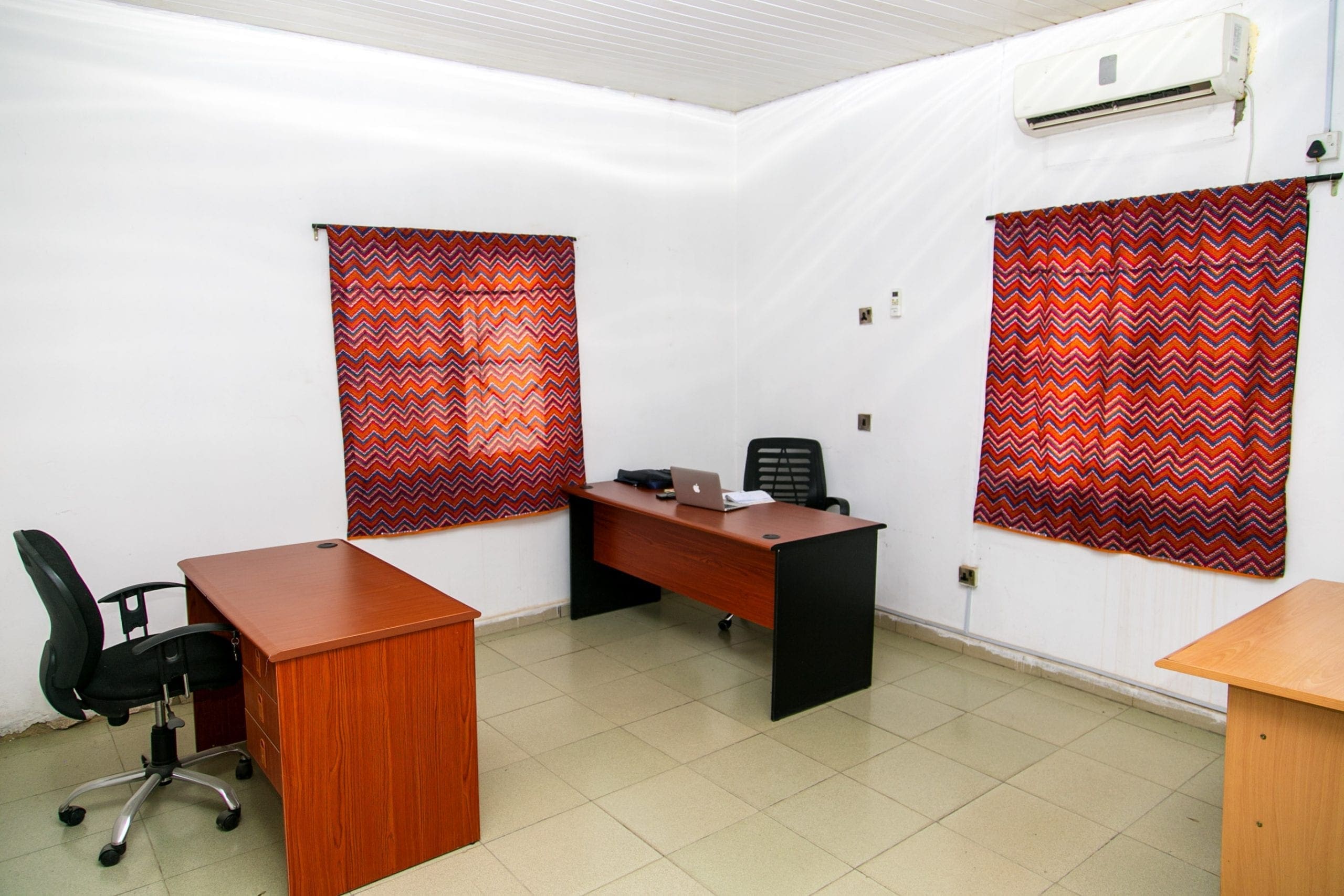
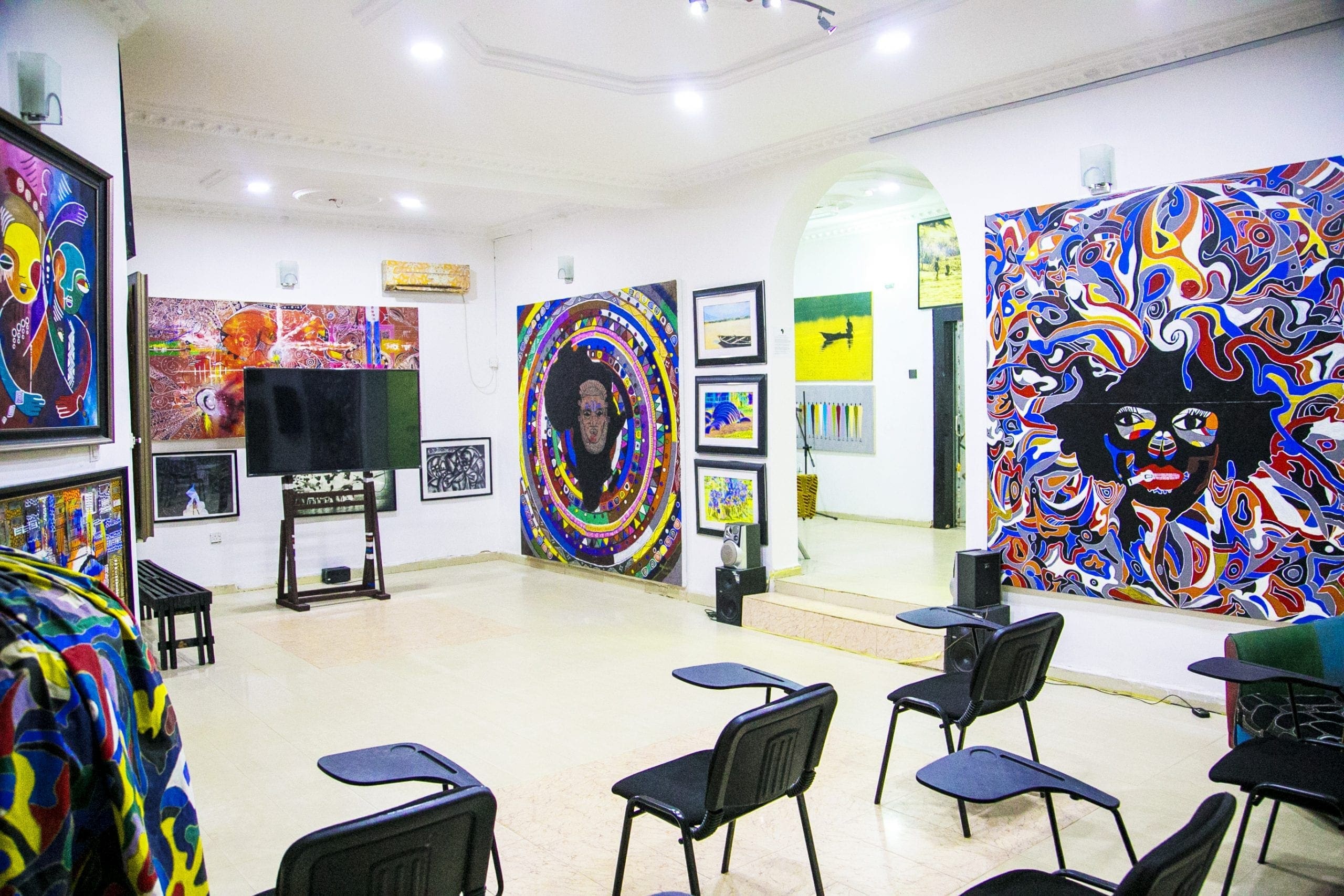
Owing to this trend, this week AfriLab’s hub feature is showcasing the Creative Arts and Visual Imagery Centre (CAVIC) a non-governmental, non-profit creative incubator, accelerator and training hub was established to fill a need within our cultural landscape occasioned by the existing struggles and isolation of local artists.
CAVIC hub was founded in 2016 by Philip Agbese Jnr. a Photographer and Ex-banker, and his wife, Joyce, a Lawyer and Entrepreneur.

Over the years, CAVIC has become a great space keeping connected, artists and designers with an emphasis on interaction and cross-cultural artistic exchanges between national, regional and international artists.
It provides a supportive and creative space that serves as a resource center, a meeting place and a melting pot for creative practitioners and organizations, where innovative professionals from diverse artistic fields can exploit their creative genius to foster social change.

It provides artists with access to facilities and enables them to pick up new skills, whether as a visual artist, photographer, a performer, designer, musician, a curator, a consumer of creative works, a supplier of creative materials or simply someone who wants to hang out with likeminded creative people and get involved in a project.
CAVIC also act as a promoter and pull together resources within its network to organize exhibitions as well as host public information and art appreciation events for the wider community including for schools, specialist sectors and the members of the general public establishing a coffee-shop environment for creativity which attracts members of CAVIC’s various publics.
As stated by the founders, “It was founded to address the disunity and other impediments to growth that exist among the creative community in Nigeria, particularly artists and provide a platform for artistic expressions and collaborations.
It functions as a much needed artistic creative hub, to unite local artisans/creatives, and invite and welcome the community to get involved by linking art, artists and the community, to foster unity of purpose through art, space provisioning, cultural diplomacy as well as organize conferences in art, business and creativity.”
Innovation and entrepreneurship
To foster innovation in their local community, most hubs tend to make themselves readily accessible to individuals and startups as much as possible.
According to the founders, this can be done by fair pricing, provision of innovative tools and access to a wide network of services and forums.

Creative hubs in Nigeria like CAVIC, aim to discover or create innovative technology solutions for creatives to help them in a variety of ways, such as competing in new markets, acquiring customers for their creative work, or developing new ways to stay relevant in the ecosystem.
“So far this has been done by collaborations and partnerships that exist to further push the narrative of oneness in the ecosystem.”
According to the founders, Nigeria has experienced persistent youth unemployment and poverty amidst a constantly growing population.
The country‘s population is conservatively estimated to be 200 million with over 75% of the population falling within the working age of 15 to 65 years.
“Entrepreneurship has become an emerging platform to increasing employment and economic development in Nigeria particularly since most government interventions have met with limited success.
The Nigerian government has since provided support to entrepreneurs through policies and programs, the creation of ministries, departments and agencies as well as other infrastructure to support entrepreneurship.

However, even though this infrastructure has been put in place, we still see the government not doing enough for entrepreneurship development most especially in including it in school curriculums.
It is safe to say that the ecosystem surrounding innovation and entrepreneurship in Nigeria is directly pushed by individual bodies who have a great passion to see entrepreneurship grow as it is solving the problem of unemployment.”
Nigeria’s reception towards STEM
In Nigeria, Science Technology, Engineering and Mathematics (STEM) is accepted as it plays a key role in creating sustained growth and stability in our economy and is a critical component to helping the youth win the future.
STEM education creates critical thinkers, increases science literacy, and enables the next generation of innovators to be well prepared for the advancement they seek.
However, Nigeria has faced some challenges as to how to fully teach STEM in schools as there is a shortage of teachers to give the student proper and correct knowledge.
“To mitigate this problem, teachers should be properly trained to impact correct knowledge to students. They should also be provided with advanced learning and teaching materials to further allow for easy assimilation for both students and teachers alike.”
According to the founders, Nigeria currently tends towards a STEAM education approach to learning that uses Science, Technology, Engineering, the Arts and Mathematics as access points for guiding student inquiry, dialogue, and critical thinking.
STEAM provides a more robust way to take the benefits of STEM and complete the package by integrating these principles in and through the arts.
It allows students to connect their learning in these critical areas together with arts practices, elements, design principles, and standards to provide a new holistic pallet of learning at their disposal.
In Nigeria, STEAM education produces a whole host of benefits, such as developing soft skills (creativity,problem-solving, collaboration), thereby increasing engagement and motivation, and personalizing the learning experience.

What’s even more powerful about STEAM learning is each of these benefits works together to give students one of the biggest benefits of all: preparing them for the future world they will lead.
Challenges and milestones
The founders explained that the main challenge for hubs in Nigeria is access to funding which is the main catalyst for proper day-to-day functioning for hubs.
In the case of Nigeria, the access to funds of loans are either limited or too expensive to pursue.
CAVIC has however provided a supportive and creative space where innovative professionals from diverse artistic fields can exploit their creative genius to foster social change, build capacity and confidence across the creative workforce, ignited by creative education and skills provision and has created an open resource for a range of collaborative youth meetings and efforts for all creative endeavours.
We have also undertaken art promotion; shows and exhibitions; training at both physical and virtual spaces while also providing access to online marketplaces for creatives.
Government and AfriLab’s role
Nigeria is positioning itself as a critical player in the age of innovation and technological advancement, as young and dynamic entrepreneurs have emerged in the tech space seeking to provide solutions to the challenges in the economy.
However, the government still has a role to play in assisting hubs to exist to further nurture these entrepreneurs who have emerged.
According to the founders, the government can assist hubs by:
- Providing access to Finance/funds –The need to attract financing for hubs, through a special investment fund that can be visible to venture capital and private equity firms.
- Providing an enabling business environment- Creating an atmosphere for business zones with a friendly tax regime.
- Providing an enabling policy environment- The Policy strategy of the government should be fitting to encourage the setting up of innovation hubs and even the development of already established tech clusters.
- Providing avenues for synergy With Universities- There is a need for more collaborations between innovation hubs and universities in Nigeria. This will encourage research and development and scale the environment for innovative ideas in the academic space. Hubs and universities need to be brought closer to each other so that the exchange of resources/knowledge is more seamless which will further encourage a new age of innovators and entrepreneurs.
On AfriLabs role, the founders commented, “the organization has opened a gateway for us to the African continent, facilitating collaborations, exposing us to better industry practices, through the training webinars and making new friends as well via our participation in their programs such as the Annual Gathering.
Thanks to AfriLabs, we now have access to hubs all over Africa and possible funding programs as well.”
Women’s participation in technology
Women’s involvement in technology is gradually growing as opposed to how it was in years past.
According to women-in-tech statistics for 2020, a mere 20% of positions in the tech world are held by women.
“Although we often hear that there is a lack of female technology leaders, the reality is that more and more women are becoming involved in leadership positions or launching startups that involve tech.
No matter how you look at it, a more gender-diverse workforce is better for business, especially in Tech. I believe that women are more than capable and qualified to excel in Tech-based fields, like engineering, coding, cybersecurity, and more.
No story about Nigerian tech would be complete without Andela, the mammoth start-up that has raised over $180 million within five years of launch.
But this is particularly true for women in tech, as the company’s initiatives and programs have encouraged women to participate in the tech space with outcomes such as the first tech talent factory in Nigeria—many of whom are women.”
This goes to show that women in tech are growing and are influencing tech one day at a time.
According to the founders, women should be encouraged to do more, this can be further achieved when they are:
- Opened up to more women inclusive programs and projects that allow them to show their capacity
- Opened up to more leadership positions that allow them to take part in policymaking.
- Opened up to mentorship programs and training that can further boost their confidence.
As a creative hub, creating that enabling environment for women to thrive in their creative space is key for us, by doing so we contribute to the growth and empowerment of women in our society.
Bottom line
CAVIC is located in the commercial cosmopolitan area of Wuse 2, in Abuja the capital of Nigeria and is readily accessible to all.
CAVIC was the proud recipient of the British Council Entrepreneurs/Travel grant in 2018 and has worked in partnership with Perl-DFID, ActionAid and others here in Nigeria.
Don’t miss important articles during the week. Subscribe to techbuild weekly digest for updates.