


In Africa’s rapidly changing venture capital landscape, relying on outdated templates is a quick way to misprice risk or completely miss out on generational opportunities.
True thought leadership in this ecosystem requires a deliberate combination of extensive institutional experience and the humility to regularly update your assumptions based on real-world data.
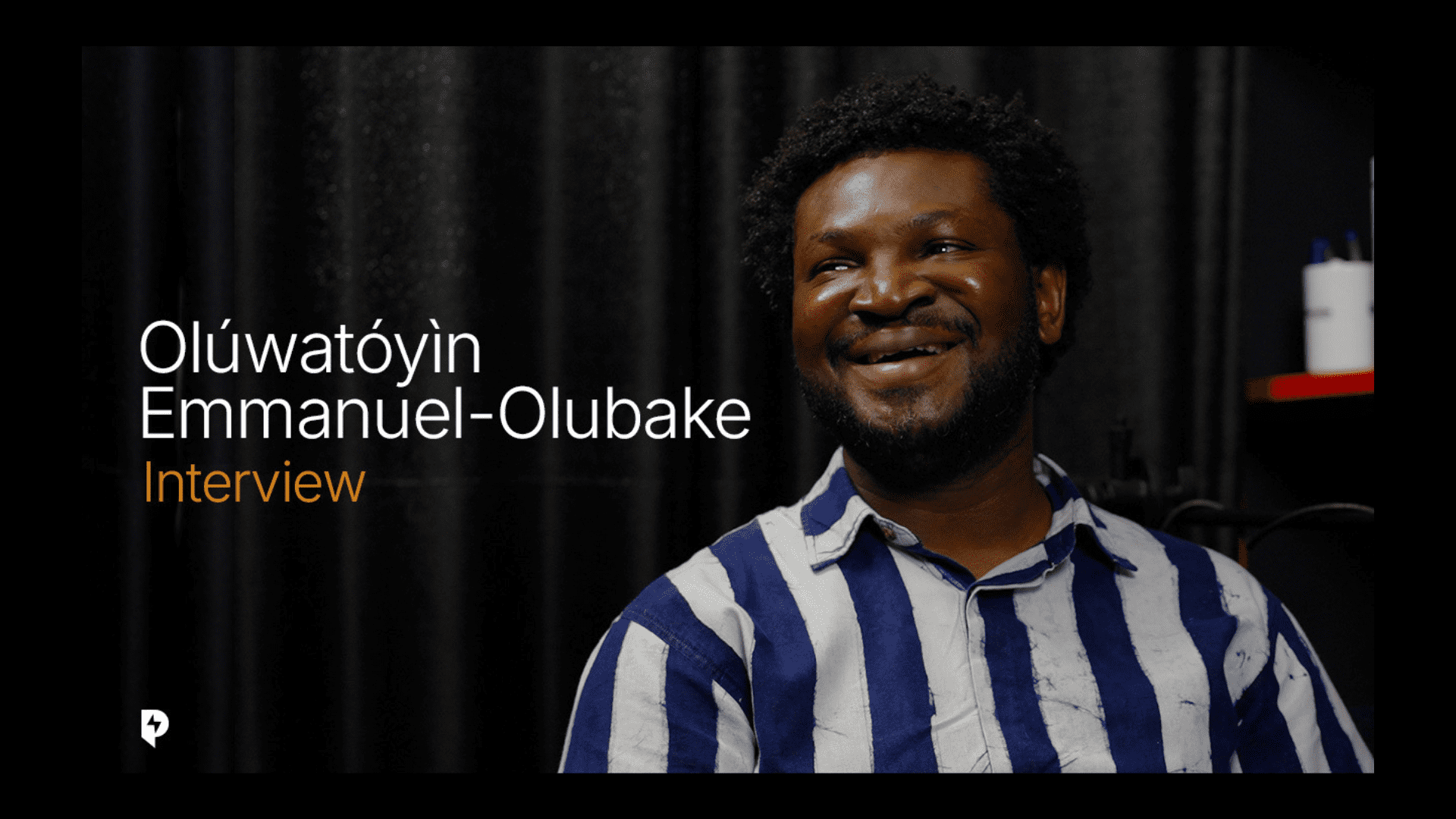
Olúwatóyìn Emmanuel-Olubake, Chief Investment Officer at Catalyst Fund, is a rare example of balance. Toyin has over two decades of experience in investment banking, venture capital, private equity, impact investing, and financial advisory across growth markets.
He has advised and deployed capital in Africa’s most critical sectors, ranging from agribusiness and infrastructure to technology and renewable energy.
In a recent episode of The Blue Couch Podcast by PowerLabs, Toyin sat down to unpack his evolution from private equity to early-stage climate tech investing, sharing raw, pragmatic insights into how he assesses founders and navigates frontier market risks, and why structural shifts in Nigeria’s energy sector are creating an entirely new asset class.
Watch the full conversation here: PowerLabs Investor Series Ep. 02 — Olúwatóyìn Emmanuel-Olubake
The Critical Mindset Shift: From Transaction to Ownership
Toyin wants you to understand that technical skills are almost secondary when transitioning from investment banking to private equity and then venture capital, and that it requires far more than a sharp analytical toolkit.
According to Toyin, the most difficult challenge for most finance professionals is not technical, but cognitive.
“The thing that some people are not able to do is switch their mindset. It’s not just about skills; analytical skills matter, of course, but it’s about being able to switch mindsets and broaden your skill set. In Private Equity, you are a co-owner, and so you are no longer just a transaction person. You are now thinking about how to grow a business and how to ensure that it has good governance… It’s probably harder to switch to that mindset from investment banking than to switch from private equity to impact investing because of that switch between a transaction versus an owner’s mindset.”
In a highly resource-constrained environment, the task at the seed and pre-seed stages is not merely to assess what is already in place but to assist founders in actively reducing their learning curve.
He clarifies that investment banking prepares you to function as a transactional individual. Your responsibility is to conclude the transaction. Private equity makes a fundamentally different request of you.
Why He Chose Early-Stage investing And Why It’s Not About Being Conservative
There’s a throughline in Toyin’s career that he describes simply: “I’ve always wanted to use finance as a primary but not exclusive tool to support entrepreneurs.”
That instinct explains why, given the choice between a well-structured Series B or a pre-seed, he consistently gravitates toward the latter—out of a clear-eyed view of where he can actually add value.
“What I found is that generally speaking, the more advanced the company, the more structured it should be and typically is, and then the ability to influence and shape decisions is typically more limited, ultimately possible but more limited.”
At the early stage, the relationship between investor and founder is fundamentally different. It’s not about board mechanics or information rights. It’s about shortening the learning curve.
Rethinking Founder Fit: Moving Beyond 70% Pattern Matching
Venture capital circles frequently obsess over “pattern matching”—the habit of looking for traits in new founders that mirror past successes. Toyin takes a refreshing, nuanced counter-stance, attributing only 30% to 40% of his decision-making process to pattern matching.
“In terms of pattern matching, it does matter, but it doesn’t determine everything. If you think about 100% of how I come to a decision. Is pattern matching part of that? Yes. Is pattern matching 70%? No. Is it 60%? Probably not. Maybe for me, I would say 30 – 40%.”
The remaining 60–70% is where the real work happens. At Catalyst Fund, two concepts shape how Toyin and his team assess founders: founder-market fit and founder-solution fit.
Founder-solution fit goes one layer deeper, exploring not only your market understanding but whether you are the right person to build this specific thing in it.
“What exactly is it about these founders that tells me this is a solution they should be building? Why would you win in this space? Why will you figure out a product? Why would the market believe you?”
He also insists that a founder must be able to sell, making this a hard requirement. You have to sell the vision to investors who aren’t yet convinced, sell the mission to high-quality team members who could earn more elsewhere and sell the product to a market that doesn’t yet fully understand that it needs it.
The Risks You Must Simply Accept
One of the most candid sequences in the entire conversation comes when Toyin is asked about risk management.
His framework is not about eliminating risk, which he regards as a fantasy many investors tell themselves, but about knowing clearly which risks you’re choosing to hold.
“There are some risks I can eliminate. There are some risks I can only mitigate; I can’t eliminate them. And there are some risks that you must just accept.”
Understanding which risks are structural features of a market lets you build an investment thesis and a portfolio model that actually survives contact with reality.
Nigeria’s Energy Moment Is a Structural Shift
The concept of “updating your priors” is particularly important right now in Nigeria’s energy sector, with two changes reshaping the energy landscape in ways that previous generations of investors overlooked.
The first is deregulation. After years of debate, policymakers have put the policy changes into effect, and states such as Lagos are moving quickly to implement them.
“It’s taking shackles off in a lot of ways. What it means is that people who have already been doing a lot — but not all they could — to manage their supply and cost of electricity can now do a lot more, legally.”
The second shift is the Dangote Refinery, with its downstream impact on commodity economics and energy costs across the market.
Taken together, these are not minor changes. They are the kind of structural reconfiguration that creates a decade’s worth of new market surface for the right companies to occupy.
Where there is a massive problem, however, there is an equally monumental opportunity.
“There is a problem on one side.” Opportunity on the other side.
Catalyst Fund and the PowerLabs Investment: Putting Conviction Into Practice
This context is the backdrop for one of Catalyst Fund’s most recent and significant bets: their participation in the pre-seed round for PowerLabs—the Lagos-based energy and climate-tech startup building Pai Enterprise, an AI-enabled energy orchestration platform.
Toyin Emmanuel-Olubake is not the kind of investor who acts on conviction. He earns, tests, and holds it with the calm of someone who has been wrong before and knows its cost.
At Catalyst Fund, he is doing exactly what he has always wanted to do: use finance as a primary, but not exclusive, tool to assist entrepreneurs in solving some of the continent’s most pressing problems.
Watch the full conversation on the PowerLabs Investor Series: https://www.youtube.com/watch?v=VZvY3JJ_yj4
PowerLabs is building intelligent, AI-enabled energy orchestration for Africa’s commercial and industrial sectors.
Learn more at powerlabstech.com
Don’t miss important articles during the week. Subscribe to techbuild.africa weekly digest for updates.