

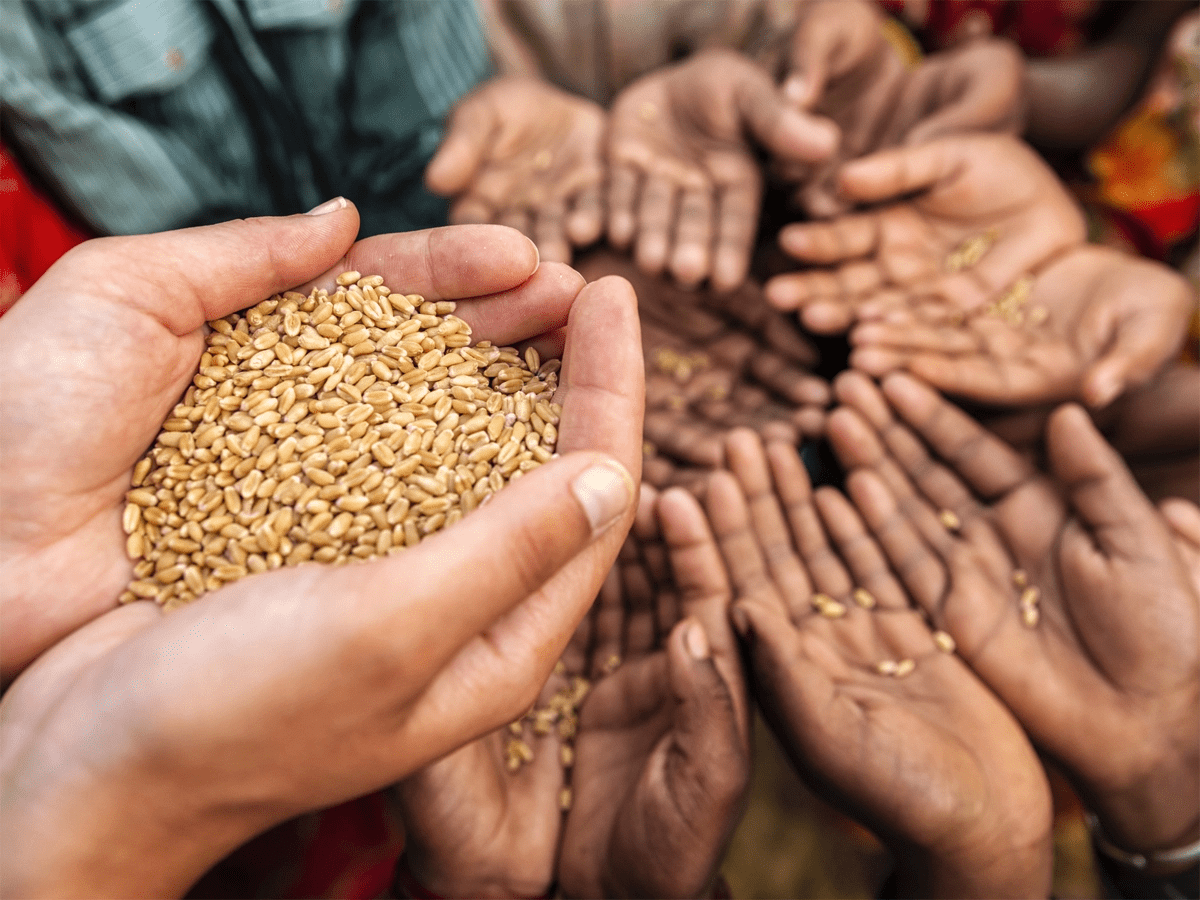
The food industry has been faced with several issues in recent times globally, there have also been predictions of food scarcity in the near future.
Some of these issues revolve around food safety concerns, sustainability, food waste, and nutritional requirements among others.
In the African food industry, some challenges are peculiar to the continent and they are limited infrastructure, post-harvest losses, limited access to markets, poor food safety, and even poorer quality control.
Traceability, to a large extent, is the antidote to the issues both in Africa and globally, this entails the process of tracking the movement of food products right from the farm to the consumer.
Also read, 4 Ways Blockchain Can Drive Food Supply
Traceability is important as it can help address these global food issues and concerns.
Blockchain technology has the potential of improving this traceability, being a technology that is decentralized and can store information in such a way that it is tamper-proof, making it the right technology for the task.
The various ways blockchain does this include the following:
Immutable record-keeping
Blockchain technology stores information on a block, and this provides a secure and immutable ledger of transactions that can be seen by everyone on the network.
This will prevent tampering and any fraudulent activity as the food journeys through the food supply chain.
Increased Transparency
With blockchain technology, there is increased transparency and even accountability. As everyone in the supply chain can access information about the food product in real time.
Improved supply chain management
The overall supply chain management will be easier as every activity on the food supply chain is recorded, and this will also help combat wastage.
Blockchain technology will also enhance data management, reducing errors and improving integrity.
Compliance
There are food safety regulations that instruct on how food products are to be handled. Blockchain technology will show food products that have been handled in compliance with these regulations.
In cases of contamination, the affected products can be traced easily and removed from the market.
Increased consumer trust
Blockchain technology will greatly reduce food fraud and increase consumer confidence in food products as they can see proof that the food products were processed and packaged under high-quality processes.
It is important to elaborate on how blockchain can reduce food fraud and checkmate counterfeit
products.
Oftentimes, malicious people flood the market with substandard food products just to make money, and this is detrimental to the health and safety of society.
With the information stored using blockchain technology, it is easy to identify these products as there won’t be a record of it on the block. This will ensure that the food bought is safe and authentic.
In conclusion, blockchain technology is a powerful tool that can help manage the food industry globally in such a way that every food obtainable in every country can be seen on the block, and in cases where there is a higher harvest, the excess can be moved to another country that needs it.
This way food goes around instead of being wasted and this would help sustainability in the food industry and ultimately aid in combating food scarcity.
Don’t miss important articles during the week. Subscribe to blockbuild weekly digest for updates.