


Banking as a Service (BaaS) is poised to play a significant role in the African tech ecosystem, transforming the way businesses and consumers have access to financial services.
BaaS startups provide businesses with access to cloud-based infrastructure, APIs, and other services to build and deploy their own financial products and services without having to invest in their own backend infrastructure.
This makes BaaS particularly attractive in Africa, where the cost of building and maintaining backend infrastructure can be prohibitive.
Additionally, BaaS startups can help businesses to scale more quickly and efficiently and to reach new customers more easily, but currently, BaaS startups in Africa play in narrow segments which include being data aggregators, payment facilitators, or KYC providers as opposed to being full-stack BaaS companies.
Flourish Ventures, a leading investor in disruptive organizations creating economic opportunity for people in emerging markets, is focused on supporting the growth of BaaS in Africa.
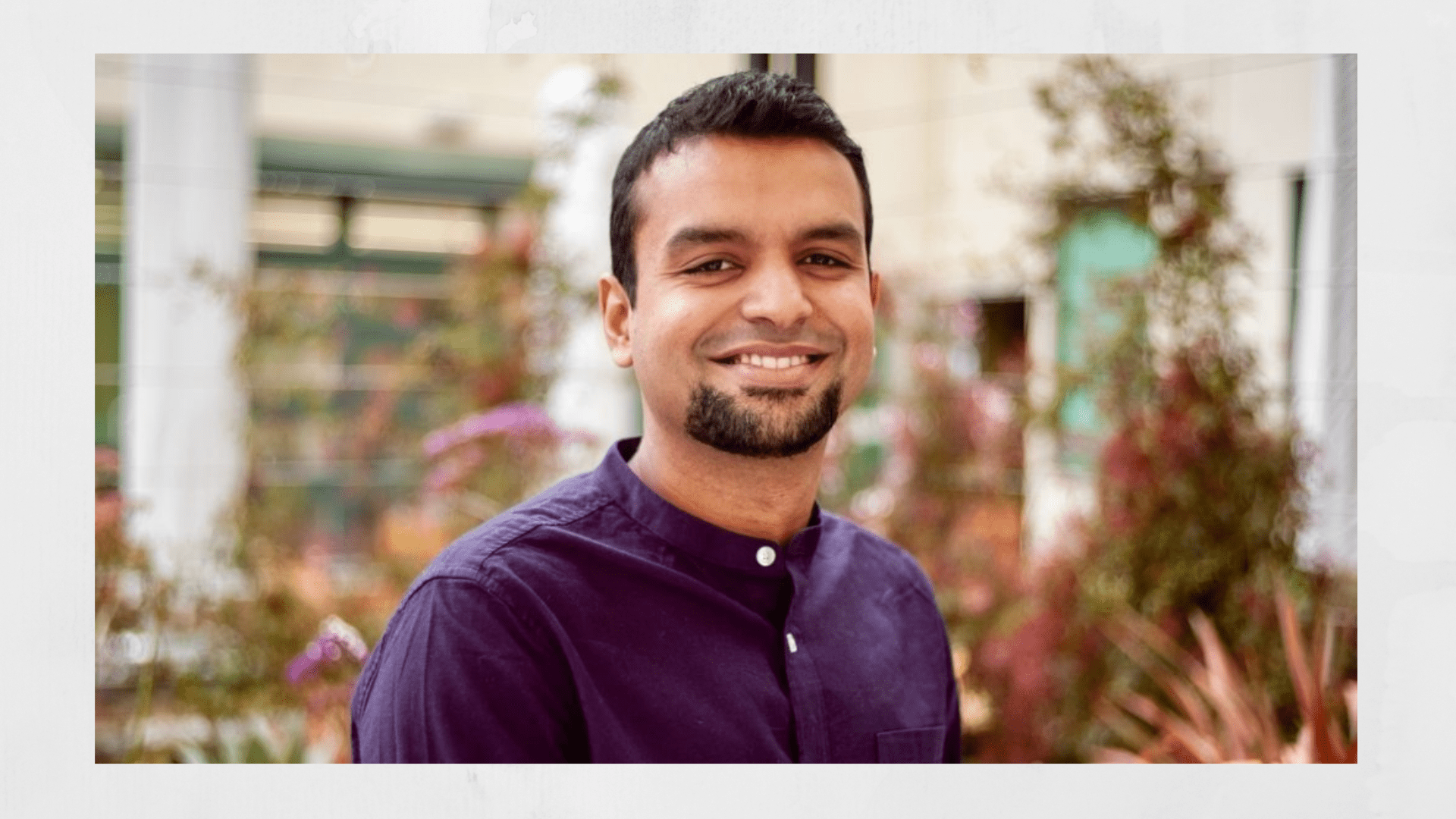
In this chat with Ameya Upadhyay, Venture Partner at Flourish Ventures discussed why BaaS is a significant investment opportunity in Africa and how Flourish Ventures is leading the way.
How Flourish Ventures is Impacting BaaS for Emerging Markets in Africa
As explained by Ameya, Flourish Ventures aims to improve the financial health (people’s ability to manage their money better) of customers and small businesses across the globe.
“We invest in solutions that help people save more, take out loans for productive uses, insure against downside risk, and the like. Our portfolio includes wealth management applications, credit applications, and insurance companies, but we also take a very broad view of what financial health stands for.”
Explaining further, Ameya emphasised that financial services are broader than just a financial app, according to him, users should be able to interact with their money through many other platforms outside of just clicking on your banking application.
“We see that happening more often in the world. We call this trend embedded finance, where finance is embedded into the fabric of your daily life.”
Making an illustration of the aforementioned, Ameya explains how ride-hailing businesses offer users the option of payment without physical cash as well as the vehicles also getting insured. According to him, there are both insurance and financial services at play here. This concept shows how finance is already automatically embedded inside the ride-hailing service.
“We see this will happen more and soon finance will become invisible to the customer. It will be given to the customers through e-commerce, taxi, and food delivery applications as well as many other things that you interact with”
Stating further, Ameya said that two factors are important for financial services to be embedded for users. The platform the user interacts with and the ‘plumbing’ required at the backend for fintech to be embedded. Making illustration of this, Ameya mentioned how the messaging app, WeChat offers both communications and payments to its users.
“And that’s where we get to banking as a service because this entity is offering a component of banking. We feel for these platforms to offer these financial services, they need banking as a service provider on the back end.”
Flourish Ventures has globally invested in several banking as a service companies including Unit (Unicorn) in the United States, M2P in India and Swap in Brazil. However, the company is yet to make any investment in Africa.
“And so we would say that we are one of the more prominent investors behind banking as a service globally.”
“Now, we have scanned the space in Africa for several years now and have diligence. Many companies have not made an investment yet. But we are looking at many closely and we can talk about that.”, Ameya added
How BaaS can address the Problem of Financial Inclusion in Africa
Making yet another illustration, Ameya explained that if one makes an order on an E-commerce application in Lagos, many times, it’s either payments don’t go through or the delivery guys reject cash payments owing to security issues.
According to Ameya, the role BaaS companies could play is to provide a means of payment for this e-commerce application in Lagos. “You don’t have to reach out for a banking application or your card, that payment is seamlessly embedded into the E-commerce application.”
Continuing, Ameya said that BaaS companies can offer both payments and data services combined. With another illustration, he mentioned companies in Nigeria like Mono and Okra who pull out data from customers’ bank accounts, and give it to credit organizations. These enable customers to access loans more easily.
“Now, there are payments, data and KYC, as well as fraud prevention, all of these services can be provided by banking as service companies.”
Qualities Flourish Ventures wants to see Before Investing in the African BaaS Ecosystem
Ameya went into detail about why Flourish Ventures is yet to make an investment in African BaaS startups. “We have seen in successful companies globally is that they serve a large market and pull together many products together to earn higher margins.”
According to him, there are two important success factors for banking as a service companies: market and margins.
As mentioned earlier, Ameya highlighted payments, data and KYC as services that BaaS companies can offer. Payments are always a low-margin service because the companies involved earn 0.5% or 1% on each transaction, thus they need to serve a large market to make their expected revenue.
For data and KYC, Ameya pointed out that the margins are small. “There are two options to be successful, If you provide only one of these services, you will require a very large market, or you will have to provide all of the services in an integrated offering. The best obviously, is to provide many of these services as an integrated offering in a large market. And that’s where we have seen real success globally.”
Making another illustration, Ameya referred to one of the earlier mentioned Flourish Ventures’ portfolio companies, M2P in India.
As explained by him, M2P provides integrated banking as a service offering which is making them make good margins on the overall product. They have a large market in India and have expanded their market by offering these services not only to early startups but also to banks.
“What we have seen in Africa till now, it’s companies that are offering one or two of these narrow products to a small market. And what we need to see happen is more companies offering more of these services, and trying to expand their market.”
That’s where we need to see the evolution both on innovative vectors to expand the market and an innovative combination of products to expand margins.
How African BaaS Companies Can Get Positioned for Investment from Flourish Ventures
According to Ameya, they need to find innovative ways to expand their addressable market, while also improving their margins.
Further explaining, he redefined what ought to be the measure of success for startups in contrast to the general notion of fundraising announcement.
“We should subscribe to the definition of success as how many customers? Is this company serving? What problems in their lives are they solving? And therefore, what revenues are they making? And are they profitable? Are they generating money?”
Ameya stated that some BaaS startups in Africa had raised funds at high valuations, however, they lack a robust business model and this according to him has hampered the development of the BaaS ecosystem in Africa as lots of money was injected into suboptimal business models.
Challenges and Opportunities around BaaS solutions in Africa
Ameya believes that the biggest challenge facing the scalability of BaaS solutions on the African continent is market size because BaaS companies believe that tech startups are their customers (how many of these companies in Africa are willing to spend money in buying BaaS products?).
Another challenge identified by Ameya is the small margin on payments. “From our portfolio, the product that makes the most money for BaaS companies is payments.”
Making an illustration of this, Ameya mentioned that a BaaS company in the US could charge 1% For every payment made, however, its counterpart in Nigeria can only charge 0.15% owing to the total interchange revenue being capped coupled with multiple players in the value chain.
“What we think will help these companies in Africa is by diversifying their customer base, to target not only technology companies, but also large enterprises and SMEs.”
Ameya further emphasized why BaaS companies need to go for a full product set called integrated banking as a service if they want to increase their margin.
According to him, diversifying rather than sticking to one product offering will help these companies address the challenge of market size.
Regions in Africa with Promising Potential for BaaS Growths
Ameya opined that any promising potential for BaaS growth in Africa has to come from one of the traditional VC markets Like Nigeria, South Africa, Kenya and Egypt, however, he stated that any of these four countries have to become regional players. In his words, “I do not believe that any of these countries individually have large enough markets for banking as a service company to address.”
How Flourish Ventures is supporting the Growth of BaaS Startups in Africa
Beyond BaaS companies, Flourish Ventures is also supporting the African tech ecosystem as Ameya reiterated the disproportionate amount of venture capital flowing into Africa’s big four – Egypt, Nigeria, Kenya, and South Africa.
He also touched on how women founders do not get the proportionate amount of VC dollars and how a lot of capital goes to founders that belong to some networks.
“It’s not a level playing field. And we think that if this has to be a level playing field, the intervention has to be earlier in a startup ecosystem.”
Flourish Ventures has launched a pre-seed funding called Madica with the purpose of breaking some of the “walls” set by disproportionate VC funding.
“We invest disproportionately outside Africa’s big four as we prioritize women founders, local founders, and sectors that may not be considered, from the VC perspective.”
“The second thing I would say is that we have a very deep focus on the mental health of founders, but we believe that to be a good CEO, you have to live a balanced life and mental health is absolutely crucial.”
According to Ameya, entrepreneurs are susceptible to vagaries and vicissitudes in their lives, and that is why Flourish Ventures runs an annual CEO retreat called CEO Circles, a safe space where founders come together to share their fears and hopes.
“We don’t talk about product strategies or customer acquisition costs. We talk about how you live a more balanced life. How you take a check of your own personal inventory, bring your full self to work and face your colleagues authentically.”
Summarily, Ameya reemphasized that the first thing Flourish Ventures is doing to support BaaS companies and the broader startup ecosystem is to break the institutionalized systemic discrepancies in Africa VC, and the second is to focus on the CEO as a person.
Key insights for the African continent to learn from BaaS investment
“It has to start with a core product that makes money for your customers”, Ameya said. According to him, founders can start making revenue from payments if they offer their customers what can help them increase their revenues.
Clients will readily buy financial service components from BaaS companies, once they are guaranteed a reasonable margin on their revenue.
Secondly, founders have to think creatively about their addressable market such that they look into diversifying their end customer segments.
Ameya buttressed this point as he referred to the earlier-mentioned Brazilian startup, Swap. According to him, the startup helps their clients run their loyal employee loyalty programs on their system which comes with immediate benefits.
He further explained that Founders should offer their products outside of other tech startups, they should look at big corporates and not forget small ventures including more traditional brick-and-mortar businesses.
Finally, Ameya urged founders to be well-versed with regulations in their country of operation. They should get proactive in talking to the regulators and clarifying rules.
For instance, founders need to make clear about assuming they are dealing with an e-commerce company rather than a fintech platform. If you are offering a payment service to an e-commerce company, you need to find out if they are licensed to be a payment provider.
Featured Image: Ameya Upadhyay, Venture Partner, Flourish Ventures
Don’t miss important articles during the week. Subscribe to techbuild.africa weekly digest for updates.