

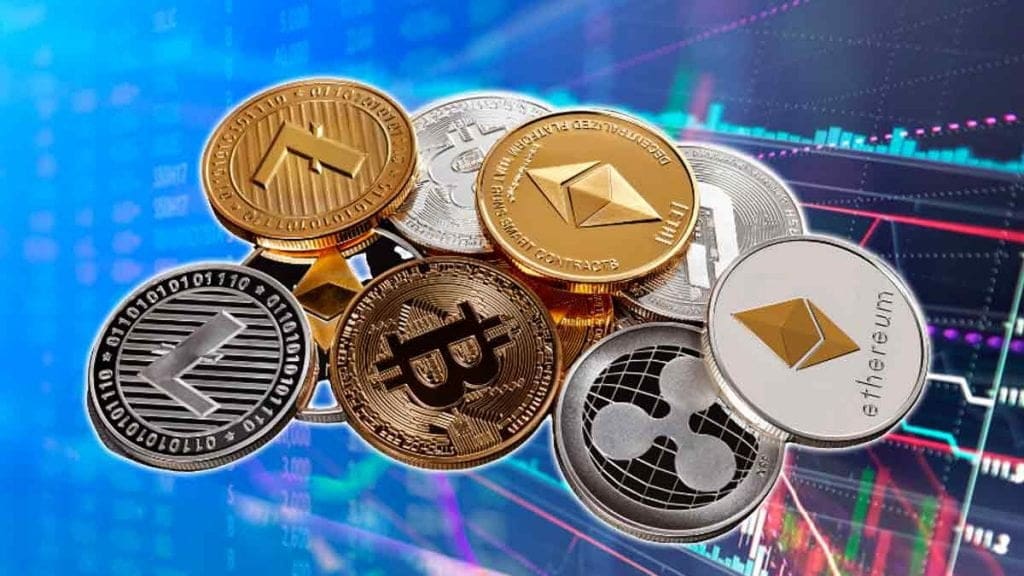
Altcoins are alternatives to Bitcoins and this means that these crypto coins build upon the positives of Bitcoin but they have a slight change in the rules to appeal to their various users.
Altcoins were created by developers who diverged Bitcoin’s open-source for the purpose of creating new currencies.
Subsequently, these new currencies split further from their parent currency with different privacy features and supply schedules. An example is Litecoin.
Altcoins are very new and their prices can be very volatile.
Altcoins are therefore cryptocurrencies that use blockchain technology or recording ledger (which publicly and permanently records transactions) for secure peer-to-peer transactions.
They are a form of cryptocurrencies or digital currencies that have their own set of rules.
How do Altcoins operate?
Altcoins operate the same way as Bitcoin.
They enable users to make transactions (send or receive payment via digital wallet) using private keys.
Their blockchain feature is secured by mathematics proof which confirms transactions in blocks.
This ensures that transactions are recorded so that there are no duplicitous occurrences.
What are the types of Altcoins?
Altcoins can range from coins to new frameworks for everything – from online marketplaces to messaging applications.
They come in different forms depending on their users’ needs. For example, Solar coin was created as a form of exchange for solar energy production.
The same goes for Name coin which was created as a basis for a new system for domain names.
Having established that here are the types of Altcoins:
Stablecoins
Stablecoins were first introduced with Tether in 2014.
They are cryptocurrencies that are created to stay steady in price which makes them acceptable as a store of value and a medium of exchange because they are tied to assets that are stable in prices like gold or the U.S. dollar.
They aim to tackle the problem of volatility which is associated with cryptocurrency.
In a nutshell, stable coins combine cryptocurrency’s decentralized, global and anonymous features with the stability of fiat currency to provide a safe, stable and efficient payment mechanism.
Examples of stablecoins include USD Coin, Digix Gold, DAI, Binance USD, etc.
Digital tokens
Digital tokens constitute a specific amount of digital resources you can possess, give to another or collect later. They are either built-in or created by software and given a specific value.
Altcoins that perform the same function as digital tokens are backed by a basic blockchain platform. For instance, Tether is built on Ethereum and as such, can be considered a digital token.
Examples of built-in digital tokens are Ether and Bitcoin.
Advantages
- The transaction fee is low
- It improves on Bitcoin’s flaws
- Creators can adjust the rules which give room for competition and improvement of these coins
Disadvantages
- Susceptible to scams
- Highly volatile
The creation and rise of these coins and their respective blockchain networks have brought a surge in market activities.
Traders are leveraging the volatility of these Altcoins for high-risk rewards.
Dont miss important articles during the week. Subscribe to blockbuild weekly digest for updates.