



In a country where hope meets harsh reality, Nigerians are wrestling with a deepening crisis of trust. The recently released “2025 Edelman Trust Barometer Nigeria Report” shows how institutional failures have created widespread grievances among citizens.
Despite this grim outlook, businesses and NGOs continue to hold public confidence, though that trust shows signs of erosion.
The report considered several key points. For this article, we would consider four discussion points, which include:
- A Crisis of Grievance Driven by Institutional Failures
- Trust in Institutions in Nigeria
- Worsening Job Insecurity
- Widening Income-Based Trust Gap
After a quarter-century of perceived institutional failures, Nigerians have reached a breaking point. The report reveals that 7 in 10 Nigerians harbor moderate to high grievances against business leaders, government officials, and wealthy elites.
The data shows Nigerians believe government and business actions actively harm their interests while serving a privileged few. There’s a growing sentiment that the wealthy benefit from a system deliberately designed to favor them.
This pattern mirrors a global trend, with 23 out of 26 countries surveyed showing similar grievance levels. What makes this particularly concerning is how these feelings transform into a zero-sum mentality.
Nigerians with high grievances are over three times more likely to believe that benefits gained by those with different political views come at their expense.
When citizens stop seeing progress as possible for everyone and start viewing it as a win-lose scenario, social cohesion breaks down. This creates fertile ground for division and stalls national development.
Who Do Nigerians Still Trust?
Despite widespread grievances, Nigerians haven’t lost faith in all institutions. Both businesses and NGOs enjoy relatively high trust ratings at 77%, while media organizations secure 63% confidence.
Government institutions lag significantly behind at just 44%, though this represents a marginal improvement from previous years.
However, these trust levels aren’t uniform across the population. The report identifies a clear “trust penalty” linked to grievance levels.
For example, trust in businesses plummets from 78% among those with low grievance to just 35% among those feeling highly aggrieved. This pattern repeats across all institutions, suggesting that addressing public grievances is essential for rebuilding institutional trust.
Artificial intelligence maintains the majority trust in Nigeria (81% among those with low grievance), though this drops to 53% among those with high grievance.
This suggests Nigerians remain open to technological solutions despite their skepticism toward traditional power structures.
When it comes to individual trust figures, teachers (84%) and scientists (82%) stand head and shoulders above institutional leaders.
Corporate executives receive moderate trust (65% for “My CEO” and 64% for CEOs generally), while government leaders rank last at a dismal 33%. This suggests that Nigerians place greater faith in experts and educators than in those holding official power.
For information sources, search engines (80%) and traditional media (68%) remain the most trusted channels, highlighting the continued importance of established information structures despite growing digital alternatives.
Job Security Fears Mount
The workplace isn’t immune to this trust deficit. Employees across Nigeria report increasing anxiety about job security, with concerns about foreign competition (70%), automation (70%), and international trade conflicts (76%) showing significant year-over-year increases.
What we’re seeing is a perfect storm of economic pressures. Nigerians worry about losing jobs to overseas competitors, machines, and geopolitical tensions. This trifecta of concerns has intensified notably since 2024.
Despite these worries, employer trust in Nigeria remains relatively strong at 75% in 2025, though this represents a decline from 78% in 2018. This resilience suggests that even in challenging times, many Nigerians still view their employers more favorably than government institutions.
The Edelman Trust Barometer report indicates clear public expectations for businesses to address these concerns. Across all grievance levels, Nigerians overwhelmingly believe businesses must provide good-paying local jobs (91-92%) and invest in training to keep workers competitive (86-90%).
There’s also strong support (85-87%) for employers to create workplace environments where contentious issues can be discussed civilly.
Businesses that ignore these expectations do so at their peril. With trust at a premium, organizations that demonstrate a genuine commitment to worker security and development will gain a competitive advantage.
The Growing Trust Divide Between Income Levels
Perhaps most concerning is the widening gap in institutional trust between Nigeria’s wealthier and poorer citizens. Since 2022, the trust inequality between high-income (top 25%) and low-income (bottom 25%) Nigerians has steadily increased.
The 2025 data shows high-income Nigerians recording a Trust Index (averaging trust across business, government, media, and NGOS) of 69%, while low-income citizens register just 58%, an 11-point gap that has grown from 9 points in 2022.
This trust inequality cuts across all major institutions:
NGOS: 79% trusted by high-income vs. 69% by low-income Nigerians
- Government: 49% vs. 40%
- Media: 73% vs. 58%
- Business: 77% vs. 66%
Nigeria’s income-based trust gap mirrors global patterns, where the average difference stands at 12 points (62% trust among high-income populations versus 50% among low-income groups).
This growing divide suggests different lived realities based on economic status. When lower-income citizens consistently trust institutions less than their wealthier counterparts, it indicates these institutions aren’t serving everyone equally.
The Dangers of Inaction
The Edelman Trust Barometer report highlights a particularly troubling consequence of unaddressed grievances: openness to hostile activism. As trust erodes and grievances mount, more Nigerians express willingness to support disruptive actions to force change.
We’re seeing patience wear thin. When conventional channels fail to deliver results, people naturally look for alternatives, some of which may destabilize the social order.
This potential for disruption places added urgency on institutional leaders to address root causes rather than symptoms. The report suggest business, government, media, and NGOS must collaborate to rebuild trust by delivering tangible benefits that reach all segments of society.
It’s not enough to make promises or launch symbolic initiatives. Nigerians are looking for real changes that improve their daily lives. Without these, the crisis of grievance will likely intensify.
What we see
The report doesn’t merely diagnose Nigeria’s trust deficit; it also suggests pathways to recovery. Business leaders, government officials, media executives, and NGO directors all have roles to play in addressing grievances and rebuilding institutional trust.
For businesses, this means creating quality jobs, investing in worker training, and ensuring benefits flow to communities rather than just shareholders.
Government officials must demonstrate that policies serve the many rather than the few, while media organizations need to maintain journalistic integrity amid economic pressures. NGOs, despite their relatively high trust ratings, must ensure their work reaches those with the greatest needs.
What’s clear from this report is that no single institution can solve Nigeria’s trust crisis alone,” says governance expert Fatima Hassan. It requires coordinated efforts across sectors, with each institution focusing on its unique responsibilities while supporting broader trust-building initiatives.
The coming years will test whether Nigeria’s institutions can rise to this challenge. With grievances running high and patience running low, institutional leaders face a critical choice: address the underlying causes of distrust or risk further social fragmentation.
Whether this crisis of grievance leads to renewed institutional vitality or deeper social division will depend largely on how quickly and effectively Nigeria’s leaders respond to the warning signs contained in the Edelman Trust Barometer report.
Get the full report here.
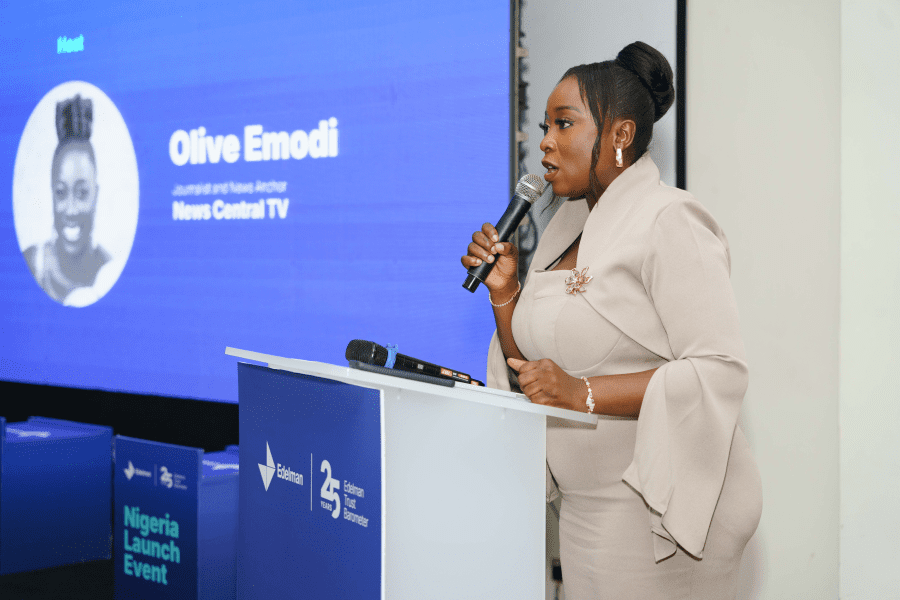
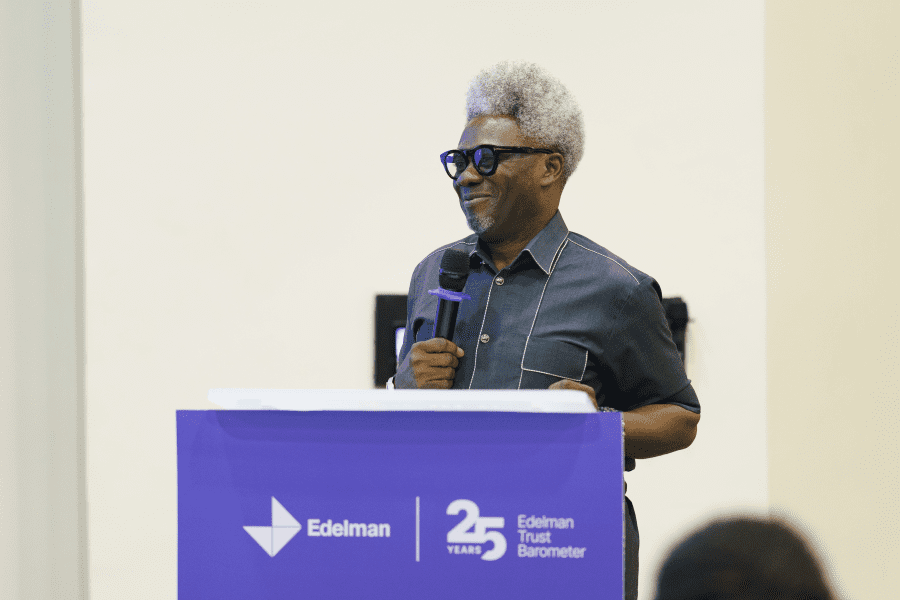
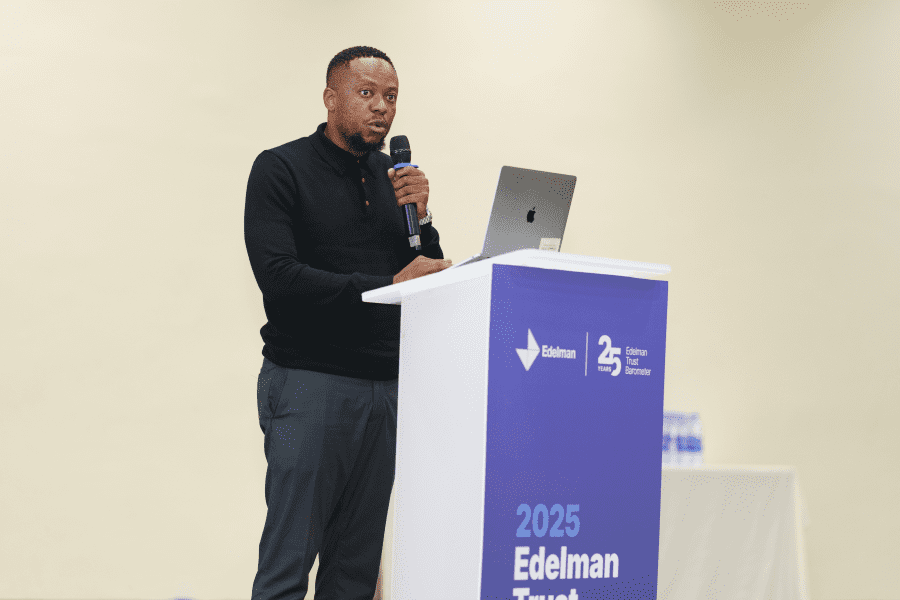
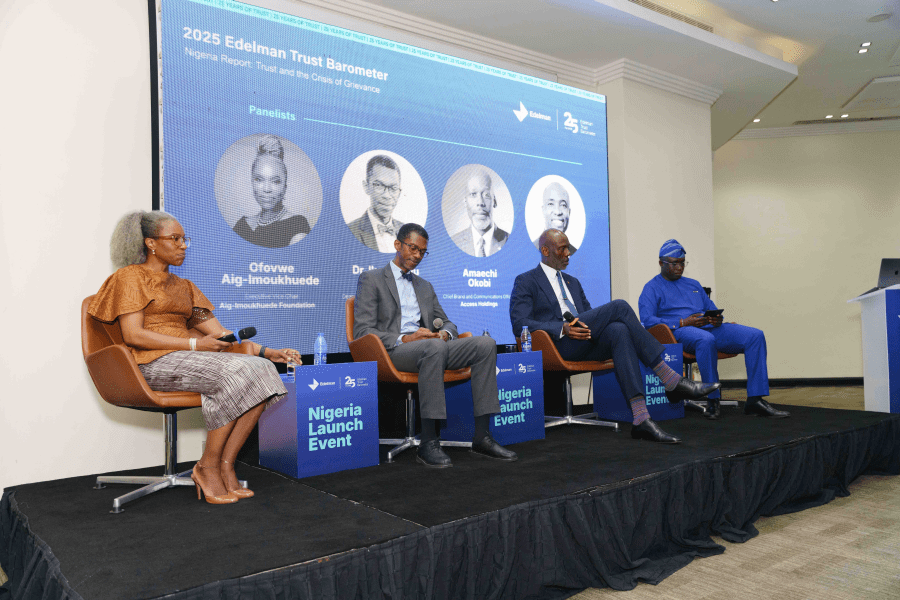
Here are pictures from the Nigerian Launch of the 2025 Edelman Trust Barometer


Don’t miss important articles during the week. Subscribe to techbuild.africa weekly digest for updates