


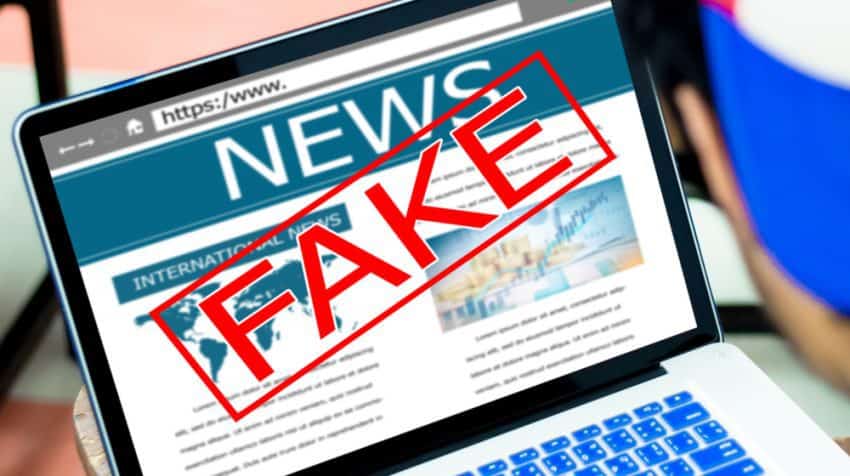
Sadly, fake news sells fast. This is usually aided by the use of social media, the internet, blogs and websites which are not regulated and controlled. Unlike the conventional news sources such as radios, TV, newspaper which are strictly under regulation.
Fake news is misleading, usually, have a negative influence on us and the society at large. It is capable of throwing the whole society into a state of disorder and chaos. And so it is important we know how to spot them. Here are guides:
1. Check the Domain of the Website
This should rather be the first call. A web domain starts from the dot (.) after the website name. Look at the web domain for a lot of fake news web pages use fake or funny looking site domain. Some of such URLs end with .org.co, .com.lo, .fo (i.e. fastnews.com.lo or fastnews.com.co). These sites copy genuine news site.
2. Look for the Author
The fakest news doesn’t carry any name as the author. Some might include some forged names as the writer of that news. If it has an author, Google it and see what comes up. Does the author have other works to his name, or all you could find was some Facebook username everywhere in the search results?
3. Take an overview of the webpage layout
Fake news site looks ugly, not in shape and funny looking with a lot of ads covering the whole page. Check for quality and coordination in the overall layout of the page.
4. News Source Identification
There are well-known news websites that have some level of trust, respect, and followership. As a matter of fact, readers go to these sites to confirm any major headlines they see somewhere. Examples are CNN, BBC, Aljazeera, Channels TV etc. You can do a little policing by looking up the site on (whois).
5. Check the site’s ‘Contact Us’ and ‘About us
Click the About Us section of the websites and see if there is any detailed information about them, what they do and also see if there are any contacts and address. This is very important.
6. Evaluate the Grammar and Command of English in the Write-up
All fake news is done haphazardly, with a lot of grammatical errors, Capitalization, words spelt wrongly, with a lot of use of punctuation marks.
7. Use fact check websites to confirm
There are lots of trustworthy facts check sites online that you can use to check up news. Examples are Politifact.com, FactCheck.org.
8. Check the tone and main message of the whole post
If it is too good to be true, then it is probably not true. Fake news is meant to mislead, put one party in the good light and very biased. They make almost impossible claims and their story isn’t fair.
9. Are there any references, Sources?
They mostly don’t have any source or reference to back up their story. Even if it does have, it is not verifiable, and anonymous.
10. Search on other websites
You can also check up the same story online to confirm its authenticity. When you can’t find any other channel saying same, it might be fake and unreliable. If is indeed a news, then it should be on multiple channels.