


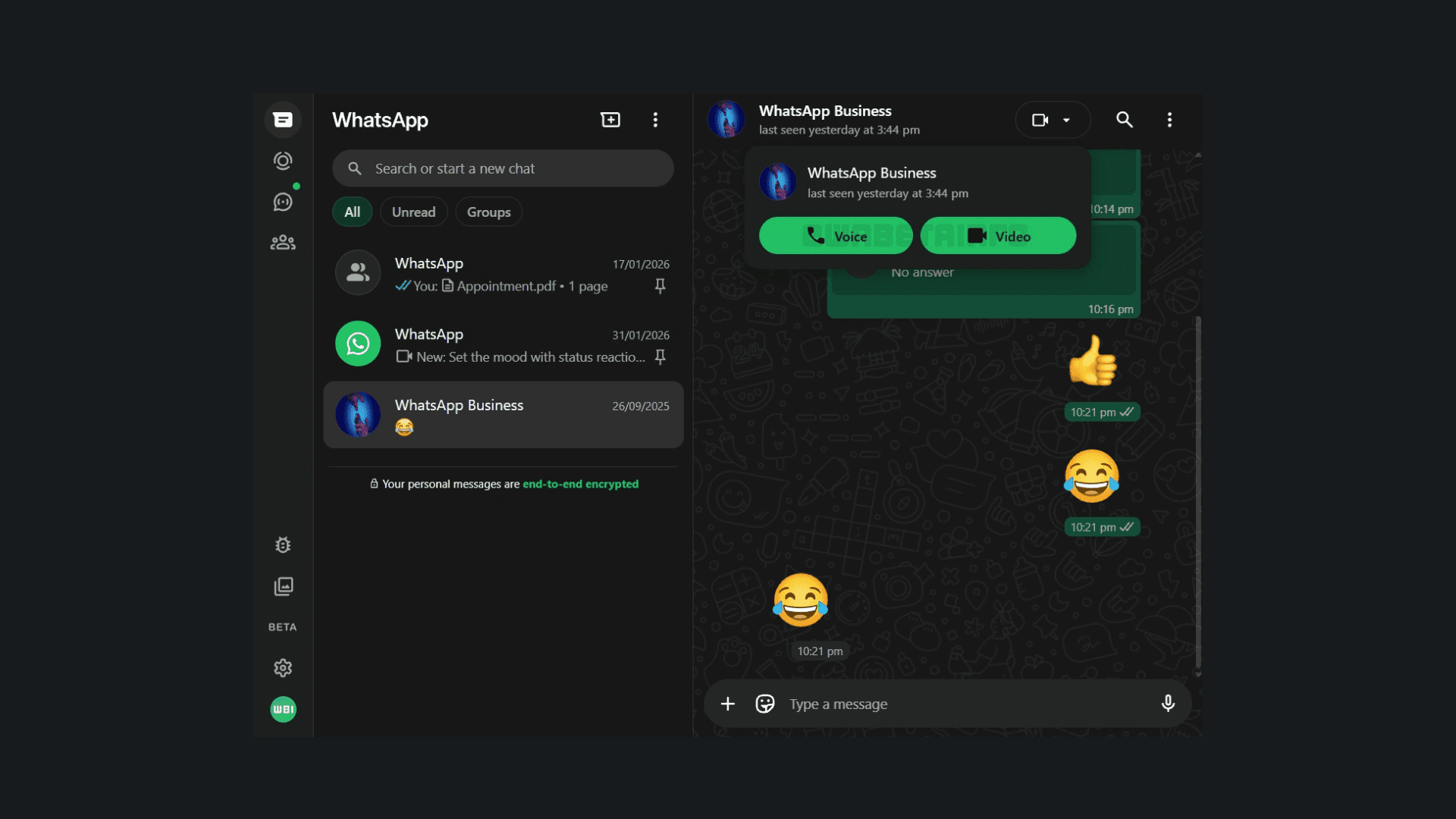
WhatsApp is expanding its browser experience with the wider rollout of voice and video calling on the web client, allowing users to place calls from a browser without installing the desktop application.
The initial stage adds one-to-one voice and video calls directly from individual chats, with group calling, call links, and scheduled calls expected to follow as the feature matures.
The new web calls match the security model used on mobile and desktop apps by protecting conversations with end to end encryption based on the Signal protocol.
Users who join a call from the browser will have the same confidentiality guarantees as those who join from Android, iOS, or the native desktop apps.
Screen sharing is available during video calls, enabling participants to present documents or slides from their browser while keeping control over what they show.
WhatsApp has been testing web calling for roughly a year and has refined the interface to mirror desktop functionality.
In this first rollout, users enrolled in the WhatsApp Web beta are seeing the call button inside individual chats. The company plans to expand availability over the coming weeks and to enable group calls for up to 32 participants after an initial testing phase.
The feature has particular practical value for Linux users, who have lacked an official desktop client and have relied on the web interface for messaging.
With voice and video supported in the browser, Linux users can join meetings and calls without switching devices or relying on third-party wrappers. Windows users who prefer the web client over the hybrid desktop app will see similar benefits.
From a product standpoint, bringing calling to the web reduces friction for people who split work and personal communication between browsers and phones.
The inclusion of screen sharing and scheduled calls signals a push to make WhatsApp Web a fuller collaboration environment rather than a simple companion app.
How quickly group calling and call link workflows roll out will determine whether the web client can serve heavier meeting and event use cases.
WhatsApp says encryption is automatic for all calls and that no extra settings are required. With the rollout widening, the company will be watched for how reliably web calls perform across networks and browsers, and whether the web experience can match the low latency and stability users expect from native apps.
Don’t miss important articles during the week. Subscribe to techbuild weekly digest for updates