

Although AI development has had a long history of excitement followed by a long disappointment, there is no doubt that we’re experiencing an unprecedented period of technological innovation across various sectors that is driving the growth of AI.
The rapidly developing set of Artificial Intelligence technologies has the potential to solve some of the most pressing challenges that impact Sub-Saharan Africa and drive growth and development in core sectors.
As the case is with other transformational and revolutionary technologies, there are challenges that can hamper the development of a healthy AI ecosystem in Africa.
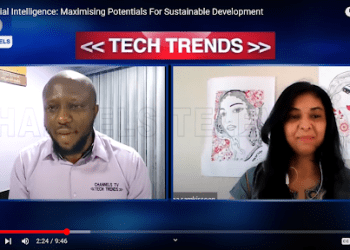
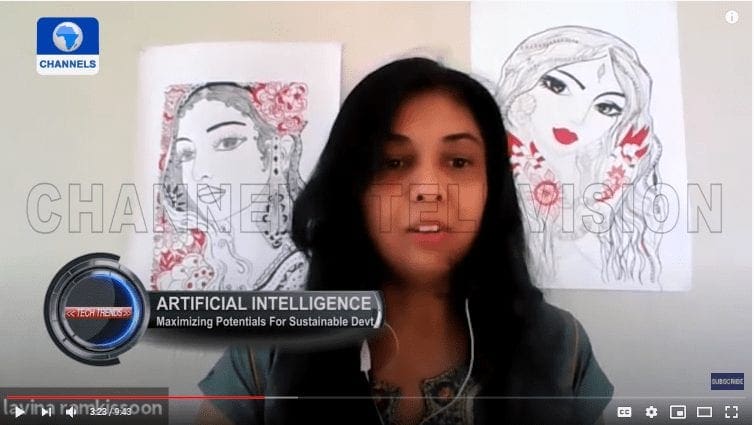
I, recently, had a chat with Lavina Ramkissoon, an AI strategist and ethics mentor, on Tech Trends show on Channels Television. She discussed how Africa can embrace these challenges limiting the growth of AI as well as create a clear road map to guide the adoption of the technology.
CFA: Lavina, glad to have you on Tech Trends today.
Lavina: Hi, there. How’s everyone doing?
CFA: Hi. So, let’s start by understanding what Artificial Intelligence really means.
Lavina: You know, it’s a good question in terms of the common folks and how it actually translates to who we are. I think for us it basically means understanding our digital citizenship.
It means understanding and having access to a large amount of information with relative ease. And I think that just doesn’t only talk to AI, but it talks to technology in general.
CFA: As AI continues to evolve, do you think Africa is taking full advantage of it thus far?
Lavina: Not just yet. So, I think Africa still has a large learning growth spurt to go through. So, in terms of understanding its true potential against our real-world day to day impact.
You know, for example, it could mean, us unpacking it in the healthcare sector and what does that truly mean for us as citizens at the end of the day? What is the real-life impact?
So this is where we talk a lot about AI, not just research, not just the idea of what we think we can actually
CFA: Looking at the context of Africa with all the data we’re generating, smartphones from various countries, various kinds of apps, what sort of policies do we need to ensure that we’re on track when it comes to ethics around AI?
Lavina: I think that’s an interesting one because the policy is definitely one part of it, but then the infrastructure is the other part of it.
If we unpack the policy itself, are we looking at things, like taking into account diversity? Are we taking into account transparency, accountability? Those are keys to the foundation areas that need to be looked at.
You can watch the full interview here.