
The Nigerian telecommunications industry, one of the fastest growing sectors has recorded an investment of $68bn, of which $35b comes from Foreign Direct Investments (FDIs) data from Nigerian Communications Commission have shown.
Reacting to this, Hamadoun Toure, former Secretary General, International Telecommunications Union (ITU), said the $68bn investment recorded so far in Nigeria point to the fact that the country is certainly a preferred destination for telecommunications investors in Africa.
Delivering a keynote address at the just concluded ITU Telecom World 2016, Bangkok, Thailand, Toure said Nigeria is the place to invest because the population is large; there is political stability and a very robust telecommunications regulatory regime.
He explained that within 15 years when Nigeria opened its telecoms sector to the global community, investments have grown in leaps and from a small 400,000 connected lines in 2001, the country now has over 150m connected lines and a teledensity of 107 percent.
Suggested Read: NCC Boss, Ernest Ndukwe, Tunde Coker and others to Speak at 2016 TechDev Summit.
“The next growth for voice communication is in Quality of Service and the new oil in Nigeria is ICT and data transmission is the way to go” he noted.
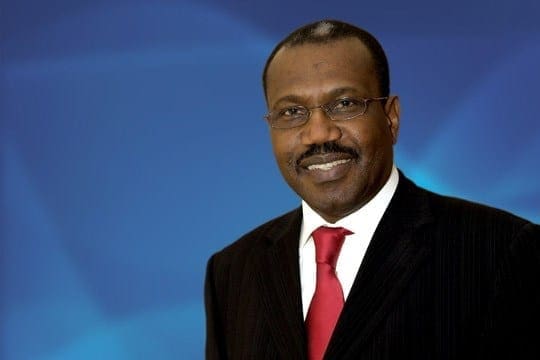
He explained to the current and potential investors that the Nigerian Communications Commission (NCC) has done a magnificent job with the way it has managed regulatory activities transparently and by the fact that law makers from Nigeria were also part of the audience he spoke to at the venue, underscored the importance Nigeria attaches to this sector.
Speaking on a broadband initiative in Nigeria, Professor Umar Danbatta, EVC, Nigeria Communications Commission, he said the regulator had begun digital transformation through the National Broadband Plan (NBP 2013 – 2018).
The NCC boss explained that since broadband is the catalyst for social and economic transformation, “we have come to let the global community know that investments are welcome in this area.”
He said the target is 30 percent by 2018 according to the NBP 2013 – 2018.
Although Nigeria has hit 21 percent so far, investments will be needed for 3G, 4G and to take services to underserved and unserved regions of Nigeria, “and we need to deploy infrastructure to those areas that have no services, we understand that and the strategy to address them hence we came out with the 8-point agenda to address this”.
Nigeria has a very flexible regulatory environment and “we are fair, firm and forthright in our activities” he added.
In her words, Funke Opeke, CEO of MainOne Cable Company, said the company has keyed into the National Broadband Plan and hence investments in the Infrastructure Company (Infraco) licences for Lagos to take broadband services to Small and Medium Enterprises (SMEs), Corporate organizations through metropolitan fiber optic links.
“We are building over 1,000km of fiber optic in Lagos, and this is part of the building block to encourage broadband penetration,” she said.