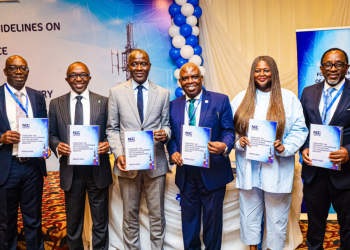


National Information Technology Development Agency (NITDA) is considering processes to reverse the economic due to the increasing loss level of revenue loss to acquiring different hardware and software running into over $2billion annually.
Adebayo Shittu, Minister of Communication, backing NITDA’S new direction, said the present economic realities in the country, following the dwindling revenue from the oil sector, has spurred national alternative to diversifying the economy for sustainable development.
“There is no such better alternative than ICT, which has recorded tremendous growth and contribute about 12.62% to total nominal GDP and 12.68% to total real GDP in the second quarter of 2016 according to National Bureau of Statistics,” Shittu said.
“The ICT revolution offers a historic opportunity to enable social adjustment to a fast changing and knowledge-driven global economy. It opens the opportunity for Nigeria to transform to an open, smart, and inclusive economy. It offers new tools and platform to address the region’s challenges particularly in areas such as governance, employment, demands for public services, export diversification, structural transformation, and global competitiveness amongst others”.
Shittu reiterated, however, that the challenge presently focuses not only on closing the gap in access to technology but also on enhancing ICT innovation and promoting digital industries.
“Indeed, the access to technology is a major factor for us in Africa, and for that, we should focus our efforts on collaborating with the ICT private sector in the digital economy. The crucial role SMEs play in our digital ecosystem as well as regional strategic partnerships to be able to do business and make it possible for all to communicate, but we need to address the ultimate application of this potential technology to tackle the underlying challenge of human capacity development.
“Developing the capacity of a human resource gives us an opportunity to turn on the furthest reaching and fastest growing technology to bridge the gap. There is a need, therefore, to tap the potential of this technology so as to ensure that everyone can enjoy the opportunity for economic mobility, personal advancement and higher quality of life.”
Suggested Read: US based Investment Company Eyes $100m Investment on Nigerian IT Startups
The Minister observed that the shift in world economy towards knowledge-based products and services have become indispensable in recent past as globalization and developments in ICT had changed the business scenario and the entire landscape.
To this end, Shittu told delegates at eNigeria that the Ministry will collaborate with NITDA to ensure all tiers of government consider the adoption of Open Data Policy (ODP) as a means of creating jobs, making data available for policy formulation and decision making as well as reducing the cost of governance and improving service delivery.
Earlier in his welcome address, Dr. Isa Ali Ibrahim Pantami, NITDA’s DG/CEO, decried that Nigeria loses approximately $2.8 billion annually from the importation of ICT goods and services, including a whopping $1 billion spent annually on software imports.
The DG described as unacceptable a situation locally manufactured or assembled computers represent less than 8% of all the computers used in the country.
“Similarly, Nigeria is projected to expend about $143.8 billion on ICT by 2019- a vast sum that translates to over seven times the value of the 2016 national budget!
“We are firmly pleading with our international manufacturers to domesticate their products to achieve a win-win relationship.
“Within the limits of the mandate that set us up, we at NITDA are repositioning ourselves to filter the IT gadgets being imported to the country in the overall interest of the nation.
“We want to transform NITDA from its administrative outlook to IT-driven and knowledge-based agency, and we request the support of all to materialize this aspiration,” the DG said.
“In addition to the emphasis that NITDA will lay on regulation, local content development, and capacity building, we are making concerted efforts to create, as well as review, existing standards and guidelines.
“This will enable us to regulate the sector in line with the highest global standards. We are committed to ensuring that the proliferation of fake and sub-standard ICT products and services in the country is eliminated or at least significantly curtailed.
“Similarly, security in the 21st century is highly reliant on ICTs, and we want to encourage the development of ICT-enabled security services across all sectors of the economy. In addition to our support for the use of ICT for physical security, we are also committed to ensuring the cybersecurity of our nation. Our Computer Emergency Readiness and Response team (CERRT) and our Public Key Infrastructure (PKI) project will support in these efforts.
“Job creation is also very important to us at NITDA. According to the National Bureau of Statistics’ national youth survey report, there are nearly 70 million people in the 15 to 35 age bracket. Unfortunately, they also report that over half of these are unemployed, and much more are underemployed. We recognize that this challenge gives us an excellent opportunity to use ICT to empower our youth, create jobs and generate revenue for the country. Interestingly, the Federal Government of Nigeria through the office of the Vice-President created 200,000 jobs for Nigerians”, he said.
The DG added that to bring about the objectives they have set for themselves under his leadership, the Agency would correct irregularities, fight corrupt practices and resist unnecessary and unproductive interference in the affairs of the NITDA. “But I need the help of all Nigerians, particularly IT stakeholders, in this all-important task,” he prayed.