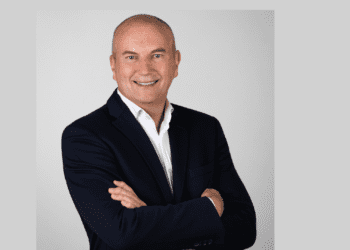


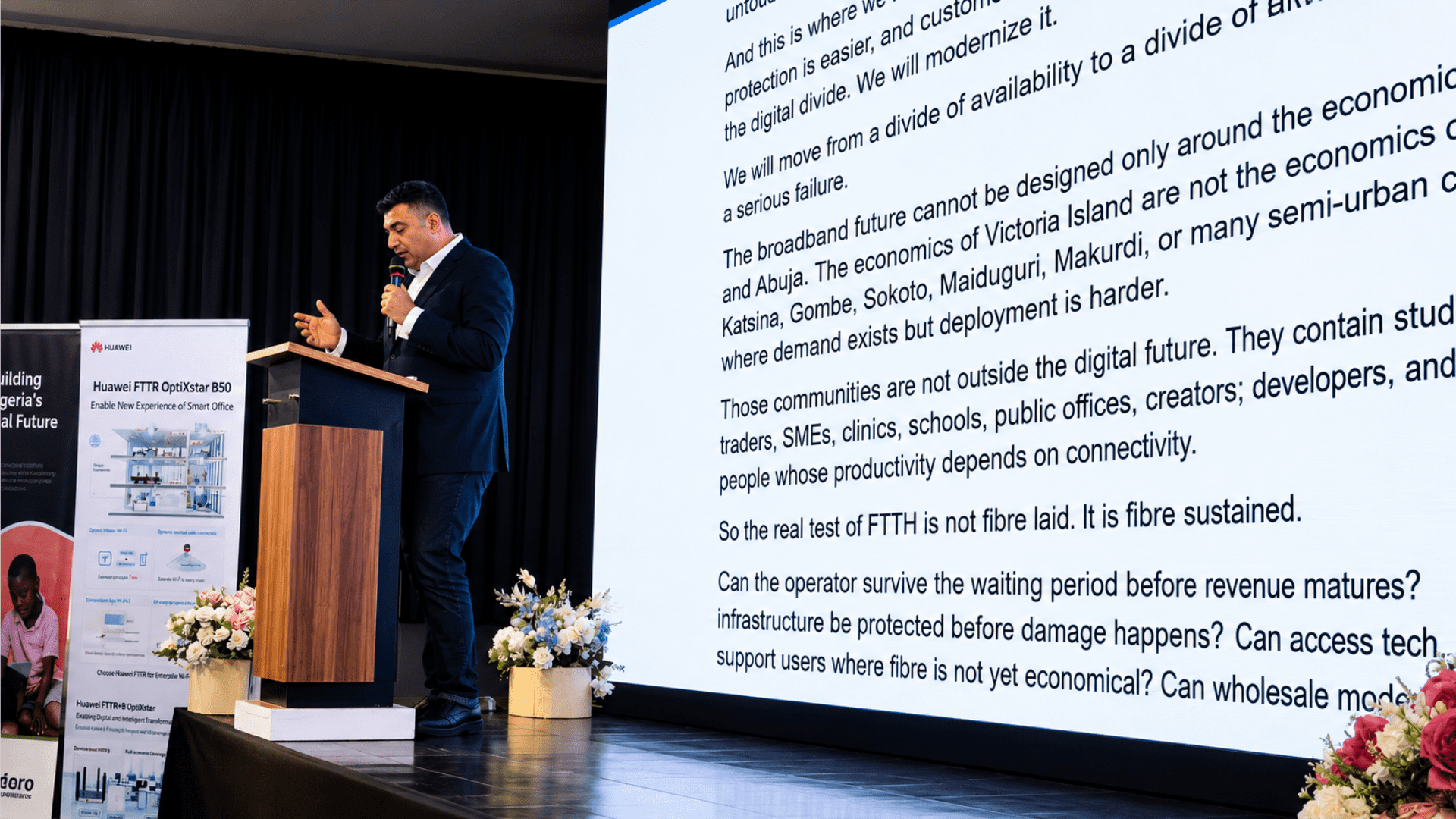
Fibre-optic cable can be laid across every street in Nigeria and still fail the citizens it was built to serve, the Managing Director/CEO of MegaMore Wireless Broadband Limited, Amin Dayekh, told operators, regulators and investors gathered in Lagos on Tuesday.
Delivering the keynote address at the Association of Telecommunications Companies of Nigeria’s (ATCON’s) Critical Conversation Forum on Fibre-to-the-Home, Dayekh argued that Nigeria’s broadband ambitions were being undermined not by a shortage of cable in the ground, but by the absence of what he called “the compact around the cable.”
“The cable is not enough,” he told the forum. “Every fibre project has two lives. The first life is public and it appears in announcements, brochures, maps, targets, and launch ceremonies. The second life is private, it begins the morning after deployment, when the network must face the road contractor, the vandal, the power failure, the impatient investor, the customer complaint, the repair bill.”
That second life, he said, is where broadband succeeds or fails.
Dayekh built his address around four pillars he insisted must surround fibre deployment if it is to survive. The pillars are patient capital, infrastructure protection, access realism and affordability.
On financing, he distinguished between an ROI mentality that asks how quickly money can be recovered and an infrastructure mentality that asks whether a network can serve a community for ten, fifteen or twenty years.
Operators, he said, spend long before they earn, absorbing the cost of routes, right-of-way, equipment and customer acquisition through a difficult waiting period before revenue matures.
“If we finance fibre with impatience, we should not expect inclusion,” he said. “We will get networks only where payback is fastest. We will get deployment that avoids difficult communities. And then we will wonder why the digital divide remains.”
On protection, Dayekh described a cycle familiar to operators nationwide: road contractors striking buried cable, late relocation notices, and operators absorbing repair costs while their reputations take the blame for failures they did not cause.
He further argued that weak enforcement does not stay outside the price of broadband, saying it becomes a hidden tax that eventually reaches the customer.
“The customer does not usually say, ‘Your fibre was damaged by uncoordinated public works.’ The customer says, ‘Your Internet is unreliable,'” he said, calling for coordinated route mapping, advance excavation notices and structured cooperation between the Nigerian Communications Commission, state works ministries and security agencies.
On access, he defended the continuing role of wireless Internet Service Provides (ISPs) in regional cities and peri-urban communities where fibre economics remain immature, while warning that licence-exempt spectrum is increasingly congested and must feature in any serious sustainability conversation.
His sharpest warning came on affordability. Dayekh cautioned that if FTTH scales only where payback is fast and customers can absorb high prices, Nigeria risks trading one problem for another.
“We will not close the digital divide. We will modernise it,” he said. “We will move from a divide of availability to a divide of affordability.”
He urged the sector to look beyond Lagos and Abuja to the economics of Kano, Katsina, Gombe, Sokoto, Maiduguri and Makurdi, insisting those communities held the students, traders and small businesses that Nigeria’s broadband future depends on.
Dayekh closed by reframing what success should look like for the FTTH rollout.
“A fibre cable in the ground is not yet development,” he said. “It becomes development when it carries opportunity.”
The future of broadband in Nigeria, he told the forum, would not be decided by who lays the most fibre, but by who builds networks that remain alive, trusted and reachable long after the launch ceremony ends.
Don’t miss important articles during the week. Subscribe to techbuild weekly digest for updates