


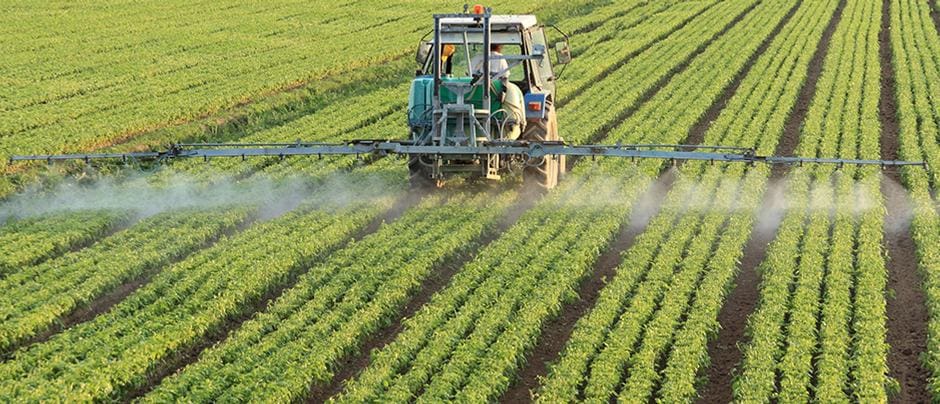
Now that Nigeria is moving to diversify its mono-product economy from oil to other sectors such as agriculture and industrial exports, it must move fast to overhaul the entirety of its agricultural ecosystem by deploying technology..
If this is not done, the amount of food wastage and importation will continue to increase year in, year out.
We have, over the years, been witnessing wastages in the agricultural value chain with huge amounts spent annually on the importation of produces which ordinarily should have been well preserved after being harvested.
The Ministry of Agriculture and Rural Development in its agriculture promotion policy (2016 – 2020) presented to the Presidency confirmed that Nigeria’s current post-harvest loss rates of perishable crops was up to 60 per cent. This is quite alarming and unbelievable in this era when Elon Musk is planning to make its visa to visit Mars!
In February 2016, Africa’s richest man and President of the Dangote Group, Aliko Dangote, said Nigeria spent almost $1.8bn annually importing approximately 3.2 million metric tonnes of rice.
Meanwhile, Central Bank of Nigeria data revealed that the country spent about $7.4bn (N1.5tn) on the importation of food between 2014 and 2015. These include the importation of fish which accounted for $1.39bn; milk, $1.33bn while rice import accounted for $51m.
Aside from these mind-boggling statistics, Nigeria lost its position in the global space as one of the leading nations in agribusiness decades ago. A report on agriculture innovation released by the global innovation index ranked Nigeria 119th on the 2017 Global Agricultural Innovation Index. This is lower than the 114th position the nation was ranked in 2016.
The President of African Development Bank, Akinwumi Adesina, understands that the robust deployment of technology will see Africa as a food-producing continent.
Some technologies that have been adopted over the years in developed nations still exist today, while some modern technologies are still emerging in the laboratories where they are undergoing testing and analysis.
No doubt, technology can drive agribusiness. I read some report that AfDB will invest $24bn in agriculture in Africa over the next ten years. This proposed investment was confirmed by Adesina when he visited Ibadan recently.
He said that it would be channelled towards deploying technologies. These technologies will drive agriculture in Africa and Nigeria, being the continental leader, is expected to take full advantage of this initiative.
Some Nigerian farmers are currently deploying technologies on a small scale. Such technologies include irrigators, harvesters, anti-pest plants and genetically modified technologies. These, however, need to be upgraded. These tools allow them to — Finish Reading on the Punch