


There are no words or suitable expression to describe the fascinating nature of technology. With different apps and software, various human problems are solved. Just think of any human problem and you will find a solution through technology.
One of such fascinating software is FaceReader, premier professional software for automatic analysis of facial expressions. FaceReader software has been adopted some university lecturers in developed countries.
They use this facial-recognition technology on students to help determine the level of interest during lectures. Hence, a tool I recommend should be utilized for a wider education. However, the use of facial recognition is becoming increasingly common in China.
How FaceReader Works?
FaceReader automatically analyzes six basic facial expressions, as well as neutral and contempt. It also calculates gaze direction, head orientation, and person characteristics. The Project Analysis Module is ideal for advanced analysis and reporting: you quickly gain insight into the effects of different stimuli. And, review of Action Units is available.
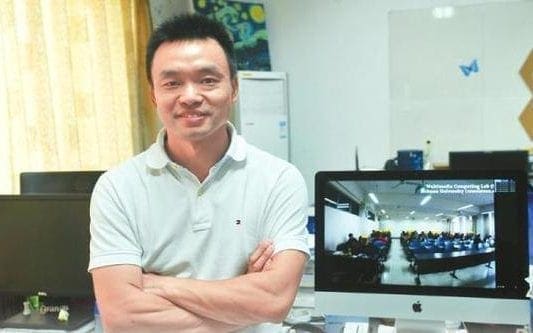
“My technique produces a “curve” for each student showing how much they are either “happy” or “neutral,” and that data can indicate whether they are bored said Wei Xiaoyong, Computer Science Professor, Sichuan University, China
“When we correlate that kind of information to the way we teach, and we use a timeline, then you will know where you are attracting the students’ attention,” Professor Wei had told the UK Telegraph.
He added: “Then you can ask whether this is a good way to teach that content? Or if this content is OK for the students in that class?”
Who can use FaceReader?
FaceReader is used worldwide at more than 500 universities, research institutes, and companies in many markets, such as consumer behavior research, usability studies, psychology, educational research, and market research.
“I first started using face-tracking devices about five years ago as a means of taking the daily register of attendance, Wei Xiaoyong, Computer Science Professor, Sichuan University
According to him, he had often forgotten to check for attendees when he started teaching at the University, so he sought a less “boring or time-consuming” method to find out if his students were present.
Prof Wei has passed that technique on to several friends and colleagues who teach at universities across China, and he now hopes his more recent ‘emotion-analysing proto-type’ could be put to wider use.
“It can be utilized for a range of social sciences, psychological work and by educational researchers,” he said.
Suggested Read: 4 Useful Resources For Kids To Learn Difficult Subjects