

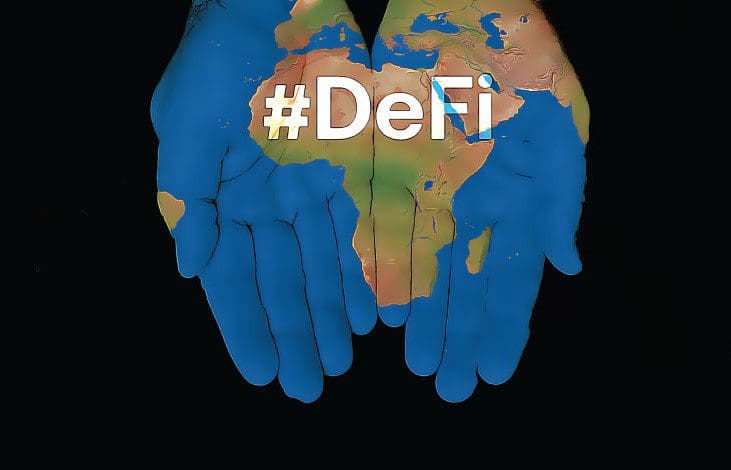
Africa has one of the rapidly-growing economies in the world and is a leading continent in the world’s mobile money adoption index, globally accounting for more than 45% of transactions.
This can be attributed to the improved banking system in the continent with the introduction of mobile banking which has facilitated ease in banking and borderless transactions.
However, despite the significant strides Africa is taking in the finance ecosystem, lapses abound especially with the continued trust deficit that Africans – both the banked and underbanked – have in traditional banking institutions, which is causing them to seek digital solutions to control their finances and access banking services.
This is where decentralized finance (DeFi) comes in.
Decentralized Finance (DeFi) has the potential to drive access and inclusion to financial services such as lending, investing, settlements, online transactions, payments, etc.
DeFi is a form of finance that is based on blockchain and as such, does not base its operations on traditional, centralized intermediaries.
Its decentralized nature enables the creation of software that executes transactions on its own, is independent, unchangeable, and cannot be controlled by anybody.
DeFi as a catalyst to economic growth
Decentralized finance can truly enable the growth of Africa’s economic development because it places financial power (management, decisions, outcomes, etc.) on the people instead of the government.
We are well aware that most African economies are centralized by design, making it possible for the government to implement harsh policies on businesses and the people at large.
DeFi’s decentralized nature is resistant to such harsh policies because it allows for the people to make endless transactions and take charge of their own financial outcomes, not the government.
The centralized nature of traditional banks makes them susceptible to governmental influence because they require approval from the government before they can operate.
DeFi eliminates this problem because anyone can develop their own digital without government interference.
Decentralized finance, because it is an open network, also enables people to monitor the flow of funds. This is an important factor because the monopolistic and opaque nature of traditional banking systems has hindered the growth of the African economy.
The system is plagued by a few people who, because of their thirst to monopolize the market, engage in shady deals such as money-laundering, defrauding investors, funds diversion, and illegal transactions.
Another aspect where DeFi serves as a force for economic development in Africa is access to loans.
Accessing loans in Africa is a major challenge and when businesses can’t access loans to build solutions, it affects the continent’s overall development.
Despite the increase in micro-lending platforms, there are still issues with the erratic lending processes and unaccountability of these platforms.
However, with DeFi, there is access to crypto loans which are collateralized or uncollateralized loans given to borrowers in exchange for their crypto assets.
This allows borrowers obtain fiat loans using crypto assets as collateral which becomes a form of security when there is default in the repayment of loans.
These crypto loans are majorly facilitated by DeFi lending platforms which enable lenders and borrowers transact without intermediaries.
Finally, DeFi can make way for industries that develop products aimed at tackling different needs via smart contracts.
For example, the rapid growth of online trading and e-commerce will require smart contracts which is a viable, smart, easy, and decentralized way of facilitating online transactions.
Bottom line
Many economies in Africa are undergoing tremendous growth and the financial system is revolutionizing. However, this feat will be incomplete without embracing a decentralized financial system.
Adopting DeFi will result in a massive increase in banking access for people, allow them to control their finances, and create an enabling environment for businesses to thrive via access to loans.
Don’t miss important articles during the week. Subscribe to blockbuild weekly digest for updates.